If you have black smudges on your walls and a spooky set of soot webs hanging from your ceiling corners, you either hosted a candle party or your oil furnace coughed its lungs out. One is cosmetic and usually easy to tame. The other is a greasy, fuel-scented house takeover called a furnace puffback. Get the ID wrong and you can grind soot into your paint, perfume your ductwork with eau de diesel, and repaint twice. Here’s how I tell them apart on jobs, plus how to clean, deodorize, and repaint without spreading residue or setting stains.
Quick Test: Candle Soot Or Puffback?
Candle Soot is usually light, dusty, and likes to cling to cold surfaces, picture-frame edges, and ceiling corners where air slows down. Furnace Puffback residue is darker, sticky, and rides your HVAC system into every room it can find. Your fingers know the truth fast.
| Feature | Candle Soot | Furnace Puffback |
|---|---|---|
| Texture | Light, powdery, lifts easily | Greasy, sticky, smear-prone |
| Color | Light gray to black | Deep black with an oily sheen |
| Where It Lands | Corners, cold walls, behind frames | Throughout rooms via vents and returns |
| Smell | Mild smoky scent | Burnt oil or fuel odor |
| Wipe Reaction | May dust off or lightly smear | Smears badly and fingerprints set in |
Pro tip: if wiping a spot with plain water makes it look worse instantly, you likely have oily puffback residue. Water alone can set it deeper into paint or drywall.
How Misidentifying Backfires
Wrong cleaner, wrong order, wrong day. I walked a home where the owner thought puffback was candle soot and went straight to wet wiping. The walls got zebra stripes, the HVAC dragged the odor through the whole second floor, and the next step was a full repaint with odor-blocking primer. Candle soot tolerates light wet cleaning after a dry pass. Puffback makes water your enemy until you lift the bulk of residue with dry methods first.
Stop The Spread First
Shut down the furnace and the air handler so you are not blasting soot into other rooms while you clean. Pop off supply and return grilles, bag them for later cleaning, and temporarily cover openings so residue does not draft through the system. If the HVAC was running when it happened, assume the ducts, blower compartment, and coil collected soot. We have a detailed HVAC decon playbook if you want the full tour of registers, plenums, and liners that might need cleaning or replacement. HVAC Ductwork Decontamination Guide.
Dry Cleaning Comes First, Always
Start with HEPA vacuuming to remove loose particulate without blowing it around. Keep the nozzle just off the surface so you do not grind residue into paint. Then switch to dry cleaning sponges, also called chemical sponges. Press-and-lift in straight passes, rotate to a clean face often, and swap sponges as they load up. Do not add water yet or you will smear oils across a larger area. We show the exact motion and order here: Soot Webs Cleaning: Chemical Sponge Cleaning and quick tips here: Dry Cleaning Sponge Tips.
Wet Washing That Does Not Smear
Once the dry pass stops producing visible transfer, bring in targeted wet cleaning. For Candle Soot, a mild detergent and warm water usually finish the job. For Furnace Puffback, use a soot degreaser that is made for petroleum residues. Work top-down so rinse water does not streak clean areas, and use the two-bucket method: one for solution, one for rinse, swapping out water often. Microfiber beats cotton here because it grips residue instead of pushing it around.
If the source was food or grease, you are dealing with protein soot that sticks like bad news. Enzyme-based cleaners break the bond better than soap alone. Here’s how we handle stubborn odor and residue from protein burns: Protein Soot Odor That Will Not Quit.
What About The HVAC?
Odor and residue love duct liners, evaporator coils, and the blower wheel. Clean the registers, returns, and boots. Agitate and HEPA vacuum the ducts with proper capture. Wipe or wash the blower compartment and coil surfaces. If fiberglass liners or insulation are oil-soaked or burnt, replace them. After cleaning, seal seams and joints so you are not pulling attic dust into your shiny system later. Details and scope-checks are here: HVAC Ductwork Decontamination Guide.
Odor Control That Actually Works
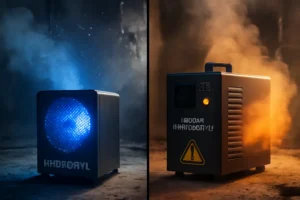
You cannot deodorize filth, so finish physical cleaning first. For lingering odor in porous materials like drywall, framing, or cabinets, we deploy thermal fogging to mimic smoke particle travel, hydroxyl generators for occupied spaces, and controlled ozone in unoccupied spaces where materials allow it. The point is targeted odor work after soils are removed, not as a shortcut. We outline the odor sequence here: Soot Webs Cleaning: Chemical Sponge Cleaning.
Seal And Repaint Without Bleed-Through
Painting over uncleaned soot is like trapping a skunk in the wall and pretending it is gone. Clean, dry, then spot-test a stain-blocking primer. Oil-based or specialty stain-blocking latex primers lock in light staining and residual odor so it does not telegraph through your topcoat. Flat paints are more stain-prone later, so consider eggshell or semi-gloss in high-traffic or candle-happy rooms. Give primers their full cure time before topcoating so you do not reactivate stains. If you have questions about finishes for easier wipe-downs, we cover that here: Soot Webs Cleaning: Chemical Sponge Cleaning.
When You Should Call A Pro
Call in help if you smell fuel, the HVAC was running during the event, soot is in multiple rooms, or electronics and coil surfaces took a hit. If odor keeps coming back 24 hours after cleaning or roars back when the system kicks on, something hidden is still contaminated. Puffback is sneaky, and it loves duct liners, insulation, and little voids you will not reach with a household vacuum. If wiring damage or arcing was involved, stop and let a tech make it safe first. Here is a related case where smoke in an attic started with chewed wiring: Attic Smoke Cleanup After Chewed Wiring.
Prevention That Actually Prevents
For Candle Soot, trim wicks to 1/4 inch, avoid burning candles in drafty rooms, and skip low-quality petroleum-heavy jar candles that smoke like a grill. Switch to soy or beeswax and keep candles away from cold exterior walls that promote black soot deposition. For Furnace Puffback, schedule yearly service, replace nozzles and filters on oil systems, and fix delayed ignition or backdraft conditions fast. If you ever hear a boom at startup, shut it down and call a technician before the next cycle.
FAQ
Why did soot collect behind my picture frames?
Air slows and eddies around frames and cold wall zones, which drops dry Candle Soot in those spots. Think of those areas as little soot magnets.
Can I just use my favorite all-purpose cleaner?
Maybe for Candle Soot after a dry pass, but it will smear Furnace Puffback. Use a degreaser made for oily soot and the two-bucket method so you are not bathing walls in dirty water.
Do I need duct cleaning after a small puffback?
If the air handler ran during the event, yes. Even a short cycle can seed the blower housing and coil, and that odor will keep greeting you every time the system starts.
Will new paint block the odor by itself?
No. You need cleaning first, then an odor-blocking or stain-blocking primer. Skipping that step is how you get yellowing seams and stubborn fuel smells a week after a “fresh” paint job.