When the grid goes dark and your HVAC takes an unscheduled vacation, indoor humidity can spike fast, condensation shows up like uninvited guests on your windows, and mold says thanks for the warm buffet. That is a blackout fungal bloom. If you have ever opened a fridge after an outage and caught a whiff of funk, you already know the vibe. This guide gives you smart pre-outage prep, safe humidity control while the power is down, and the first-24-hour moves that stop a small problem from turning into the kind of mold mess that eats weekends and paychecks. We will keep it practical, a little cheeky, and very effective. Grab a hygrometer and let’s talk outage spore control that actually works.
What Is A Blackout Fungal Bloom?
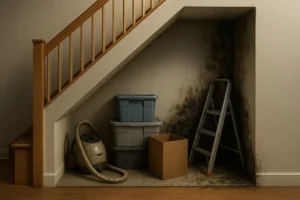
Blackout fungal bloom is rapid mold growth triggered by heat, moisture, and still air after an extended power outage. Your HVAC usually dries and circulates indoor air. Kill the power and your home’s microclimate flips. Rooms get warmer, relative humidity climbs, cold surfaces sweat, and materials like drywall, carpet, and cabinets hold onto moisture just long enough for mold spores to wake up and start building condos. As we like to say in the field, mold does not need much encouragement. According to our team’s guidance, “Mold begins to develop in 24 to 48 hours when materials stay damp.” Source. That clock runs even faster if humidity hangs above 60 percent and there is food on the surface, which in homes is basically everything cellulose or dusty.
During a blackout, hidden zones are the first to go funky. “Hidden mold thrives in concealed areas like behind walls, under flooring, or inside HVAC systems.” Source. Picture the backside of exterior walls, the underside of vinyl plank on a slab, and insulation around duct boots. If the outage hits in hot-humid weather, condensation on metal and uninsulated cold surfaces becomes your early warning siren. In cool seasons, leaks and ground moisture in basements or crawlspaces take the lead. Either way, if indoor RH breaks 60 percent for long, you are in the mold splash zone.
Pre-Outage Prep You Can Do Today
Outage spore control starts before the storm or grid hiccup. The goal is simple: reduce water entry, reduce moisture loads, and set your HVAC up to dehumidify like a champ when power returns. The win is keeping indoor RH between 30 and 50 percent most of the year, and in hot-humid seasons right around 45 to 50 percent source. Knock these out while the lights are still on:
Handle the easy leaks first. Clear gutters and downspouts so the next rain does not pour into your foundation. Check window and door weatherstripping and look for drip stains under window sills. If your home gets coastal wind-driven rain, aim a hose at suspect windows and watch for interior weeping. The cheapest mold prevention hack on earth is a $7 tube of exterior sealant used on the right joint. Pop into the attic to scan roof penetrations for old water rings around vents and chimneys. Any roof leak that is minor during sunny days will be major in a hurricane.
Tune the HVAC. Our techs recommend changing filters regularly, cleaning coils and drip pans, and confirming the condensate drain is not clogged, because “High humidity levels in your home can encourage mold growth in and around your HVAC system.” Source. If you run a smart thermostat, set the fan to auto instead of on, and avoid eco modes that raise indoor humidity too far during shoulder seasons. Coil re-evaporation is real, and fan-only runs can kick moisture back into rooms if the coil has not drained yet. Learn how.
Stage your tools. Keep a digital hygrometer in the living area and another in a bedroom so you can see RH at a glance. A basic pinless moisture meter lets you check baseboards, cabinets, and wood floors for hidden damp after the outage. If you own a portable dehumidifier, clean its bucket and filter now and test it for at least 30 minutes. Stash heavy contractor bags, microfiber towels, painter’s tape, and a roll of plastic sheeting for quick isolation of wet zones. Print our Moisture Prevention Maintenance Checklist and pencil in seasonal reminders for gutters, bathroom fan runtime, and HVAC tune-ups. For post-outage verification, our field docs say “Verify humidity levels are below 45%.” Source.
Reform your small devices. Humidifiers and essential oil diffusers? Park them until winter dryness returns. As we have warned before, “Use them wrong and you will be seeding mold on windows, walls, and even inside your HVAC.” Source. If you rely on a room humidifier for medical reasons, set it up with a humidity limit and place it where excess moisture cannot hit cold glass or uninsulated walls.
Secure the fringe stuff that bites you later. Pull area rugs off slab floors if a major storm is inbound, especially near exterior doors. Elevate cardboard boxes in closets and garages so a little water does not turn them into mold spore farms. Know how to quickly move your fridge forward to wipe up defrost water so it does not creep under toe kicks and feed spores behind cabinetry.
Safe Humidity Control Without HVAC
When the outage hits, your home shifts into survival mode. You are not trying to make it perfect. You are trying to keep conditions just dry enough to block a blackout fungal bloom. Here is how to play both offense and defense until the grid wakes up.
Start with a simple rule: indoor RH should live below 60 percent. In outages, you might run just north of that, but the lower you keep it, the longer you can go without mold drama. If you have a battery backup on your router and a phone, check the outdoor dew point and compare it to indoor readings. If the outdoor air is cooler with a dew point below 60 F, controlled cross-ventilation can actually help. Crack windows on the shady side, open one on the leeward side to encourage flow, and keep interior doors open so rooms equalize. If outdoor air is hotter and stickier than inside, shut the windows and focus on reducing indoor moisture loads instead of ventilating.
Kill the big moisture sources. Skip long showers and boiling pots. Keep tight lids on aquariums and cover steamy cooking with lids or use a grill outside. If you must hand-wash dishes, towel dry them and hang the towel outdoors. Move houseplants to a single bright room and put a towel or tray beneath them so watering does not wet floors.
If you own a safe generator and know how to use it, a properly sized portable dehumidifier can be a game winner. Place the generator outdoors and away from doors, windows, or garages to avoid carbon monoxide hazards CDC guidance. Use heavy-gauge outdoor cords and elevate the dehumidifier on a table or counter so it is not sitting in incidental water. Empty the bucket frequently. Keep the unit in the most humid room and shut that door so it works a smaller volume of air. If you do not own a generator, you can still use passive moisture control. Set out a few buckets with calcium chloride dehumidifier pellets if you have them, keep them away from kids and pets, and dispose of the liquid brine safely.
Control solar gain. In hot weather, close blinds and curtains on the sunny sides to keep rooms cooler so RH does not spike as high. In cooler weather, do the opposite during the day to warm up slightly drier air, then close up at dusk to reduce nighttime condensation.
Wipe sweat and spills. If you see condensation beading on windows, metal doors, or toilet tanks, wipe it down with a dry towel. Check under-sink cabinets and the base of exterior walls where they meet floors. Small daily wipe-downs prevent that crucial 24-to-48-hour wet window from staying open. The EPA and CDC both advise that anything wet should be dried within 24 to 48 hours to prevent mold growth EPA CDC. If you have to choose, prioritize wood, drywall near floors, and closets on exterior walls where airflow is poor.
Do not run humidifiers or scent diffusers during an outage. That moisture has no exit path and will settle on cold surfaces. Our device hygiene guide says it plainly: “Use them wrong and you will be seeding mold on windows, walls, and even inside your HVAC.” Source. Keep generators and any electrical gear off damp floors to avoid shock hazards and equipment damage.
First 24 Hours After Power Returns
When the lights come back, the next day determines if spores bloom or go back to sleep. You will combine fast ventilation, targeted drying, and a quick health check on your HVAC so it does not become a mold factory that spreads spores everywhere.
Start with an air reset. If outdoor air is cooler and less humid than indoors, open windows for 10 to 20 minutes to dump the muggiest air. Then shut the house and run the HVAC on cool mode with the fan on auto. Avoid running the fan-only setting for long periods right now because of coil re-evaporation. If the evaporator coil is wet and the fan keeps blowing without active cooling, it can push moisture right back into your rooms details here. Set the thermostat a few degrees below current indoor temperature so you actually dehumidify, and aim for 45 to 50 percent RH over the day.
Give the air handler a quick safety check before you hammer it. Turn the system off, open the blower compartment if you can do it safely, and look for standing water in the drain pan. Clear the condensate drain if it is clogged and wipe the pan dry. Swap in a new filter immediately. As our HVAC mold guide puts it, “Change filters regularly … Keep indoor humidity levels below 60%.” Source. If you smell a strong musty odor blasting from vents when the system starts, stop and call a pro. That smell can mean the coil, pan, or duct liner is already colonized.
Layer extra drying. Run portable dehumidifiers in the muggiest rooms even while the HVAC is working, and keep bathroom exhaust fans on after showers for at least 20 minutes. Put a box fan at the most humid doorway blowing out into a hallway to push damp air toward the return. Keep interior doors open for circulation unless you are concentrating a dehumidifier in one room.
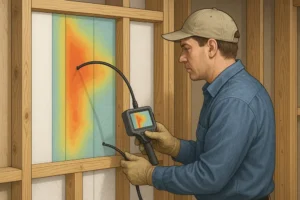
Do a hidden mold walk. Use our Hidden Mold Check as your roadmap. Open under-sink cabinets and feel the bottom panel. Slide a hand along baseboards behind sofas and beds that sit on exterior walls. Lift entry rugs and check for damp or musty odor. Peek into the HVAC closet for rust trails or drips. If you have a crawlspace, open an access point and check for puddles or condensation on ducts. “Hidden mold thrives in concealed areas like behind walls, under flooring, or inside HVAC systems.” That line exists because we find it there all the time.
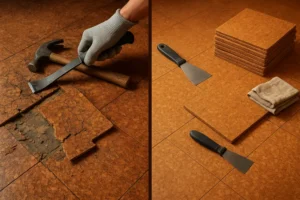
Handle small growths right away. The EPA advises homeowners can generally clean mold patches smaller than about 10 square feet on non-porous surfaces using detergent and water, then dry the area quickly EPA. Porous materials that stayed wet beyond 24 to 48 hours are candidates for removal and replacement. CDC guidance lines up with this timeline CDC. If the odor returns after you clean, you likely have moisture trapped inside a wall, floor, or HVAC component that needs professional attention.
Verify the win. By the end of day one, you want indoor RH holding at or under 50 percent, and ideally under 45 percent on your hygrometers. Our verification checklist literally says, “Verify humidity levels are below 45%.” Source. If you cannot get there with HVAC and dehumidifiers running, something is still adding moisture or blocking airflow.
Quick Reference Table
| Stage | Target RH | Primary Actions |
|---|---|---|
| Before Outage | 30-50%, hot-humid 45-50% | Fix leaks, clean coils and pans, verify clear condensate drain, stock hygrometers and towels, prep dehumidifier |
| During Outage | Under 60% if possible | Cross-ventilate only if outdoor air is drier, limit moisture generation, wipe condensation, run generator-powered dehumidifier safely |
| First 24 Hours After | 45-50% then hold under 45% | Short vent purge, HVAC cool mode with fan auto, replace filter, clear condensate drain, run dehumidifiers, inspect hidden zones |
When To Call Professionals
There is DIY and then there is mold that wants a containment crew. If you see visible growth larger than about 10 square feet, if musty odor keeps blowing from your vents, or if you cannot hold indoor RH under 55 percent after a full day of HVAC and dehumidifiers, call in backup. Mold inside an air handler or duct liner will keep distributing spores until the contamination and moisture source are addressed. If anyone in the home has asthma, severe allergies, is pregnant, or is immunocompromised, skip the experiments and schedule an inspection.
All Nation Restoration handles 24/7 water, mold, and HVAC-related contamination. We isolate affected areas, run HEPA air filtration, remove contaminated materials, and dry structures to documented targets. We also track down the moisture sources that triggered the blackout fungal bloom in the first place so you do not rinse and repeat. You can start by using our maintenance checklist and our HVAC mold guide here.
Real-World Scenarios
Case one: midsummer hurricane, 96-hour outage. Day one, RH inside hits 68 percent by afternoon. The homeowner closes blinds on sun-facing windows, limits cooking, and keeps showers short. Evening dew point outside drops to 71 F while inside is 75 F and 68 percent RH. That is barely helpful, so they skip cross-ventilation. They run a generator outside, power one 50-pint dehumidifier in the family room, and empty the bucket hourly. They wipe window sweat twice daily and pull entry rugs off the slab. When power returns, they throw windows open for 15 minutes at dawn while the outdoor dew point is at its low point, then run AC cool mode with fan auto. New filter in, condensate drain clear. By the end of day one, RH holds at 48 percent. They lift two area rugs to find damp padding, toss the padding, and clean the slab with detergent. No bloom, no drama.
Case two: early fall grid failure after a week of rain. Basement smells a little earthy to start. The outage lasts 36 hours. Without HVAC, the house creeps to 64 percent RH. The homeowner opens windows because it feels cool, but the outdoor dew point is still high, so the basement sweats on metal ductwork. After power returns, the AC blasts, but a strong musty odor blows from vents. Pan inspection reveals slimy growth at the coil. They shut it down and call us. We isolate the air handler, HEPA vacuum visible growth, clean and treat the coil and pan to industry standards, flush the drain, and dry the basement with dehumidifiers until RH holds under 45 percent. We show them how to set fan to auto to limit coil re-evap, and provide the hidden mold inspection list they now use after storms.
Case three: winter ice storm outage with a thawing fridge. The interior air is cool and relatively dry, so general mold risk is low, but the kitchen floor takes a puddle when the freezer leaks. They keep towels on standby, catch the melt, and move the fridge forward to mop under toe kicks so moisture does not feed spores behind base cabinets. Power returns the next day, they run heat with fan auto, and still do a quick under-sink check because hot air plus yesterday’s puddle can shove humidity into hidden spaces. No smell, no growth, game over.
Blackout Mold FAQ
How do I know if outdoor air will help or hurt during an outage?
Compare your indoor RH and temperature to the outdoor dew point. If the outdoor dew point is below 60 F and the outdoor air is cooler than inside, short cross-ventilation can help. If the outdoor air is hotter and stickier, closing up and reducing indoor moisture generation is usually safer. Use a hygrometer inside and a weather app for outside numbers.
Can I run fans if the air is muggy?
Yes, but aim them smartly. Ceiling and box fans help evaporate surface moisture, but if the air is already close to saturation, moving it around just makes you feel cooler while materials still stay damp. Point fans at wet surfaces to aid drying, open a window on the downwind side for exhaust if outdoor conditions allow, and add a dehumidifier whenever you can.
Should I fog my house with biocides after an outage?
No. Fogging without source removal and moisture control is the restoration version of spraying cologne on sweaty gym shoes. You might knock down odor for a day, but viable spores and moisture will be back on duty by morning. The EPA recommends physical cleaning and drying first, and removal of porous materials that stayed wet too long EPA.
How can I tell if my ductwork is contaminated?
Signs include a musty odor that is strongest when the system first starts, visible growth on supply registers or in the air handler, and occupants who cough or get stuffy only when the HVAC runs. Our HVAC guide walks through warning signs and next steps here. If you suspect duct liner contamination, stop running the system and call a pro.
Is bleach ok for small mold spots?
On non-porous surfaces, plain detergent and water is usually sufficient. On porous materials like drywall, bleach does not fix the root problem because it does not remove water-damaged material or solve moisture. The CDC and EPA both emphasize drying within 24 to 48 hours and removing materials that stayed wet too long CDC EPA.
Are houseplants a problem during a blackout?
They can be. Clusters of plants raise local humidity and can keep window sills damp. Group them in a single room with decent light, set trays beneath, water lightly, and keep them off exterior sills until RH is under control again.
What thermostat settings help after power returns?
Use cool mode or dry mode if you have it, and keep the fan on auto so the coil can drain between cycles. Avoid leaving the fan on continuously right after an outage. That can push moisture off the coil and back into rooms, a process our team details as coil re-evaporation explained here. Target 45 to 50 percent RH for the first day, then hold under 45 percent if possible.
Need Help Stopping A Blackout Fungal Bloom?
If your outage spore control plan did not go to plan, we can step in fast. From wet wall discovery to musty HVAC cleanup, All Nation Restoration finds the moisture, removes the growth, and resets your building so it stays that way. Check the resources linked across this guide, start dropping RH now, and if you are seeing visible growth or smelling mustiness from vents, reach out. Hidden mold and post-outage humidity spikes are our daily bread, and we would rather see your hygrometer at 45 percent than your baseboards at 95 percent.