You know that glorious moment when the sun finally gives up roasting your house and you crack open the windows, flip on the whole-house fan, and smugly wait for free night cooling to work its magic? In humid climates, that move can backfire hard. If the outdoor dew point is high, your fan is just slurping moist air into your walls, attic, and closets. That moisture rides along with the cooler temps, finds the coldest surfaces in your home, and starts feeding mold. You get a house that smells like a gym bag by breakfast. Let’s talk whole-house fan pitfalls, dew point monitoring, and simple tweaks that keep you cool without seeding a science project overhead.
The Cool Night Air Trap
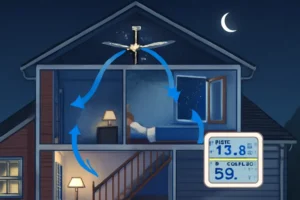
A whole-house fan is basically a giant exhaust fan mounted in your ceiling. You open a few windows, turn it on, and it pulls outdoor air through your living spaces and up into the attic, pushing the hot attic air outside through vents. When the outdoor air is cool and dry, it works great. When the outdoor air is cool and humid, you just dragged buckets of invisible water through your house.
Why does that matter? Because moisture is sneaky. It soaks into drywall paper, wood framing, carpet pad, and fiberglass like they’re bar towels. Then it hits cold surfaces in your home and condenses. In humid climates, those cold surfaces are everywhere: metal ductwork, bathroom vents, the backside of attic sheathing that sees night sky radiation, and that closet exterior wall with a supply duct in it. Once those surfaces stay damp long enough, mold spores stop freeloading and start blooming.
Dew Point Vs RH: What Actually Matters
Relative humidity is the percentage of moisture the air is holding compared to what it could hold at that temperature. It swings around as temperature changes, which is why air at 75 degrees and 50 percent RH can jump to 65 percent RH if you cool it to 70. Dew point is the actual moisture content expressed as the temperature at which air will hit 100 percent RH and start condensing on a surface. Dew point is the grown-up in the room for condensation risk. If the air’s dew point is above the temperature of your surfaces, moisture will condense on those surfaces. It is that simple.
In homes with air conditioning, a lot of surfaces hang out near 60 to 70 degrees at night. Supply registers and ducts can run cooler than that when the AC cycles. Building science research in humid regions often uses about 55 degrees Fahrenheit as a target for conditioning incoming air specifically to avoid wetting surfaces. Push air with a dew point above that into a cool house, and you’re asking for wet insulation and moldy attic sheathing. Keep indoor RH under 60 percent and aim for 40 to 50 percent if you can. That range significantly cuts mold risk in living spaces and attic structures alike.
| Outdoor Dew Point | Night Fan Risk In Humid Climates |
|---|---|
| 55°F or lower | Generally safe if house surfaces are not colder than low 60s |
| 56-60°F | Caution zone – limit runtime and monitor indoor RH |
| Above 60°F | High risk – expect moisture loading and potential condensation |
Bottom line: dew point monitoring beats guessing. If you run a whole-house fan with outdoor dew points in the mid 60s, you are importing swamp air. It does not matter that it feels cooler on your skin.
Where Does The Moisture Go?
Air moves from high to low pressure. Your whole-house fan drops the pressure inside your living area and attic. Outdoor air rushes in through open windows, slides across walls and floors, picks up a little extra moisture from indoor activities, then rockets into your attic. The attic sheathing often cools quickly under a clear night sky. If that sheathing is cooler than the dew point of the incoming air, condensation forms. The same goes for cold ducts, bath fans, and the top side of drywall near attic penetrations.
Those damp surfaces can hover at a surface RH above 70 percent, which is a known trigger zone for biological growth on building materials. If the attic is poorly ventilated or the airflow pathway is messed up by blocked soffits, that moisture hangs around longer. Multiply this routine a few nights a week all summer. You are not airing out your house. You are slow-cooking mold spores.
Whole-House Fan Pitfalls
There are three common traps we see. First, running the fan just because the air feels cool. In humid climates, a cool breeze can still carry a lot of water. Second, blasting the fan late at night after the AC has cooled the house. That pulls wet air over cold registers and ducts, which is like handing mold a Capri Sun. Third, failing to provide a clean path to vent the attic. If soffit and ridge vents are blocked or undersized, your attic becomes a moisture mailbox with no outgoing pickup.
Others miss the latent load tax. Your AC is a moisture bouncer. It dehumidifies while it cools. If you dump humid air into the house at 2 a.m., your AC will spend the following day working longer to yank that moisture back out. That means clammy mornings, longer runtimes, and higher bills. Any comfort you gained overnight can be vaporized by noon.
Signs Your Fan Is Seeding Mold
If you wake up to foggy windows, a musty whiff in closets, or a light sheen on duct boots, your whole-house fan is likely part of the problem. Watch your indoor humidity. If RH spikes above 60 percent overnight after running the fan, that is a red flag. Check the attic sheathing for darkening or fuzzy patches near the fan penetration or around the north side of the roof deck. Peek at the back wall of your smallest closet. It is often the canary for hidden moisture. If your AC struggles to knock humidity back down the next day, that is the invisible bill for last night’s free cooling.
Dew Point Monitoring That Works
You do not need a lab. You need numbers before you hit the switch. Your local weather app lists dew point. A cheap indoor-outdoor sensor can show indoor RH and temperature so you can track whether your nighttime move is helping or hurting. If you want to get fancy, smart-home sensors will log dew point and humidity over time and can automate a plug-in fan timer so it never runs when the outdoor dew point is above your set point. We like making tech carry the load, and sensor-based alerts are a simple way to keep your home out of the danger zone.
If you want a quick rule: set your personal no-go at an outdoor dew point of 60 degrees. If it is 58 to 60, limit runtime. Below 55 is the sweet spot for most humid regions. Pair that with an indoor target of 40 to 50 percent RH and your risk drops fast. For more guidance on humidity ranges and prevention basics, see Indoor Humidity And Mold Prevention In Your Home.
Safer Night Ventilation Tactics
Start by making sure the air has somewhere to go. Open a couple of windows on the coolest, shadiest side of the house and verify your attic ventilation is not choked off. Soffit vents should be clear, and your attic should have a defined exhaust path at the ridge or roof vents. Next, set a hard time limit. The first 15 to 30 minutes of fan runtime moves the most heat out of the attic without saturating the house with moisture. Then stop and reassess. Check indoor RH. If it is rising, call it a night.
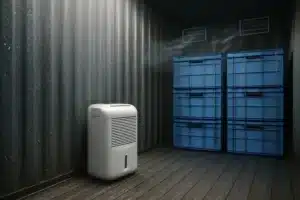
A light pre-dry can help. Run the AC for a cycle before you use the fan so the house is not already damp. Then run the fan in the early evening instead of late at night, when roof sheathing and ducts are not as cold. If your climate is a humidity roller coaster, consider an energy recovery ventilator tied to your HVAC. An ERV will not dehumidify like a dedicated dehumidifier, but it balances some moisture across the air streams and is far kinder than a big fan that blasts in raw outdoor air. In sticky seasons, a portable or whole-home dehumidifier is often the hero you actually need.
Quick Evening Checklist
- Check outdoor dew point. If it is above 60°F, skip the fan.
- Confirm a clear airflow path: a couple of windows open and attic vents unblocked.
- Set a timer for 15-30 minutes. Short bursts beat marathon runs.
- Recheck indoor RH after shutdown. If it jumped above 55-60 percent, do not rerun.
- Close windows before you sleep if dew point is climbing overnight.
What We See In The Field
We are in and out of attics every week. The pattern is painfully consistent. A homeowner uses a whole-house fan on muggy nights because the forecast says 72 degrees and breezy. The dew point is also 72. Within a few weeks we find gray and black staining on the north-facing roof deck, rusty nail tips, and matting in the insulation near can lights. Closets on exterior walls smell earthy and show speckling on the top shelf. The AC is running longer each afternoon trying to claw RH back under control. It is not a roof leak. It is night ventilation pulling in too much moisture.
Our fix is not just to scrub and go. We clean and treat the mold in the attic, correct blocked soffits or weak exhaust venting, air-seal the ceiling plane so attic and house pressures are less crazy during fan use, and then set dew point monitoring with runtime limits. When those steps are in place, the staining stops progressing, the closet smell fades, and the house actually feels drier the next morning instead of swampy. If you want to see how we approach attic-specific problems, here is our page on Attic Mold Removal.
When A Whole-House Fan Makes Sense
If you live in a high desert or you see summer nights with dew points in the 40s, whole-house fans can be fantastic. Even in humid regions, shoulder seasons can deliver safe dew points. The trick is to treat the fan like a tool, not a lifestyle. Use it when dew point is low, run it early in the evening, and give the air a clean path through the house and out of the attic. If the air is muggy, skip it and use your AC or a dehumidifier. Comfort without mold is the goal.
FAQ
Should I Run A Whole-House Fan With The AC On?
No. You are fighting yourself. The fan pulls in outdoor humidity while the AC tries to remove it. You pay for both and get clammy air as a bonus. If you plan to use the fan, shut the AC off temporarily, set a short timer, and confirm the outdoor dew point is safe first.
What Dew Point Is Actually Safe?
Below 55°F is generally safe for most humid climates. Between 56 and 60 is a caution zone that calls for short run times and monitoring. Above 60 is where we see the most problems. Building science work in the humid South often pegs 55°F dew point conditioning as a target for incoming air to avoid wetting surfaces.
Why Is Dew Point Better Than Relative Humidity?
Dew point does not bounce around when the temperature changes. It tells you how much water is truly in the air. If the dew point of incoming air is higher than your interior surface temperatures, condensation risk is real, regardless of relative humidity at the window you opened.
Will An ERV Or HRV Fix This?
An ERV can temper moisture transfer and is friendlier than blasting raw outdoor air, but it will not dehumidify like dedicated equipment. In very humid climates, a dehumidifier or well-sized AC system handling latent load is the right move for moisture control.
Why Does Attic Mold Show Up First?
The attic takes the brunt of the moisture because the whole-house fan shoves air through that space. Roof decks can get cooler than outdoor air at night, which boosts condensation risk. Nail tips can rust, insulation can dampen, and sheathing can stain while your living room still looks fine.
Is A Window Fan Safer Than A Whole-House Fan?
It can be, because it moves less air and often has a shorter path to the outdoors. But you still have the same moisture math. If outside dew point is high, even a small fan can load your home with water vapor. Check the dew point before you turn it on.
Can Smart Sensors Automate This For Me?
Yes. A simple setup can read outdoor dew point and indoor RH, then allow the fan to run only under safe conditions. Pair that with a timer and you have a reliable safety net. We cover sensor options here: Smart Home Solutions For Mold Prevention.
Tools And Thresholds
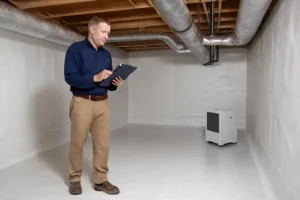
You do not need to rebuild your house to avoid whole-house fan pitfalls. You need a thermometer-hygrometer combo for inside, a weather source for outdoor dew point, and a $10 timer. Keep indoor RH between 40 and 50 percent if possible and under 60 percent at all times. Avoid running the fan when the outdoor dew point is above 60 degrees. If you notice persistent RH above 60 percent indoors, bring in a dehumidifier and look for hidden moisture sources like bathroom fan backdrafts, attic bypasses around lights, or leaky duct boots. For more prevention tips and thresholds, see our Indoor Humidity guide.
If you want to nerd out on the science, TrueSight Environmental summarizes why keeping indoor RH under 60 percent and targeting 40 to 50 percent is smart in hot-humid regions, tying it back to dew point and condensation risk. You can read their take here: Humidity Thresholds. Building Science Corporation’s research on humidity control in the South also explains why air should be conditioned to about a 55°F dew point to avoid wetting surfaces and how surface RH above 70 percent invites biological growth. That paper is here: Humidity Control In The Humid South.
What We Recommend
As a restoration crew that scrubs out attic mold way more than we would like, we keep our advice practical. In humid climates, treat your whole-house fan like a part-time helper, not the star. Use dew point monitoring every time. Set a hard stop with a timer. Verify your attic ventilation is open and balanced. If your home’s indoor RH lives above 55 to 60 percent, prioritize dehumidification and HVAC service before you start dragging in outdoor air. You will save yourself a stack of headaches and keep the fungus among us from setting up shop.
If your attic or closets already smell off or you see discoloration on sheathing, do not wait it out. Get a qualified inspection, address moisture sources, correct ventilation, and remediate what is growing. We detail our attic approach here: Attic Mold Removal: Your Solution Starts Here. If you want to get proactive with sensors and automation so you never have to guess again, start with Smart Home Solutions For Mold Prevention. Cool nights are great. Cool, dry nights are better. Your house knows the difference, and so does mold.