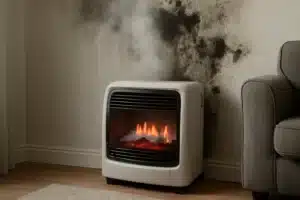
That cozy blue flame from Vent-Free Gas Heaters is not just heat. It is also a moisture factory. Burn gas inside without a flue and you pump water vapor straight into your living room. In a tight home on a cold night, that extra moisture hunts for cold glass, chilly exterior walls, and dead-air corners. Those damp spots are mold’s favorite buffet. Here is how the humidity spike happens, where you will see trouble first, and how to fix it before your windows and closets start growing fuzzy sweaters.
What Vent-Free Heaters Put In Your Air
Burning natural gas or propane indoors creates carbon dioxide and water. A lot of water. The Maine Indoor Air Quality Council notes that every pound of fuel burned releases roughly two pounds of water into indoor air. If the home is sealed up tight, that moisture has no exit and your relative humidity climbs. Studies of vent-free heaters found they can push indoor RH up substantially depending on climate, runtime, and airtightness, sometimes landing in the mold-friendly zone near or above 60 percent. That is the threshold where wet surfaces stay wet long enough for mold to take hold.
Here is the short physics lesson. Warm air holds more moisture. When that warm, humid air hits a cold surface, the air at the surface cools and drops moisture as liquid water. That is condensation. Keep feeding the room with water vapor and every cold surface turns into a drip pad. Windows cloud up. Aluminum frames bead. Exterior corners darken. Closets and spots behind big furniture stay clammy because the air is still and the wall is cold.
Authoritative guidance from the EPA warns that unvented combustion appliances add large amounts of water vapor and can raise indoor pollutants like nitrogen dioxide. That is another reason to manage runtime and ventilation while you manage moisture.
Where Mold Starts: Condensation Hotspots
You will not always see the first growth in the middle of a wall. Mold starts in microclimates where air barely moves and surfaces run cold. We see the same pattern over and over:
Windows and frames. Glass and metal are cold magnets. Elevated RH from a vent-free unit means fogged panes in the evening and wet sills by morning. That moisture wicks into paint, trim, and drywall.
Behind furniture on exterior walls. Shove a couch tight to a north-facing wall and you trap a pocket of humid air against a cold surface. All Nation Restoration recommends keeping 1 to 2 inches of clearance at minimum, and 6 to 12 inches if the wall is chronically cold.
Closets on outside walls. Packed clothes block airflow. The wall stays colder than the room, so moisture condenses on the back wall and on the backs of garments. That is why closet mold often smells musty first.
Cold corners and baseboards. Thermal bridging and poor insulation lower surface temps. Once RH crosses about 60 percent, those surfaces can stay damp long enough for mold to colonize.
Why Mold Follows The Moisture
Mold does not need a flood. Give it a food source like paper facing on drywall or dust on paint, a cool surface, and 24 to 48 hours of dampness and it can get started. Elevated RH from a vent-free heater turns minor cold spots into chronic wet spots. Repeat that cycle night after night and you get staining, peeling paint, swollen trim, and eventually soft drywall. In HVAC systems, the same high humidity encourages growth on coils and in ducts, which can spread spores and odors through the whole house.
Field Notes From Real Homes
Example 1: The foggy-window bungalow. A homeowner ran a vent-free fireplace six hours nightly. Windows fogged by 8 p.m., and by January the lower sashes had black spotting. RH logging showed 65 to 70 percent during runtimes. We added a dehumidifier sized for the main floor, cracked a nearby window an inch while the unit ran, and trained the homeowner to keep RH under 50 percent. Spotting stopped spreading and maintenance cleaning solved the rest.
Example 2: The closet surprise. A bedroom with a ventless wall heater had a packed closet on an exterior wall. Clothes smelled earthy and the back drywall dotted gray-green. RH was 58 percent at 70 degrees in the room, but the closet wall measured 55 degrees. That mismatch drove condensation. We spaced hangers, added a louvered door, pulled furniture 6 inches from the exterior wall, and used a small desiccant dehumidifier in the closet during cold snaps. No recurrence after insulation touch-ups.
Fixes That Actually Work
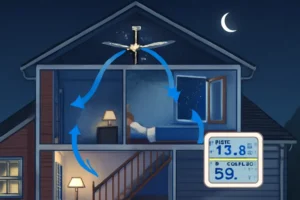
Give the moisture a way out. When you run a vent-free unit, crack a nearby window or door and run a mechanical exhaust if you have one. Kitchen and bath fans should run during and for 20 to 30 minutes after steamy activities like cooking and showers.
Dehumidify the space. Keep indoor RH in the 35 to 50 percent range. A quality portable dehumidifier in the same room as the heater is a simple answer. For whole-house situations, a ducted unit paired with your HVAC can hold the line during long cold spells.
Watch the numbers, not the guesswork. Place hygrometers in rooms with vent-free units, near windows, and in closets on exterior walls. Check morning and evening. If RH peaks above 55 percent regularly, adjust runtime, add ventilation, or upsize dehumidification.
Warm up cold surfaces. Better insulation, interior storm panels on single-pane windows, and air sealing around frames raise surface temperatures so condensation is less likely. Even a clear interior window panel can make a dramatic difference in winter.
Keep air moving along exterior walls. Pull furniture a couple inches off exterior walls and more if the wall is habitually cold. Avoid wall-to-wall shelving on outside walls. In closets, avoid overpacking so air can circulate.
Limit how long you run it. Vent-free units are space heaters, not primary heat for all-day use. Follow the manufacturer’s guidance and local codes. Only use models with an Oxygen Depletion Sensor and never use them while you sleep.
Cold Spots And Quick Fixes
| Condensation Hotspot | What You See | First Fix To Try |
|---|---|---|
| Windows and metal frames | Fogging, water beads, sill staining | Crack a window during runtime, add interior storm panel, run dehumidifier |
| Behind large furniture | Dark spotting at baseboard line, musty odor | Pull furniture 2 to 6 inches off the wall, add gentle airflow |
| Closets on exterior walls | Musty clothes, speckles on drywall | Reduce clutter, louvered door, small dehumidifier during cold snaps |
| Exterior corners | Gray or brown shading, cooler wall temps | Insulate or air seal, maintain RH under 50 percent |
Already Seeing Mold?
Small and recent. If the total area is under about 10 square feet and the material is non-porous or semi-porous, clean with a detergent solution or an EPA-registered mold cleaner. Rinse, dry fast, and keep RH below 50 percent. Toss visibly colonized cardboard or fiberboard. Watch the spot for a week of steady dry conditions.
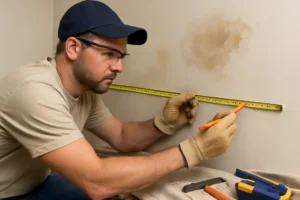
Widespread or recurring. Call a professional mold remediation company. We use moisture meters and infrared imaging to find hidden wet zones, set up containment and filtration, and fix the moisture source so you are not right back where you started. If your vent-free heater is driving the problem, we will show you a plan that pairs runtime limits, ventilation, and dehumidification with insulation upgrades.
Safer Use Of Vent-Free Units
Use only code-compliant heaters with an Oxygen Depletion Sensor. Never run them while sleeping. Do not install them in small bedrooms, bathrooms, or in any area banned by your local code. Keep a working carbon monoxide alarm on each level. Treat the unit like what it is, a space heater that needs fresh air and RH control. If you see persistent condensation or smell mustiness, cut the runtime and add ventilation and dehumidification right away.
FAQ: Common Questions
How much water does a vent-free heater add?
The combustion process is humidification in disguise. Roughly two pounds of water vapor are produced for every pound of fuel burned. In a tight home, that moisture can push RH past 60 percent on cold nights without ventilation or dehumidification.
What RH should I target in winter?
Keep indoor RH between about 35 and 50 percent. If you routinely see 55 to 60 percent, expect window condensation and cold-corner dampness to show up. Mold needs a wet surface for a day or two to get going.
Why are my windows wet but my thermostat says 70?
Thermostats measure air temperature, not surface temperature or RH. Glass and metal run colder than room air, so humid air from your heater reaches its dew point at the surface and turns into liquid water.
Can I fix this with better insulation alone?
Insulation raises surface temperatures and helps a lot, but it does not remove moisture from air. Pair envelope improvements with fresh air and dehumidification for reliable control.
Should I switch to a vented heater?
Vented heaters move combustion by-products and water vapor outside, which makes humidity control much easier. If you rely on a vent-free unit, commit to RH monitoring, managed runtime, and ventilation during use.
Helpful Links
Window Condensation And Thermal Bridging | Furniture Wall Clearance Tips | EPA Guide To Indoor Air Quality | Maine Indoor Air: Unvented Appliances | Research On Vent-Free Heaters And Humidity