If your blinds are squeezed tighter than your skinny jeans after Thanksgiving, you might be growing a mold farm on your sills. Closed-blinds condensation is real. Tightly shut shades trap humid room air against cold glass, that pocket of air hits dew point, and boom, your sash and sill get wet enough for mold to throw a party. The fix is not ripping out your windows. It is about stopping that mini sauna behind the blinds with smart spacing, timed ventilation, targeted dehumidification, and a longer-term helper like low-e window film that keeps interior glass warmer.
What Is A Window-Blind Microclimate?
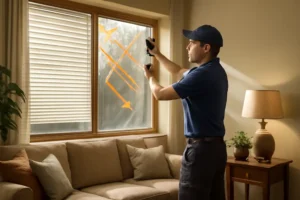
When blinds or shades sit flush to the glass, they create a dead-air pocket that blocks room air from washing over the glass. In winter or during big temperature swings, the glass and frame get cold. The humid air trapped behind the blind cools until it hits dew point, then water beads across the glass and drips to the lower sash and sill. Repeat this cycle long enough and you get swollen trim, peeling paint, musty odors, and spotty mold on the sill. All Nation Restoration breaks down how interior glass drops below dew point when circulation is cut off, and why cracking the blinds slightly helps the room air warm that surface just enough to stop the sweating. See their guide: Window Condensation vs Thermal Bridging.
How Mold Shows Up On Sills
Closed-blinds condensation usually paints the same picture. You open the blinds in the morning and find water beads at the lower corners, a damp sash, and dark specks crawling along the sill and the lower jamb. If you have wood windows, the stain runs with the grain and the putty-soft spots show up where water sat overnight. Vinyl frames will show mildew in the tracks and on weatherstripping. ANR’s Hidden Mold Check flags windows and sills as classic micro-mold zones when humidity and cold surfaces team up.
Fast Fixes You Can Do Today
Start by giving the air a path. Add tiny spacing clips or bumpers so the blind stands off the glass by about a quarter inch. Cracking the slats 10 to 20 degrees lets warm room air wash the pane. If you have drapes, keep them off the wall a finger-width and avoid pressing fabric right against the frame. ANR’s advice on keeping furniture off exterior walls applies here too: a little clearance keeps pockets from going clammy and moldy. See: Furniture Wall Clearance Stops Mold.
Vent the moisture you make. Run bath fans during showers and at least 20 minutes after. Use your kitchen hood whenever you cook, especially when boiling or simmering. If you use an unvented gas heater, know that it dumps water vapor straight into your air. ANR explains why those heaters spike humidity and mold risk: Why Vent-Free Gas Heaters Breed Mold.
Control indoor humidity. Set a dehumidifier so living areas hang around 35 to 45 percent RH most days. When it gets icy outside, drop to 30 to 35 percent so the glass stays above dew point. If you wake up to wet panes, treat it like a spill. Wipe the water and pop the blinds open for air movement so the frame and sill dry.
Keep drainage paths clear. Many windows have weep holes that let incidental water escape. If those are stuffed with debris, moisture lingers where you do not want it. ANR covers why clear weeps and proper flashing matter: Stop Flashing Failure.
Low-E Window Film Helps
Low-e window film is a thin retrofit coating that lowers the glass surface’s emissivity. Translation for non-nerds: it reflects a chunk of your room’s radiant heat back inside instead of letting the glass radiate that heat to the outdoors. That keeps the interior pane a bit warmer in cold weather. Warmer interior glass means the air behind your blinds is less likely to hit dew point. The U.S. General Services Administration found low-e film raises interior glass temperatures and cuts heat loss, which trims condensation potential in winter installations. See the GSA findings: Low-E Window Film Findings. For a plain-English explainer on how low-e coatings reflect long-wave heat, GlassAdvisor’s guide is solid: Low-E Glass Coatings Guide.
Low-e film shines on older single-pane and early double-pane windows that feel chilly every winter. It will not fix a busted seal in an insulated glass unit, rotted frames, or major thermal bridging through metal. You might also see more exterior condensation on cold mornings because the inner surface stays warmer and the outer surface stays cooler. That is a quirk, not a failure, and it usually dries fast. For trade-offs in high-performance packages, this piece is worth a read: Condensation Risk In High-Performance Low-E Packages.
How To Choose The Right Film
Look for spectrally selective low-e films that keep high visible light while trimming infrared heat loss in winter. Check manufacturer guidelines for glass type compatibility and size limits. If your windows already have a factory low-e coating, talk to a pro film installer about stack-compatibility so you do not void warranties. Placement matters on multi-pane units because coatings are usually on interior faces of the glass sandwich. Ask about winter performance, condensation resistance, and whether the film is safe for tempered or laminated panes.
Set Your Humidity Targets
If your glass keeps getting clammy behind closed shades, measure RH with a cheap digital hygrometer. Aim for 35 to 45 percent when outdoor temps are moderate, and 30 to 35 percent in deep cold. Tackle moisture at the source: cover pots, use lids, run bath fans, dry laundry outside the living space, and keep the HVAC supply registers open so air mixing actually happens at the windows. ANR’s condensation guide backs those numbers and habits: Window Condensation vs Thermal Bridging.
Stack Solutions For Real Results
The winning combo looks like this: small spacing clips so the blind never kisses the glass, slats cracked a touch at night, a dehumidifier set correctly, exhaust fans on timers, and a low-e window film upgrade on the worst offenders. If your home is drafty or the wall around the window is under-insulated, tighten that up too. Repeat wetting will always undo a single silver bullet, so stack fixes and change a couple of daily habits.
| Fix | What It Changes | Where It Helps Most |
|---|---|---|
| Spacing clips or cracked slats | Restores air wash over glass | Any window with tight blinds or shades |
| Dehumidifier and fan timers | Lowers RH during peak moisture loads | Bedrooms, baths, kitchens |
| Low-e window film | Raises interior glass temp in cold weather | Older single-pane or chilly double-pane units |
When To Call A Pro
If the sill stays wet most mornings, paint keeps blistering, or you are cleaning the same mold spots every week, it is time to bring in help. Persistent moisture can run into the wall cavity and feed hidden mold. Small areas on non-porous surfaces can often be cleaned with detergent and water, then dried within 24 hours. If the stained area is larger, on porous trim, or you smell a steady musty odor, schedule an inspection. ANR covers safe cleanup basics and next steps here: Window Condensation vs Thermal Bridging.
FAQ
Will Opening The Blinds In The Morning Help?
Yes. Opening them lets warm room air wash the glass and evaporate any overnight moisture. It is a simple daily habit that breaks the closed-blinds condensation cycle.
Do I Still Need Low-E Film If I Lower Humidity?
Sometimes yes. In cold snaps, even 35 percent RH can condense on very cold glass. Low-e film nudges the glass temperature up, which widens your safety margin so normal humidity does not turn into window rain.
Can Low-E Film Be Used On Existing Low-E Windows?
Often, but not always. You need a film that plays nicely with the existing coating and glass type. A qualified installer will check manufacturer charts to avoid thermal stress or warranty conflicts. Start with resources like GlassAdvisor’s low-e guide and ask your installer for documentation.
Why Do My Windows Sweat More Behind Drapes Than Blinds?
Heavy drapes can seal tighter to the wall and glass, creating a larger, colder pocket with less airflow than slatted blinds. A small stand-off, a magnetic return that is not airtight, or opening the drape bottom at night can help.
What If Water Is Leaking In, Not Just Condensing?
Check for failed glazing, bad weatherstripping, or clogged weep holes. If wind-driven rain shows up inside the frame or you see staining above the window, you may have a flashing or siding issue. ANR’s article on clearing weeps and stopping flashing failure is a good start: Stop Flashing Failure.
Ready For A Mold-Resistant Window Routine?
Space the blinds, set the fans, dial the dehumidifier, and add low-e window film to the worst windows. If you keep finding puddles or spots on the sill, we will track down the moisture source and get the mold out fast. Reach out for an assessment, especially if you have repeating growth, soft trim, or a stubborn musty odor around the windows.