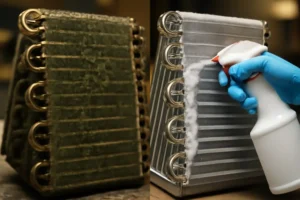
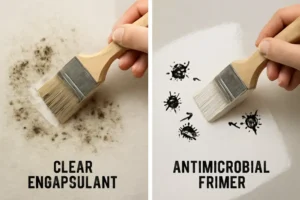
If you’ve ever fired up your window AC in June and got smacked in the face by a smell that could only be described as gym-sock-in-a-swamp, you’ve already met your enemy: evaporator coil biofilm. That slimy gunk pairs up with a grimy condensate pan to turn your unit into a tiny mold factory. The fix isn’t black magic. It’s smart cleaning, better condensate management, and seasonal habits that keep moisture from hanging around long enough to host a mold party. Here’s how to shut it down so you don’t blow spores back into your room next summer.
The Gross Truth About Coil Biofilm
Evaporator coil biofilm is a gluey mix of dust, pollen, skin cells, and microorganisms that settles on the cold fins of your indoor coil. Cold plus organic debris plus constant condensation is pretty much the mold equivalent of a starter home with a fenced yard. The coil is supposed to shed water into the pan, but a fuzzy, slimy coating traps moisture on the fins and in the nooks. That does two nasty things at once: it stunts heat transfer so the AC works harder and it supplies a steady wet buffet for mold and bacteria. The stink you smell at startup is the building’s HVAC equivalent of morning breath, and biofilm is usually the culprit.
You’ll spot it even before you see it. The air feels a little damp and clammy even when the thermostat says you’re cool. The unit runs longer for the same temperature drop. The filter looks grime-glazed a week after you washed it. Sometimes you’ll get light frosting on the coil face or the connecting tubes. That’s the coil getting colder than it should because biofilm and restricted airflow slow warm air across the fins. When the ice melts, it dumps extra water into the pan and can overtop any tiny overflow notches. What grows in that standing puddle ends up in your airstream next time the fan kicks on.
Condensate Pan Hygiene Basics
Condensate pan hygiene sounds like the world’s dullest dinner topic, but it’s the heart of mold control in a window unit. Here’s what’s going on inside the box. Warm room air crosses the indoor coil. The coil pulls heat out, water condenses, and drips into a small interior pan or channel. That water moves to the rear base pan, where many window ACs intentionally hold a shallow pool. The outdoor fan has a slinger ring that picks up that water and flings it across the hot condenser coil to improve efficiency. A little water in the back is normal during operation.
The problem isn’t that water exists. The problem is water that sits still and never dries. If the unit isn’t tilted slightly to the outside, moisture can backflow into the indoor side and keep the evaporator assembly wet long after the compressor stops. If debris blocks weep slots or corners of the base pan, you get a permanent birdbath. Add dust, add a summer of on-off cycles, and you get biofilm city. Good condensate pan hygiene means you prevent sludge buildup, make sure the pan drains to the rear like it’s supposed to, and you never trap wetness in the unit during storage.
Filters And Airflow That Don’t Sabotage You
Most window ACs use a thin washable mesh filter. It’s not a HEPA miracle and that’s fine. What it is, is the first line of defense against the crud that feeds biofilm. If you run pets, city dust, wildfire haze, or just life, clean that filter monthly in season. Hot water and a drop of dish detergent is perfect. Rinse until clear and dry it fully before reinstalling. If it’s torn or sagging, replace it with a factory-fit media; those third party cut-to-fit foam pads often restrict airflow too much, and low airflow sends coil temperature into the freeze zone.
When filters choke, airflow falls. The coil gets colder and starts icing along the lower fins or the distributor tubes. Icing looks like a party trick, but it’s just moisture with nowhere to go. When that ice melts during the off cycle, it dumps a surge into the pan. The pan was designed for steady drips, not meltwater waterfalls. Overflow, odors, and pan rust are the usual endgame. Keep airflow healthy and the coil stays wet only for as long as it takes to drain. That’s the foundation of both efficiency and mold prevention.
Step-By-Step Cleaning That Actually Works
Roll up your sleeves. The best time to do a deep clean is right before cooling season, with a mid season touchup if you run heavy hours or you’re in a dusty zone. Always unplug the unit or shut off the breaker. You’re about to rinse and wipe things that carry power when live.
Start by pulling the front grille and removing the filter. Vacuum the face of the coil with a brush attachment to lift loose lint without mashing the fins. If you see flattened fins from previous heroics, a fin comb sized to your coil pitch brings back airflow you didn’t know you were missing.
Use a coil-safe foaming cleaner meant for evaporators. These no-rinse products foam into the fin pack, loosen biofilm, and break oils that make dust stick. Aim the can at a 45-degree angle so runoff heads into the pan, not your lap. Give it the dwell time on the label. A soft nylon brush can help on stubborn corners, but stay gentle. You’re not scrubbing a skillet. Avoid pressure washers or any blast that bows fins; bent fins block airflow and you’ll be right back to icing and puddles.
Rinse only if the product calls for it, and only enough to move loosened debris into the pan. On a removable chassis, take the unit out of the sleeve and work outside where splatter is a non issue. If the unit doesn’t pull easily, keep it in place and control your rinse. You want water flowing through the coil, not into the control board.
Now tackle the condensate pan. The indoor pan is usually a narrow channel leading to the rear base. Wipe it with a microfiber cloth and a mild detergent solution. If you smell a sour funk, that’s typically bacterial film. A coil-safe cleaner or a 1:1 vinegar and water solution breaks it down. Skip bleach on aluminum or galvanized metal. It can pit the metal, wreck paint, and the fumes are miserable in small spaces.
Move to the base pan at the back. Scoop out leaves, seeds, and sludge. Clean out the corners where sediment likes to cake up. You’ll usually find small weep notches or slots that let water shift around the pan. Those should be open, not drilled bigger. Do not punch new drain holes in the base pan. Many window ACs rely on that water to cool the condenser. If you permanently drain it, you’ll lose efficiency and can overheat the compressor on brutal days. The goal is clean water movement, not a bone-dry base during operation.
Finish by cleaning the blower wheel and the inner shroud. Dust here carries straight into your room. A damp cloth and a light spritz of coil cleaner work well. Rotate the blower gently by hand as you wipe. Again, power stays off until everything is dry.
Let the unit drip-dry for an hour. If your model has a fan-only mode, run the fan for 10 to 15 minutes once the coil is room temperature to help dry the chamber. Do not leave the fan running indefinitely during normal cooling cycles. You don’t want to re-evaporate water off the coil and shoot humidity back into the room. The big fan-only dry-out is for post-cleaning and shutdown, not daily operation.
Stopping Re-Evap And Musty Recirculation
Re-evaporation is the silent partner to biofilm. Here’s the plot. The compressor shuts off, the coil is wet, and if the fan keeps pushing air across it, that moisture jumps back into the airstream and into your room. You might think you’re saving energy with a circulate setting, but what you smell is recooked humidity. On window units that offer a fan-only or continuous fan option, use Auto so the fan stops when the compressor does. If your unit’s energy-saver mode samples the air by kicking the fan on every few minutes, watch what your space humidity does. If the room gets muggy, switch to a standard cool mode and let the compressor and coil run long enough for steady condensate to drain to the base pan.
Target indoor relative humidity in the 30 to 50 percent range. That’s the mold dead zone for most homes. If your unit tends to short-cycle in shoulder seasons, raise the setpoint a degree or two so runs last longer and condensate actually moves to the pan instead of hanging on the coil. If you use a smart plug or a portable thermostat to automate cycles, avoid fan post-runs that push air across a wet coil. The theme here is simple: cold coil plus real airflow during the cooling cycle, then off. Misty coil after-runs are canceled.
Storage For Seasonal Window Units
Seasonal units get their worst mold growth in the offseason. That’s when dust settles, a tablespoon of leftover water stays tucked under a bracket, and the whole thing lives in a humid garage or a rainy window for eight months. Your off-season routine decides if you inhale spores next July.
Once outdoor temps drop for good, do a final cleaning of the evaporator coil and the condensate pan. Run the unit on fan-only for 10 to 15 minutes after the coil reaches room temperature so you’re not misting your living room. Unplug it, pop the front cover, and let the inside air-dry completely. If the unit is removable, store it in a dry location, not the damp side of the basement next to the water heater. Keep it upright so oil in the compressor stays put. Wrap the unit loosely in a breathable cover or a fitted AC cover with venting. A trash bag isn’t a cover. It traps moisture and gives mold exactly the greenhouse it wants.
If you leave the unit in the window year-round, seal the exterior and interior with insulated panels or a snug winter cover that keeps rain and insects out without locking in wetness. I like to pull the mesh filter and store it indoors after washing. It takes 30 seconds to reinstall next spring and it won’t spend the winter wicking attic funk into the coil face.
Quick Troubleshooting: Smell, Drips, Icing
Let’s solve the three classics with real examples we see every summer. Your unit smells like a wet dog every startup for 30 seconds. That’s usually evaporator coil biofilm and a damp blower wheel. A deep coil clean plus pan wipeout plus a short fan-only dry after cleaning knocks it down. If it lingers, your insulation behind the coil may be colonized. Some units let you replace that foam. When it’s drenched in funk, it’s cheaper to swap the unit than to play whack-a-mole with spores.
Water drips indoors off the front face during long runs. Nine times out of ten the unit isn’t tilted to the outside. You want a slight outward tilt so condensate travels to the rear base pan. Level-plus or tilt-in is a guaranteed indoor rainstorm. Use a level and shim the back of the sleeve. Also check that the indoor pan channel isn’t clogged with lint. Even a thin biofilm ridge can dam water and reroute it forward.
The coil ices up in the evening or in low speed. That can be low airflow, a too-clean filter that’s actually too restrictive, or simply a unit oversized for the room that short-cycles and never gets a good heat load. Clean the filter. Verify the blower wheel isn’t matted with fuzz. Check that curtains or furniture aren’t blocking the intake or discharge. If icing persists with clean hardware and clear flow, bump the fan speed and raise the setpoint a degree or two so the coil sees warmer air. The goal is steady, non-icing operation that keeps condensate moving to the pan, not freezing on the fins.
Symptoms, Causes, Fixes
| Symptom | Likely Cause | What To Do |
|---|---|---|
| Musty burst at startup | Evaporator coil biofilm and damp blower | Foam-clean coil, wipe pan, clean blower, run brief fan-only dry after cleaning |
| Indoor dripping water | Unit not tilted out, blocked pan channel | Shim rear of sleeve, clear pan channel and weep slots, clean base pan |
| Recurring coil icing | Dirty filter, bent fins, low airflow, oversizing | Wash or replace filter, fin-comb, increase fan speed, improve intake clearance |
| Persistent swamp smell | Pan sludge, wet insulation, re-evap cycles | Deep clean, replace wet foam if possible, set fan to Auto, avoid circulate sampling |
| Weak cooling, long run times | Biofilm on coil reducing heat transfer | No-rinse coil cleaner, soft brush, restore fin straightness, verify airflow |
Do You Need Chemicals Or Bleach?
You don’t need an arsenal of harsh chemicals to keep a window AC clean. Stick with coil-safe cleaners labeled for evaporators. They’re designed for aluminum fins and the resins inside the cabinet. Mild dish detergent in warm water handles the pan and plastic parts. A 1:1 vinegar and water mix is useful for light biofilm and odor control on metal or plastic, but rinse lightly if you overdo it so your room doesn’t smell like salad. For stubborn microbial film in hard-to-reach corners, 3 percent hydrogen peroxide on a cloth can help. Wear gloves and keep it off electronics.
Skip straight bleach on the coil or pan. Chlorine bleach can corrode aluminum and plated steel, wreck paint, and it off gasses in exactly the confined air path your family breathes. It won’t penetrate biofilm as well as a surfactant-based coil cleaner anyway. If you want ongoing pan hygiene, there are pan-treatment tablets designed for HVAC use that slowly release surfactants and biostats. Many window units don’t have a large standing indoor pan, so use them sparingly and only where water actually sits, not on the indoor channel. Always follow the unit manufacturer’s instructions before introducing any additive. When in doubt, simple cleaning done regularly beats chemical heroics done once.
Pre-Season Prep That Pays Off
When spring hits, don’t just jam the unit back in the window and hope last year’s funk magically matured into a pleasant oak aroma. Start with a quick inspection. Look for rodent evidence in the sleeve, cracked plastic on the shroud, and anything that looks like last season’s water line in the base pan. Clean the filter, the coil face, and the pan before first start. Verify the outward tilt with a level and tighten mounting hardware so vibration doesn’t flatten that tilt by July. Power it up and run in standard cool mode for a solid 15 minutes. You want to see water moving to the back, hear a faint hiss as the slinger ring tosses water, and smell exactly nothing.
If you pick up a light odor after all that, it’s often residual moisture in the blower wheel or an untouched corner of the coil. A targeted wipe of the blower vanes with a damp cloth, plus a second foam-pass on the coil, usually finishes the job. Units with a Clean Filter reminder aren’t reading your soul. They’re counting hours. Set your own cleaning cadence based on reality inside your home. City dust and pets can make a one-month interval feel optimistic. Watch how fast your filter darkens and set a reminder that matches your life, not a light on the panel.
When DIY Is Not Enough
Sometimes the stink laughs at your spray can. If you see heavy mold growth embedded deep in the evaporator insulation, if the blower wheel is tarred with sticky residue that won’t let go, or if the pan has rusted through, you’re into diminishing returns. On small seasonal window units, the cost of pro disassembly and lab-grade cleaning can outrun replacement. If the unit is still under warranty or is a premium through-the-wall model with serviceable parts, call a qualified tech who actually services PTAC and window equipment. For everyone else, a mid-tier new unit plus good habits is often the smarter play than battling a biofilm veteran that’s already colonized foam and seams.
Real-World Example: The July Sock Mystery
We were called to a third-floor walk-up where the tenant swore the AC turned their living room into a locker room every evening. The unit looked clean at first glance. Filter was rinsed last week. No obvious ponding. The trick was timing. The landlord had set the unit to an energy-saver mode that pulsed the fan every few minutes to sample temperature. Each sample run scrubbed the wet coil and sent that moisture right back into the room. We switched to standard cool, cleaned a surprisingly slimy indoor channel, restored a pencil-thin outward tilt with two shims, and the smell vanished. The tenant stopped lighting a cinnamon candle every night, which might have been the bigger win.
Window AC Mold FAQs
Can I spray bleach into my window AC?
No. Bleach can corrode metal, degrade coatings, and the fumes are rough in a small air path. Use a coil-safe cleaner for the evaporator and a mild detergent for the pan. Vinegar or 3 percent hydrogen peroxide can help with odor if used carefully.
Should I drill a drain hole in the base pan?
No. Many window ACs are designed to hold some water in the rear pan so the outdoor fan can sling it across the condenser for extra cooling. Drilling a hole can hurt efficiency and stress the compressor. Keep factory weep slots clear and keep the unit tilted slightly to the outside.
How often should I clean the filter?
Wash the mesh filter every one to three months during the season. City dust, smokers, pets, and construction nearby mean you’re probably closer to monthly. Replace damaged filters with a correct-fit part instead of improvising with restrictive foam.
Why does my AC smell musty for 20 to 30 seconds at startup?
That’s usually evaporator coil biofilm and a damp blower wheel throwing stored odors at you. A deep coil clean, condensate pan wipe, and a short fan-only dry after cleaning fix most cases. If the smell returns quickly, inspect the insulation behind the coil.
Is it okay to run the fan all the time to keep the coil dry?
Not during regular cooling. Continuous fan after the compressor stops re-evaporates condensate and can raise indoor humidity. Use Auto so the fan stops when cooling stops. Fan-only dry time makes sense right after cleaning or right before offseason storage when the coil is already at room temperature.
What angle should my window unit be installed at?
A slight tilt to the outside is standard. You don’t need a dramatic angle, just enough for water to flow rearward. A level that shows a small bubble shift is fine. If water ever drips indoors, add a touch more outward tilt and clear the indoor channel.
Do coil-cleaning foams really work?
Yes, as long as they’re designed for evaporator coils and you follow the label. They break down biofilm and oils so water can carry debris into the pan. Gentle brushing helps. Avoid high pressure sprays that bend fins.
What if I can’t remove the unit from the window to clean it?
You can still clean in place. Use towels to protect the sill, apply a no-rinse coil cleaner, and control your rinse so it runs into the pan. Wipe the indoor channel and the blower. Clean the rear base pan by removing the exterior panel if your model allows it.
Why does my unit keep icing even after cleaning?
It might be oversized for the room or starved for airflow. Verify that supply and return are unobstructed, fan speed is appropriate, and fins are straight. If it still ices on mild days, raise the setpoint or increase fan speed to warm the coil surface.
Can I use those blue pan tablets in a window AC?
Use only if your model has a spot where water reliably sits without splashing into the indoor air path, and follow the product label. Many window units don’t have a true indoor standing pan, so basic cleaning is safer than relying on tablets.