If your sofa is hugging an exterior wall like it’s clinging to a long-lost lover, you might be nursing a mold problem you cannot see. Tight furniture on cold exterior walls creates little climate zones where air stands still, surfaces run cool, and moisture condenses. That trapped damp drives hidden mold, warped baseboards, and mystery musty smells. The good news: a little furniture wall clearance, smarter airflow, healthy humidity, and a few insulation tweaks shut that circus down fast.
Why Tight Furniture Breeds Hidden Mold
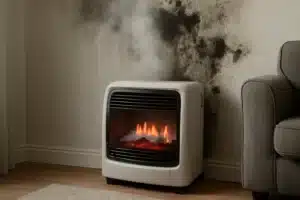
Exterior walls run colder than interior walls because they’re closest to the weather. When your heated indoor air loads up with moisture from showers, cooking, and breathing, it drifts toward cooler surfaces. If the wall surface is cold enough, condensation forms. Slide a big fabric sofa or bulky dresser against that wall and you create a dead-air pocket. No airflow means no drying. That still, cool, slightly damp slice of real estate is mold’s version of room service.
All Nation Restoration has been blunt about this for years: furniture jammed right up against walls, especially exterior walls, restricts airflow and traps moisture. Their advice is simple and effective: leave a gap for ventilation. Even a small allowance changes the physics behind your couch from swamp to breeze. Their hidden mold guidance spells it out clearly and supports what we see daily in the field. Source.
What Are Exterior Wall Cold Spots?
Exterior wall cold spots are sections of wall that run several degrees cooler than the surrounding surfaces. They often show up:
– In corners and along baseboards on exterior walls
– Beside window and door frames where framing members bridge to the outside
– Behind radiators, big cabinets, or tightly placed sofas where airflow is poor
– On walls with weak insulation or air leaks
When warm humid indoor air touches these chilled areas, the moisture in that air hits its dew point and condenses. The outcome looks like ghosting stains, peeling paint, bubbling wallpaper, or just a funky smell behind your furniture. All Nation Restoration’s wallpaper-safe removal article calls out the same condensation mechanism on the backside of wallpaper, and the fix is the same: raise surface temperature and cut vapor movement with better insulation and air sealing. Source.
Spotting The Sneaky Signs
Mold behind furniture rarely announces itself with a drumline. Look for these quiet fails:
– A musty odor that intensifies when you sit near the wall or move the furniture
– Light brown or gray shadowing on the wall at the furniture’s outline
– Peeling paint, soft drywall near baseboards, or warping trim
– Damp dust lines or faint drip marks just above the baseboard
– Allergy flare-ups that chill out when you spend time in another room
If the piece has been tight to a cold exterior wall through winter, assume you’ve got moisture risk. Mold can get going on a wet surface in as little as 24 to 48 hours, which is exactly why a stale, blocked wall gap is a problem. Source.
Furniture Wall Clearance That Works
Let’s talk practical spacing. How much of a gap actually stops the mess behind the couch? All Nation Restoration’s humidifier and diffuser guide offers a perfect rule of thumb: keep furniture a couple inches off cold walls so air can move, and give yourself 6 to 12 inches if you fight frequent condensation. Source.
Use this as a quick guide:
– Minimum gap: 2 inches for most furniture in rooms that stay between 30 and 50 percent RH
– Preferred gap: 6 to 12 inches for big fabric sofas, entertainment centers, or rooms with higher humidity or poorly insulated walls
– Curtains and drapes: keep them a few inches off the wall and away from supply registers so they do not trap moisture-rich air against cold glass or drywall
Pro tip: consistent spacing matters more than a perfect number. Even four wine corks glued into the rear corners as spacers beat a flush fit. Furniture bumpers, half-sphere doorstops, or felt-padded wood blocks are cheap airflow insurance. If the piece is low and long, create a couple of airflow breaks along the backside so the middle does not sit in a dead zone.
Airflow Hacks Without Ruining Your Layout
Airflow is your daily mold-prevention engine. You do not need a wind tunnel, just small, steady movement so cool surfaces cannot stay wet.
– Keep supply and return vents clear. If the sofa or console table sits near a register, tweak the angle so conditioned air washes behind the piece, not straight into it.
– Run your HVAC fan on low continuous or circulate mode if your equipment allows it. That gentle, always-on flow helps dry cool corners and exterior wall cold spots.
– Ceiling fans on low, set to pull air up in winter and push air down in summer, smooth out temperature differences near walls.
– In tight rooms, a whisper-quiet 4 to 6 inch desk fan aimed behind the furniture for 30 to 60 minutes a day can erase a chronic damp pocket.
– Leave closet doors open a crack and avoid packing long exterior walls with boxes, totes, or garment bags.
All Nation Restoration’s urban ventilation write-up calls out the same issue: poor airflow allows tiny drops to camp out on cold surfaces and those become condensation points. That is exactly what you are breaking up with these tweaks. Source.
Control Humidity Like A Pro
If you only tackle one thing besides spacing, make it humidity. Indoors should live between 30 and 50 percent relative humidity. Spike above 60 percent for long and surfaces start sweating, especially at exterior wall cold spots.
Do this:
– Use a digital hygrometer in the room, and one close to the suspect wall. Numbers beat guesswork.
– Keep bathrooms and kitchens exhausting to the outside, not the attic or a crawlspace. Run those fans for 20 to 30 minutes after showers or heavy cooking.
– If you use a humidifier in winter, keep it at the low end of comfort and never let the output fog one corner of the room. All Nation Restoration recommends a 6 to 12 inch buffer from walls, curtains, and furniture so mist disperses instead of soaking a single target. Source.
– In humid climates or summer months, a dehumidifier set to 45 to 50 percent works wonders in rooms with stubborn cold-wall issues. Place it where air can circulate behind the big furniture.
Insulation and Air Sealing Fixes
If the same stretch of wall drips every winter or after storms, you are fighting physics you can upgrade. Increase the interior surface temperature and block outside air leaks.
– Air seal the obvious: outlet and switch gaskets on exterior walls, caulk gaps at baseboards, trim, and window casings, and foam around pipe penetrations.
– If you remodel, add insulation in stud bays, or consider continuous rigid foam on the exterior to cut thermal bridging. Even a thin layer dramatically raises surface temperatures inside.
– In basements, seal the rim joist carefully where cold air sneaks in and condenses on subfloor edges.
– Behind built-ins or wall-to-wall cabinets on exterior walls, add spacers and a vent path at the top and bottom, or line the back with thin rigid foam where code allows.
– Skip the gimmicks. Thermal paints rarely move the needle by themselves. Pair smart paint with real airflow and insulation upgrades instead.
All Nation Restoration’s wallpaper guidance notes that better insulation and air sealing reduce those cold surfaces and vapor drive that fuels condensation. Same play here, minus the wallpaper. Source.
Quick Setup Guide
Here is the short version you can apply today:
- Slide furniture 2 inches off exterior walls. Go 6 to 12 inches if you see repeated condensation or smell mildew.
- Keep room RH between 30 and 50 percent. Never let it cruise above 60 percent for long.
- Unblock vents and run gentle, consistent airflow behind big pieces.
- Seal obvious air leaks and tighten up insulation where you can.
- Check behind furniture at the end of each season and after cold snaps or heavy rains.
Small Mold Spot? Here’s The Safe Play
If you move the sofa and see a light patch the size of a dinner plate, you might not need a full crew. Work smart so you do not launch spores around the room.
– Gear up with gloves, a snug mask rated N95 or better, and eye protection.
– Lightly HEPA vacuum the surface to capture loose growth without smearing it.
– Clean hard, non-porous surfaces with a detergent solution and disposable cloths. Rinse and dry.
– For painted drywall with light surface spotting, clean gently and dry fast. If the paper face is soft, bubbled, or crumbling, stop. That means moisture went deeper.
– Run a fan to dry the area thoroughly. Mold loves wet plus time. Remove the time by drying inside 24 to 48 hours.
Do not bleach porous materials and call it done. Bleach can leave moisture behind and does not erase growth that has crept into the paper facing or gypsum. If in doubt, stop and get an assessment.
When To Call A Pro
Bring in a certified remediation team if any of this fits:
– The visible area is larger than about 10 square feet or keeps coming back.
– The wall feels soft, smells strong, or shows signs of chronic wetting.
– You have wallpaper, paneling, or built-ins where mold may be hiding on the backside.
– There was a recent leak, storm intrusion, or plumbing issue feeding the wall cavity.
– Someone in the home is sensitive to mold or has respiratory challenges.
Professional remediation means containment to avoid cross-contamination, HEPA filtration, source removal, and moisture correction so it does not return. If you only scrub the stain, you are leaving the root cause to party again next season.
Furniture Choices That Help
You do not have to redecorate, but a few small choices make a big difference when exterior wall cold spots are part of your home’s personality.
– Prefer legs over skirting. Sofas and cabinets that sit on legs allow air to sneak underneath and up the backside, which dries surfaces more evenly.
– Leave the back off bookcases or drill discrete ventilation holes along the top and bottom of the rear panel if they must sit on an exterior wall.
– Avoid lining a long exterior wall with boxes, totes, or a 12-foot sectional. Break up large masses so air is not trapped for the full length.
Why Winter Makes It Worse
In cold seasons, the temperature difference across your exterior walls grows, and indoor RH often sits higher because of closed windows and longer showers. That is a perfect combo for condensation. If you run a humidifier in winter, keep it conservative and never aim its output toward an exterior wall. All Nation Restoration’s humidifier guide is a quick read and worth bookmarking for daily settings and spacing tips. Source.
Landlord and Tenant Traps
Rentals get hit often because space is tight and furniture ends up flush to exterior walls. A few ways to keep the peace and the walls clean:
– Put wall saver bumpers on the move-in checklist. A tiny investment keeps that couch from welding itself to the paint.
– Add a line in the welcome packet: keep furniture at least 2 inches off exterior walls and do not block supply or return registers.
– Share simple RH targets and give renters a cheap digital hygrometer. If they keep RH below 50 percent, you lower maintenance calls and mold claims.
Frequently Asked Questions
How far off the wall should my couch be?
Give it at least 2 inches. If the wall is cold or you are in a humid climate, 6 to 12 inches will outperform and usually stops the recurring musty line behind the cushions. That extra airflow kills the stagnant pocket that breeds hidden mold.
Why does mold pop up behind furniture but not on open walls?
Open walls catch moving air that keeps surfaces drier and closer to room temperature. Furniture creates a mini void with cooler temps and trapped moisture. That is a microclimate tailor-made for mold, especially on exterior walls with weak insulation.
Can I just run a dehumidifier and keep furniture tight to the wall?
Dehumidifiers help, but they are not a free pass to pinch your sofa to the paint. You need both lower humidity and a little furniture wall clearance so the wall can dry. Otherwise, even modest RH can condense on a chronically cold, stagnant surface.
Is bleach the best way to clean small mold spots?
Bleach is not the fix for porous materials like drywall. It can leave moisture behind and does not remove growth within the paper facing. Use HEPA vacuuming plus detergent on hard surfaces. If the drywall face is damaged or soft, get it assessed.
What if I have wallpaper on my exterior wall?
Wallpaper over a cold exterior wall is a classic condensation trap, especially if furniture is tight to it. Consider removing the wallpaper safely, improving insulation and air sealing, and spacing furniture. All Nation Restoration explains the risks and safe removal steps here: Remove Mold Under Wallpaper Safely.
Real-World Setup That Stops The Funk
Here is a quick layout recipe we use on service calls when living rooms start smelling like a basement:
– Pull the sofa 4 to 6 inches off the exterior wall and add two low-profile bumpers to keep it honest.
– Pivot the nearest supply register so it sends a light wash of air behind the sofa instead of blasting the seat cushions.
– Click the HVAC fan to low continuous. That gentle cycle alone dries out corners and baseboards that used to sweat in cold snaps.
– Place a compact hygrometer behind the sofa and one on the coffee table. If the back-of-sofa RH runs 5 to 10 percent higher than the room, add a tiny fan for 30 minutes a day or increase the gap another inch.
– Keep room RH between 35 and 45 percent through winter and under 50 percent in shoulder seasons. If you run a humidifier, keep it center room with a 6 to 12 inch buffer from walls and fabric.
A Few Cheap Fixes With Big Impact
Mold prevention does not have to torch your weekend or your wallet. Try these crowd favorites:
– Outlet gaskets on exterior walls stop cold air sneaking through boxes and chilling a neat little square on the paint.
– Caulk hairline baseboard gaps on exterior walls so frigid air is not drifting onto the drywall every night.
– Install felt or rubber furniture spacers that lock in a consistent gap, even after kids cannonball onto the cushions.
– Pop a small temperature and humidity sensor behind the biggest piece on an exterior wall. Data tells the truth, and it will tell you when to pull the piece another inch.
We Fix Hidden Mold Behind Furniture
If you move the sofa and find staining, soft drywall, or a smell that makes your eyes water, do not ignore it. We track down the moisture source, correct the condensation pattern, remove contaminated materials safely, and set up the room so it stays clean. Start with easy spacing and airflow tweaks today, then lean on us if the wall keeps getting wet or the growth is larger than a small patch. Hidden mold is preventable, and a little furniture wall clearance plus smart airflow beats scraping and repainting every winter. If you want a quick inspection or help setting humidity and airflow that fit your home, we are ready to roll.
For more on hidden mold and spacing, check All Nation Restoration’s quick guide here: Do You Have Hidden Mold?