If your indoor pool room is turning the rest of your house into a steamy locker room with a side of bleachy eye-burn, that is not ambiance. That is pressure gone wrong. A negative pressure natatorium pulls air inward just enough to keep humidity and chloramines corralled where they belong, so your drywall, windows, and lungs do not take a beating. Here is how to set it up right with practical specs, field-proven tricks, and a little attitude.
Why Chloramines Hurt
Chloramines are the stinky troublemakers born when chlorine reacts with stuff swimmers bring to the party like sweat, urine, and sunscreen. They irritate eyes and lungs, corrode metal, and love to hang low near the water surface. Left unchecked, they drift out of the pool room, chew on your building, and make everyone complain. The CDC covers why they form and how source control helps, including hygiene and proper chemistry management. See CDC chloramines guidance.
What Negative Pressure Means
Negative pressure is not hurricane force. It is a measured nudge. ASHRAE recommends keeping the natatorium 0.05 to 0.15 in. w.c. lower than adjacent spaces. That slight pull stops moist, chemical-laden air from wandering into the house. The simplest way to hold it steady is to run exhaust greater than supply by roughly 10 to 35 percent, then confirm with a differential pressure sensor and tweak with modulating fans or dampers. Expect doors to pull inward a bit when you open them. If they slam or whistle, you overshot it.
Right-Sized Dehumidification
The dehumidifier is the bouncer at your natatorium. Size it for the real load from evaporation, ventilation, and people, with a 15 to 25 percent safety margin. Keep relative humidity between 40 and 60 percent and run the room air temperature about 2 to 4 degrees Fahrenheit warmer than the pool water. That combo keeps dew point in check and stops windows from crying. Use corrosion-resistant coils and cabinets because chloramines will eat cheap metal for breakfast. Position supply air to wash cold surfaces like glass and exterior walls so they stay above dew point instead of growing artful mold polka-dots.
Make-Up Air And Exhaust
Fresh air dilutes chloramines and supports chloramine control. Meet ASHRAE 62.1 outdoor air rates, which often start around 0.48 cfm per square foot of pool surface plus deck contributions, then exhaust a little more than you bring in to hold negative. Distribute outdoor air where it helps you most, not just wherever a duct is easiest to hang. If you are pulling more out than you push in, the room must get the difference through controlled paths, not leaks through your drywall seams.
Doors, Seals, And Leakage
If your pool door has a gap big enough to slide a drink menu under it, that is your pressure relief valve, and not the good kind. Use tight gaskets, door sweeps, and self-closers. Keep the number of doors between the pool and the rest of the house to a minimum. Treat every penetration the same way you would treat a shower door in a hurricane. Seal it. Negative pressure natatorium setups cannot work if the room is a wind flute.
Airflow That Captures Chloramines
Chloramines sit near the water surface, so that is where you grab them. Pull exhaust from low returns at deck level and guide supply air across the water toward those returns. Avoid high-only returns that let chloramines bunk at floor level and pickle your metal railings. Do not create dead zones behind diving boards, stairs, or tall furniture where air just gives up. If you have a glass wall, throw a tempered air curtain at it with linear diffusers to keep condensation off the panes and the frames rust-free.
Targets That Keep A Natatorium Tame
| Element | Target | Why It Matters |
|---|---|---|
| Room negative pressure | 0.05 to 0.15 in. w.c. below adjacent | Stops moisture and odors from escaping |
| Exhaust vs supply | Exhaust 10 to 35 percent higher | Maintains negative pressure reliably |
| Relative humidity | 40 to 60 percent RH | Prevents mold growth and corrosion |
| Air temperature | 2 to 4 F warmer than water | Keeps windows above dew point |
| Outdoor air | Per ASHRAE 62.1, often ~0.48 cfm per sq ft plus deck | Dilutes chloramines and improves comfort |
| Air distribution | Supply to cold surfaces, exhaust near deck | Controls condensation and captures chloramines |
| Doors and seals | Tight gaskets, sweeps, self-closers | Prevents leakage paths that break pressure |
Monitoring And Maintenance
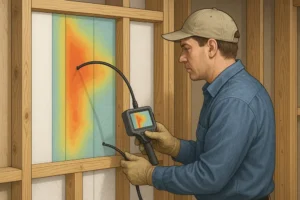
Trust but verify. Put a differential pressure sensor between the natatorium and adjacent hallway and set alerts for drift. Track RH and dew point on the pool deck and in the return duct so you catch evaporation spikes during heavy use. Your nose is a decent chloramine monitor, but use water testing to keep combined chlorine low, typically under 0.2 to 0.4 ppm per local code. Secondary disinfection like UV can slash chloramines in busy pools. Inspect for corrosion on grills, fasteners, and window frames. If metal is getting fuzzy, your chemistry, airflow, or RH is off. Fix the cause, not just the symptoms.
A Real-World Style Retrofit
Here is what a typical fix looks like in a 900 square foot natatorium. Before: the room was slightly positive at +0.02 in. w.c., RH hovered around 68 percent, winter windows dripped, and the living room smelled like a public pool. After: a dedicated dehumidifier sized to cover evaporation plus 20 percent margin, low-level deck exhaust added, outdoor air per ASHRAE 62.1 verified, and door gaskets replaced. Final readings held steady at -0.07 in. w.c., RH 50 to 55 percent, no window sweating, and odors stayed in the pool room. Bonus win: metal hardware stopped corroding because chloramines were captured at the source instead of touring the house.
Owner Checklist
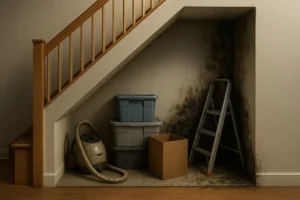
Once a week, walk the room with a cheap hygrometer and an honest nose. Confirm the dehumidifier is holding 40 to 60 percent RH and the natatorium is warmer than the pool. Stand at the door while the air handler is running and feel for a light inward pull. Watch the glass for condensation in the morning and at night. If you see fog, you are off target. Check door sweeps and gaskets for gaps. Log your combined chlorine and pH. Small tweaks now cost a lot less than tearing out moldy drywall later.
Natatorium FAQ
How negative should my natatorium be?
Target 0.05 to 0.15 in. w.c. below adjacent rooms per the ASHRAE Handbook. Most residential pools land near the middle of that range when exhaust is 10 to 35 percent higher than the total supply and make-up air.
Can I run it positive in winter to save energy?
Do not. Positive pressure shoves wet air into walls and ceiling cavities, where it condenses on cold sheathing and breeds mold. Negative pressure protects the rest of the home and your building envelope.
What if my windows still sweat?
Either the glass temperature is too low or the room dew point is too high. Warm the glass with directed supply air, verify the room is 2 to 4 F warmer than the water, and adjust dehumidification. If it persists, check for hidden infiltration cooling the window pockets.
Specs And Sources
ASHRAE Handbook Indoor Swimming Pools covers the pressure target of 0.05 to 0.15 in. w.c., 40 to 60 percent RH, and temperature guidance. See ASHRAE Handbook Chapter 6. For outdoor air and ventilation, use ASHRAE 62.1 and typical rates near 0.48 cfm per square foot of pool surface area plus deck. Exhaust should exceed supply by about 10 to 35 percent to maintain a negative pressure natatorium, as detailed in this design guide. For chloramine control strategies at the source, review the CDC guidance.
Need A Pro With A Mop And A Manometer?
If your pool room is sweating on the windows, corroding the door hardware, or sharing that signature public pool smell with your sofa, you have a pressure and humidity problem, not just a scent problem. We test, balance, dry, and seal until your negative pressure natatorium behaves. If you want chloramine control without mold, corrosion, or complaints, call us before your drywall waves the white flag.