Your toilet tank is basically a sweaty cold drink with a plumbing license. When humid air kisses that chilly porcelain, you get puddles that soak into vinyl seams, swell OSB, and rot subfloor layers. Left alone, the floor starts to sponge, the toilet rocks, and you get that not-so-chic mildew perfume. The fix is simple, but picking the right one matters: toilet tank insulation or an anti-sweat mixing valve. Let’s keep your floor dry and your tank from acting like a gym towel.
Why Tank Sweat Wrecks Floors
Condensation forms when warm, moist air hits a surface below the dew point. Your tank is filled with cold water, so it stays cool long after a flush. If the flapper leaks, it refills constantly and stays even colder. Porcelain does not absorb water, but the floor around it sure does. Pooled water slides under the toilet base, into grout lines, and under vinyl. That moisture wicks through underlayment and subfloor layers, feeds mold, stains baseboards, and in bad cases rots out joists. It is slow damage that accelerates in summer or in tight bathrooms with weak ventilation.
Is It Condensation Or A Leak?
First, wipe the tank and bowl bone dry. Add a few drops of food coloring to the tank and wait 15 to 30 minutes without flushing. If color shows in the bowl, your flapper leaks. Even if color does not move, look closely at the fill valve shank, tank bolts, and the supply connection under the tank. A steady drip is a leak. A film of moisture forming evenly over the tank is sweat. If you catch both, fix the leak first or you will chase your tail on condensation.
First Moves To Cut Moisture
Start with the easy stuff. Run a real exhaust fan during showers and for 20 minutes after. Keep indoor relative humidity under about 60 percent in warm weather. If your bathroom is a sauna after every shower, crack the door and run a dehumidifier nearby. Replace a worn flapper so the tank stops refilling nonstop. If the cold supply pipe is exposed, add foam pipe insulation for a couple feet before it reaches the tank. These low-cost moves often cut tank sweat in half.
Toilet Tank Insulation: Worth It?
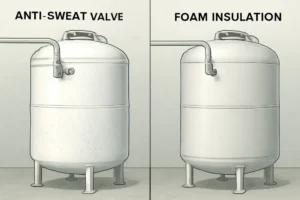
Toilet tank insulation kits line the inside of the tank with foam so the porcelain stays closer to room temperature. Some toilets ship with factory-insulated tanks, and that is the cleanest solution of all. For a kit, clean and dry the tank thoroughly, trim the foam panels to fit, and glue them in without fouling the float or flush arm. Let the adhesive cure fully before refilling. Expect a tidy reduction in sweat with almost no energy penalty. Kits are inexpensive and DIY-friendly, though they can be fiddly on odd-shaped tanks and may not solve extreme humidity or very cold incoming water. If your bath runs 65 to 70 percent RH in summer or you live on a cold well, insulation alone might not cut it.
Anti-sweat Mixing Valve: Worth It?
An anti-sweat mixing valve adds a small amount of hot water to the toilet’s cold line so the tank fills with tepid water instead of ice cold. That keeps the porcelain above the dew point and stops sweat at the source. Good valves are adjustable and often include internal check valves to prevent crossover. Plumbers commonly use models like the Legend T-20 or Watts anti-sweat valves. Install typically means tying a hot and cold line into the valve, then feeding the mixed outlet to your toilet supply. You will use a bit of hot water each flush, which is the tradeoff. If your water heater is far away, the first bit of “hot” may actually be cool, so place the valve where hot arrives reliably. For humid climates or bathrooms that constantly puddle, this fix is a tank-sweat killer.
Which One Should You Pick?
If your bathroom humidity is moderate and the tank is only damp after showers, start with toilet tank insulation. If you are mopping daily or the floor is already showing edges curling or baseboard swelling, skip straight to an anti-sweat mixing valve and deal with the humidity too. Leaky flappers always get fixed regardless. If access to plumbing is tight or you are in a rental, insulation is the least invasive choice. For a long-term home you own, a mixing valve is the set-it-and-forget-it solution when conditions are tough.
| Method | What It Does | Pros | Cons | Best For |
|---|---|---|---|---|
| Toilet tank insulation | Insulates tank interior so porcelain stays warmer than the dew point | Low cost, DIY, no plumbing changes, no energy use | Fit can be imperfect, may not stop sweating in very humid rooms or with very cold water | Humid bathrooms with limited access or budget-friendly fixes |
| Anti-sweat mixing valve | Mixes hot and cold to feed the tank with tepid water | Highly effective, adjustable, strong results even in high humidity | Plumbing work required, uses some hot water, can draw cool water if heater is far away | High humidity climates, chronic puddles, long-term installations |
Quick Drying That Actually Saves Floors
When the tank sweats today, do not let that moisture camp out. Towel up what you see, then point a small fan across the tank and the toilet base for a couple of hours. Pull bath mats so they do not trap water. If you have vinyl or laminate, pop a heat-safe spacer under the front of the toilet to let a whisper of air under the base while the fan runs, then remove it. Keep the exhaust fan on. If the room feels swampy, run a compact dehumidifier and dump the bucket daily until the fix is in. A cheap plastic drip tray behind the bowl is a temporary guardrail while you schedule work.
What If The Floor Is Already Spongy?
Check for soft spots around the toilet, musty odor, dark lines along baseboards, and caulk that stays wet. If the toilet rocks, the wax ring might be compromised and the subfloor might be swollen. At minimum, pull the toilet, inspect the flange, and probe the subfloor around it. Dry the area with directed airflow and dehumidification. Treat visible mold on accessible surfaces and replace any crumbling or delaminated wood. If the wet area runs under adjacent flooring or you see fuzzy growth, get a restoration crew in before you trap moisture under new finishes. Hidden rot spreads sideways in layered floors faster than most people expect.
Real-World Cost And Practical Tips
Expect most toilet tank insulation kits to run about 15 to 40 dollars. Anti-sweat mixing valves are typically 60 to 150 dollars for the valve, plus labor if you are not doing the plumbing. Set a tepid mix around room temperature, typically in the 70 to 85 Fahrenheit range. If your home has a hot water recirculation line, use it to ensure steady tepid supply. Where code requires, use checks or a listed valve to prevent crossover. If you are swapping the whole toilet soon, consider a model with a factory-insulated tank. As a side benefit, many low-flow toilets spend less time refilling, which can slightly reduce how long the tank sits ice cold.
Two Fast Mini Case Studies
Case 1: Upstairs bath in July, RH hitting 68 percent, vinyl plank edges cupping behind the toilet. We replaced the leaky flapper, installed a foam tank liner, and bumped the bath fan duty cycle with a timer switch. Condensation dropped from daily puddles to a light sheen after showers, no mop needed.
Case 2: Garden-level powder room with a cold well. Tank sweat every morning, stained baseboard, and a faint musty note. We installed an anti-sweat mixing valve near the riser, insulated two feet of exposed cold line, and set the valve to tepid. Zero sweat after, and the baseboard dried out within a week with a small fan assist.
FAQ: Common Questions About Tank Sweat
Will an anti-sweat mixing valve waste a lot of hot water?
It uses a small amount per flush to nudge the tank above the dew point. In very humid rooms it is far cheaper than replacing subfloor and flooring.
Can I insulate the outside of the tank?
There are wraps, but most people dislike the look and they trap dirt. Interior toilet tank insulation is cleaner and does not change the profile.
Do I need a plumber for the valve?
If you are not comfortable tying into hot and cold and ensuring proper checks, call a plumber. The valve itself is simple, but clean, code-compliant work matters.
Why does my tank sweat more at night?
Cooler night air lowers the tank temperature faster, and if your AC cycles off or humidity drifts up, the tank will hit the dew point quickly after a late flush.
What if I only rent?
Fix the flapper, run the fan, and ask for an insulated tank or permission to add a kit. A discreet drip tray and a small fan can protect the floor short term.