Should your central HVAC run while mold containment is active? The short answer is that you shouldn’t let it serve the active work area. If you use central HVAC during mold remediation, the system can pull contaminated dust into shared ductwork or push it through gaps in the containment barrier.
Conditioning unaffected rooms may still be possible if the work zone is fully isolated and pressure remains stable when your equipment cycles. Inside the containment, you need dedicated humidity control, filtration, and planned replacement air. Borrowing conditioned air from the rest of your house defeats the reason for building containment in the first place.
Why Shared Airflow Defeats Containment
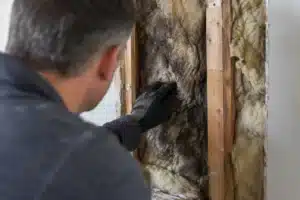
Your central return is designed to collect air and send it back through the system. During demolition or cleaning, the air in your work zone can contain fine debris and disturbed mold particles. If you leave a return open inside containment, you give those particles a direct route into ductwork serving other rooms.
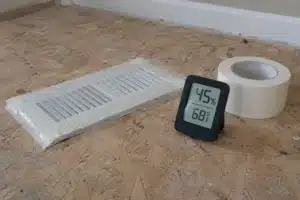
Your supply registers create a different airflow problem because they can raise pressure inside the work zone. Air blowing into containment may force contaminated air through barrier seams. That’s why you can’t isolate a room by covering only the return. You need to address both supply and return openings.
The EPA’s mold remediation guidance calls for blocking HVAC openings in affected areas and using negative pressure to limit migration. Installing a better furnace filter doesn’t make shared airflow acceptable in your home. Ordinary residential filtration isn’t a substitute for isolating your work zone.
Can HVAC Run Elsewhere in Your Home?
You don’t automatically need to keep your whole system off throughout every mold project. The deciding question is whether your HVAC can operate without exchanging air with containment or changing the pressure across the barrier.
If your bedroom containment has one supply and one return, both may be securely isolated while the same system serves the rest of your home. That arrangement can work when your duct layout supports it and the seals remain secure after the blower starts. You shouldn’t rely on loose plastic and tape over visible grilles.
Your system needs to be tested under actual operating conditions because cycling can change containment pressure. A barrier that pulls inward while your HVAC is off may billow outward once the blower starts. If you see that happen, the work zone isn’t maintaining the pressure relationship it needs.
You’ll need a complete HVAC shutdown when the work area can’t be separated reliably. The same applies if you suspect mold contamination inside your air handler or ducts. Operating a questionable system can distribute contamination beyond the room you’re remediating.
How Containment Builds Its Own Climate
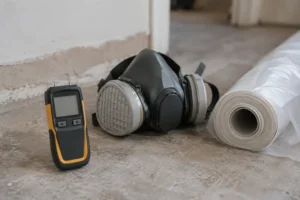
Your containment setup works best when it separates four distinct jobs: establishing the work zone, controlling moisture, filtering airborne particles, and managing temperature. Different equipment handles each function. In my opinion, you should be skeptical of any sales pitch promising that one machine will do everything.
Dedicated Dehumidification
A dedicated dehumidifier removes water vapor from the air inside your controlled area without connecting that space to the home’s duct system. This approach keeps your drying process local and makes equipment performance easier to monitor.
Refrigerant dehumidifiers pass your moist indoor air over a cold coil, collect the condensed water, and return drier air to the room. According to the U.S. Department of Energy’s explanation of dehumidifiers, that returned air is reheated as it moves through the unit. You may therefore notice warmer conditions inside containment even while the equipment removes moisture.
HEPA-Filtered Negative Air
A HEPA air scrubber primarily helps you capture airborne particles inside the controlled area. When it’s configured to exhaust filtered air from containment, the machine can help maintain lower pressure inside your work zone. You generally shouldn’t expect it to provide the moisture removal needed for structural drying.
Your dehumidifier has the opposite limitation because it can remove substantial water vapor without establishing the required pressure direction. If someone calls either machine an all-in-one solution, they’re confusing two different jobs that your containment needs performed.
Temporary Temperature Control
Temporary heating or cooling may be necessary when your containment becomes too warm or cold for the planned process. Drying equipment has operating limits, and the affected materials in your home respond differently as temperatures change.
You need to select temporary temperature-control equipment with its effects on containment in mind. A portable air conditioner that exhausts through an unplanned opening can alter your pressure relationship, while a heater placed too close to plastic barriers creates an obvious hazard. Your comfort matters, but safe equipment operation and stable containment come first.
Controlled Replacement Air
Your negative-pressure setup doesn’t turn containment into a sealed vacuum. Every bit of air exhausted from your work zone has to be replaced. You want cleaner air to enter through a planned pathway while contaminated air remains inside the controlled area until it’s filtered or exhausted.
Leaving your hallway door open doesn’t give you a controlled replacement-air strategy. Neither does using a loose flap of plastic that moves unpredictably whenever someone walks past it. Your replacement-air pathway should be planned, and its airflow direction should be checked while the building’s other equipment is running.
Humidity Doesn’t Prove Materials Are Dry
Humidity inside your mold containment matters because persistent moisture supports growth, but one low relative-humidity reading doesn’t prove that your project is finished. The EPA’s homeowner mold guidance identifies moisture control as the key to mold control. It also makes clear that you must correct the underlying moisture source.
You can see relative humidity change when the temperature changes, even if the total amount of water vapor hasn’t dropped. Air warmed by your dehumidifier may show a lower relative-humidity percentage before much moisture has left the framing. The meter reading looks better, yet your wet material can remain wet.
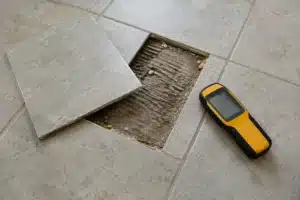
Your drywall paper may feel dry while its back side remains damp against a stud. A subfloor in your home can likewise hold moisture below a finished surface. Material-specific readings give you better evidence than a thermostat display or a small household humidity sensor sitting outside containment.
Keeping your air dry won’t remove existing contamination from affected materials. Your remediation project still requires cleaning or removing those materials according to the project plan. Humidity control limits favorable growth conditions and supports drying, but it doesn’t perform the physical remediation your property needs.
Common Pressure Disruptions
Your containment pressure can change when you start a clothes dryer or open an exterior door. Kitchen exhaust can have the same effect in a tight house. These events move enough air to change where your replacement air comes from, especially when the barrier has weak seams.
Equipment problems may be harder to spot because their effects can develop gradually. A clogged air-scrubber filter reduces airflow, while a stopped dehumidifier allows your humidity to climb. Before the filter loads, you may see the barrier pull inward consistently. After airflow falls, the plastic may hang flat or move in the wrong direction. You need repeated checks of pressure and equipment operation, not a single inspection on setup day.
When Can Normal HVAC Resume?
You can’t rely on a fixed waiting period to decide when normal HVAC operation should resume, and odor isn’t a clearance tool either. You should restore normal airflow only after the responsible professionals determine that your system won’t redistribute contamination and the project has reached its documented completion criteria.
- Your original leak or condensation source has been corrected.
- Materials designated for removal are out of your containment.
- Your remaining surfaces have been cleaned under the remediation plan.
- Material readings meet your project’s drying criteria.
- Work dust and debris have been removed from your controlled area.
- Your supply and return openings have been inspected before their seals are removed.
- Any required post-remediation evaluation for your project has been completed.
You must resolve any concerns about contamination inside your HVAC system before returning it to ordinary operation. Removing your vent covers because the room smells better is premature. The containment should come down in the approved sequence so you don’t undo cleanup work during dismantling.
Put the Airflow Plan in Writing
At All Nation Restoration, we treat your airflow plan as part of the mold remediation process, not as an HVAC setting someone guesses at after demolition begins. Our plan identifies which of your registers will be isolated, how we’ll control humidity, and what conditions must be met before your system resumes normal operation.
Your thermostat setting alone can’t answer those questions. The correct setup depends on your duct layout, moisture source, affected materials, and pressure behavior inside your home. Recognized IICRC standards and field guides address containment and engineering controls because your project needs a plan based on its actual conditions.
Your first concrete step this week is to ask for a written airflow plan before containment goes up. It should identify every supply and return inside your work zone, state whether the rest of your HVAC can run, and explain what dedicated equipment will control your containment climate.
References
- Mold Remediation in Schools and Commercial Buildings Guide: Chapter 1 (epa.gov)
- A Brief Guide to Mold, Moisture and Your Home (epa.gov)
- IICRC Standards (iicrc.org)