Can smoke-damaged insulation stay in your walls or attic after a fire? Sometimes it can, but the evidence needs to show that the fire didn’t materially affect it. Once your porous insulation holds residue or odor, removal is usually more dependable than trying to clean it in place.
You can’t answer that question by looking at color alone. Dark insulation may only have surface dust, while clean-looking insulation can contain fine particles that traveled through a plumbing opening or wall chase. Before you rebuild, you need to know where the smoke traveled and whether the insulation still performs as installed.
Color Is Only One Clue
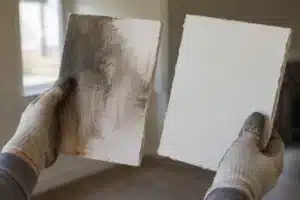
Visible staining can help you locate possible exposure, but it isn’t a pass-or-fail test. Smoke contains fine particles and gases that can enter your building through small openings, as explained in the EPA guidance on smoke and indoor air. Some residue is dark and obvious, while other residue can be difficult to see without moving the material.
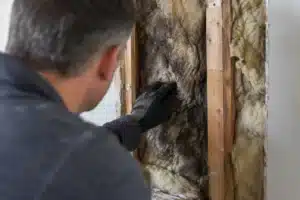
A black patch on the exposed face of a fiberglass batt deserves investigation, but it doesn’t prove that the entire wall cavity is contaminated. The reverse is true as well. A batt behind clean drywall can still be affected if smoke entered through an electrical box and spread behind your wall.
For your restoration decision, the useful distinction is between smoke-exposed insulation and smoke-damaged insulation. Material in a sealed cavity may have been inside your building during the fire without receiving residue. It becomes much harder to defend as salvageable when it retains contamination or no longer fills the cavity properly. The ANSI/IICRC S700 fire restoration standard treats the decision as an evaluation of contamination and cleaning results, which is a lot more sensible than judging your insulation by color.
Fiberglass and Cellulose Behave Differently
While inspecting fiberglass batts, account for more than the glass fibers. They may contain binders and kraft-paper facing, both of which can be affected by heat or combustion residue. Loose-fill fiberglass has a large exposed surface area where particles can settle. A protected fiberglass batt may remain if it is dry and retains its original shape. Once soot gets between the fibers, surface vacuuming is often an optimistic sales pitch.
As you assess cellulose, keep in mind that it is primarily a paper-based product treated for fire resistance, as described in the Department of Energy overview of insulation materials. Federal fire-performance requirements for cellulose don’t mean it can’t be damaged during a structure fire. Loose cellulose can collect residue throughout its depth, and wet cellulose may lose its proper coverage. For that reason, you’ll generally find fire-damaged cellulose harder to salvage after direct smoke entry.
| Condition | Fiberglass | Cellulose |
|---|---|---|
| Protected cavity with no fire or moisture effects | May remain after complete inspection | May remain after complete inspection |
| Light residue on an exposed surface | Evaluate the depth and accessibility; replacement may be more reliable if particles entered the fibers | Removal is generally favored because residue may extend below the visible layer |
| Persistent odor attributable to insulation | Remove | Remove |
| Scorching or damaged facing | Remove affected material | Remove affected material |
| Soot-laden firefighting water entered the material | Remove if it cannot be fully cleaned and dried | Removal is generally appropriate |
| The back or full depth cannot be inspected despite suspected smoke entry | Create access or remove before rebuilding | Create access or remove before rebuilding |
Residue Depth and Odor Control the Decision
In judging residue, its location matters as much as its appearance. Dry particles resting on an accessible batt face present a different problem from sticky residue drawn through the full thickness by air movement. Smoke commonly travels along attic bypasses or open chases. Your return-air cavities can move it well beyond the room where the fire started.
After opening a cavity, inspect more than its front edge. You need to inspect the back of the batt and the framing behind it. With loose fill, your evaluation needs to reach below the upper layer. Removing only the dark cellulose at the top can leave odor-producing material underneath, which is the restoration equivalent of changing the bedsheet while ignoring the wet mattress.
You should evaluate odor only after burned contents are gone and nearby hard surfaces have been cleaned. The cavity needs to be dry as well. Otherwise, you can’t tell whether the insulation is the odor source or merely sitting next to one.
Temporary fragrances or deodorizing sprays will interfere with this evaluation. A room that smells like artificial citrus for two days hasn’t proved anything about your insulation. Once ventilation returns to typical indoor conditions, a smoke odor that you can trace to the material weighs heavily toward removal.
You should recognize that encapsulation has firm limits in fire restoration. A coating may be useful on cleaned structural surfaces after damaged materials are removed. Spraying over your contaminated insulation doesn’t extract soot from the fibers or restore lost loft. Covering an odor reservoir before drywall goes up tends to postpone the argument until your room is finished.
Heat Damage Can Exist Without Odor
You may have physically damaged insulation even when it no longer smells. Fiberglass should be removed when heat has distorted it or burned its facing. A batt that shrank away from a stud leaves a thermal gap even if the remaining portion looks reasonably clean.
You need to remove cellulose when heat has damaged it or caused it to settle. Concealed smoldering is a particular concern in loose fill because damage can exist below the visible surface. Heat exposure calls for inspection of nearby wiring and sheathing before you retain or replace any insulation. New insulation shouldn’t bury your building components before they’ve been cleared for reconstruction.
Firefighting Water Changes the Scope
When firefighting water enters your building, it can carry ash farther into a ceiling or wall cavity than dry smoke reached on its own. A fiberglass batt doesn’t absorb water like paper, but the installed assembly can still trap moisture against framing. Its facing may hold contaminated water.
You’ll find cellulose less forgiving after water enters it. Wet fibers can cake together and dry unevenly, leaving thin areas that no longer provide uniform coverage. If soot-laden water entered your loose cellulose, trying to preserve it usually creates more uncertainty than value.
You need to identify the water source before deciding what can stay. A small amount of clean water from suppression is different from contaminated water. The EPA recommends removing materials that cannot be thoroughly cleaned and dried in its flood cleanup guidance. Fibrous insulation exposed to contaminated water generally belongs in your removal category.
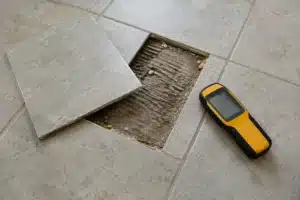
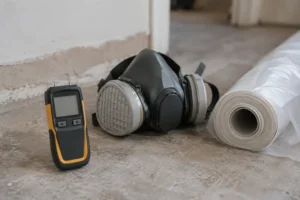
Don’t assume your insulation is dry just because its surface looks dry. Moisture may remain against sheathing or beneath dense pockets of fill. Your moisture readings should cover the surrounding framing and the least accessible side of the insulation. When a cavity needs active structural drying, closing it based on appearance is a gamble. Prolonged moisture can create conditions that require mold remediation.
Access Determines What You Can Save
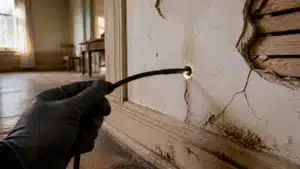
Your insulation isn’t salvageable merely because nobody can see the damage. If smoke likely entered a wall but you can’t examine the back of the batt, there isn’t enough information to approve it for enclosure. Selective openings can help you establish the damage boundary without stripping every wall in the building.
Your best opportunity to make this decision comes just before reconstruction. An open ceiling gives you a practical chance to inspect joist bays and remove contaminated fill. After new drywall and paint are installed, correcting a concealed odor source means reopening your finished work. That is a lousy place to save a little material.
Before you close the structure, follow the likely airflow pathways during your inspection. A hallway ceiling may look unaffected while smoke has moved through recessed-light openings into an adjoining attic. Likewise, one clean wall cavity doesn’t clear every connected cavity. Your access should be wide enough to identify where contamination stops, not merely where the first clean surface appears.
Testing and Hidden Materials
Laboratory testing can help when your damage boundary or contamination source is disputed, but “test the insulation” is too vague. Sampling needs a defined target and suitable comparison area. A particle analysis won’t determine whether a batt lost its loft, while a moisture reading won’t settle your odor complaint. The result needs an acceptance criterion tied to your rebuilding decision.
Before you start digging through older loose-fill insulation with a shop vacuum, identify the material. What looks like cellulose may be vermiculite, which can be associated with asbestos. The EPA advises against disturbing suspected vermiculite insulation until it has been addressed by appropriately trained professionals. Opening older assemblies can disturb hazardous fire debris, so material identification belongs near the beginning of your work.
Common Questions About Damaged Insulation
Can Ozone Remove Smoke Odor From Insulation?
For anyone considering ozone treatment, the key point is that it doesn’t remove embedded soot or reverse physical damage. You should never use odor treatment as proof that contaminated insulation is suitable to remain. The source still needs to be identified and dealt with.
Can Fiberglass Batts Be Removed and Reinstalled?
An undamaged batt can sometimes be removed temporarily when access allows it to come out intact. Keep it clean and dry during handling, then make sure it fits the cavity without gaps when reinstalled. Torn facing or lost shape can eliminate that option.
Must All Attic Insulation Be Removed After a Fire?
You don’t always need to remove every bit of attic insulation after a fire. The affected boundary may cover only part of your attic if the remaining area was isolated from the fire’s effects. You need to support that boundary by inspecting connected bays and smoke pathways. A convenient line drawn across your attic floor isn’t evidence.
References
- Wildfires and Indoor Air Quality (IAQ) (epa.gov)
- S700 (iicrc.org)
- Resources for Flood Cleanup and Indoor Air Quality (epa.gov)
- Protect Your Family from Asbestos-Contaminated Vermiculite Insulation (epa.gov)