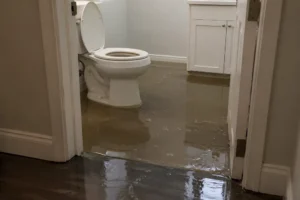
Your toilet has backed up onto the bathroom floor, and every nearby drain suddenly looks suspicious. The water may already be touching the vanity or creeping toward the doorway. Your sewage backup response needs to begin before another flush or shower sends more wastewater into the room.
Sewage is contaminated water, even when the overflow looks diluted or stays around one fixture. The CDC’s floodwater safety guidance warns that contaminated water can carry harmful contaminants and sharp debris. You shouldn’t treat it like a clean plumbing leak.
A slab-on-grade home has no basement or crawlspace to catch the overflow below the bathroom. Water can move across or beneath the finished flooring on the same level.
Your immediate job is to stop additional wastewater and isolate the area. Extraction and disinfection can wait for trained equipment. Preventing one contaminated bathroom from becoming two damaged rooms cannot.
Standing water near electrical equipment changes the situation immediately. If electrical equipment appears energized or anyone is in danger, stay out and contact emergency services or the appropriate utility.
Your Immediate Response Checklist
Work through these steps only from a clean, dry position. If a step requires walking through sewage or reaching across wet electrical equipment, skip it and tell the responding crew why.
- Stop all plumbing use. Tell everyone to stop using plumbing fixtures and water-using appliances.
- Keep people and pets away. Close the bathroom door if you can reach it without entering contaminated water.
- Check for electrical involvement. Look from the doorway for any powered equipment exposed to water.
- Protect clean rooms. Block the entrance and avoid carrying wet belongings across the house.
- Leave the water alone. Don’t try to remove or redirect sewage.
- Skip chemical treatment. Don’t pour bleach or drain opener into the backup, and never mix cleaning products.
- Photograph what you can see safely. Capture the water boundary and affected materials from uncontaminated flooring.
- Report the plumbing problem. Contact whoever is responsible for the drain or sewer line.
- Arrange a contamination assessment. Tell the restoration team where the water traveled and what actions you already took.
Stop Every Plumbing Fixture
A blockage in a shared drain line can make one fixture react to water used somewhere else. The toilet may stop overflowing, then rise again when someone runs the kitchen sink. Tell everyone in your home to stop using the plumbing until the source has been identified and controlled.
Shutting off the toilet’s supply valve won’t necessarily stop a sewer backup. That valve controls clean water entering the toilet tank. Wastewater can still come up through another drain when water is used elsewhere in your home.
Keep Occupants Out of the Area
Children and pets need to remain well away from the affected room. Anyone with an open wound or a health condition that increases vulnerability should avoid the area completely. A closed door and a clear warning at the entrance are simple controls that work.
Brief entry should happen only when it’s necessary for immediate safety and there’s no electrical concern. Wear waterproof gloves and rubber boots, then use protection that covers your eyes and exposed skin. Basic household gear doesn’t make prolonged contaminated water cleanup safe, and OSHA’s wastewater guidance explains why exposure controls matter around untreated sewage.
Wash exposed skin with soap and clean water after contact. If you have significant exposure or suffer a puncture wound, contact a healthcare professional or poison-control resource. Contaminated clothing should come off without being carried through clean rooms.
Take Electrical Hazards Seriously
Water around powered equipment is enough reason to stay out. Don’t unplug equipment while standing in water, and don’t approach a breaker panel across a wet floor. Federal flood-safety guidance advises avoiding electrical equipment that may be wet.
Shut Off Power Only From a Dry Position
You may shut off the affected circuit only when the panel is accessible from a dry location and you can operate it safely. If reaching the panel requires crossing sewage or wet flooring, wait for an emergency responder or qualified professional. Removing outlet covers to inspect behind them is unnecessary and dangerous.
Keep Contamination Behind the Doorway
Tracking causes damage that could have been prevented. One trip across the hallway in contaminated shoes can spread residue onto carpet or into another room. Keep doors to unaffected spaces closed, and don’t move clean belongings into the bathroom to get them out of your way.
Wet rugs and towels should stay where they are unless they create an immediate hazard. Carrying a dripping bathmat through your kitchen preserves nothing. It creates another surface that may require professional cleaning.
A shop vacuum is the wrong tool for sewage. Mopping or squeegeeing the water toward a hallway is just as bad, because it pushes contamination beyond the original boundary. The EPA’s flooded-home cleanup guidance emphasizes occupant protection and controlled removal of contaminated materials.
Fans can spread droplets and contaminated dust across clean areas. Don’t aim household fans at the backup. If sewage reached a floor register or adjacent mechanical area, stop using the affected HVAC system until it has been assessed.
Skip the Chemical Shortcut
Bleach doesn’t remove sewage or contaminated material. Disinfectants work only after surfaces have been properly cleaned, as the EPA explains in its cleaning and disinfection guidance. Pouring more liquid into the room won’t address moisture beneath flooring or behind a vanity.
Drain-opening chemicals create another hazard for the plumber and restoration crew. Tell responders if you already used one, including the product name and approximate amount. Never mix products in an attempt to make a stronger cleaner.
Document Damage From Clean Flooring
Photograph the visible edge of the water from the hallway or another uncontaminated location. Capture where the water crossed the threshold or stained nearby materials. Video can show the room layout without requiring you to step into the affected area.
Write down when you discovered the backup and which fixture overflowed first. Note whether using another fixture made the water rise. Keep records and receipts connected with the incident.
Preserving evidence doesn’t mean leaving a hazard untouched for hours. Don’t delay source control while you hunt for better camera angles. Avoid discarding damaged property until your insurer or restoration professional gives instructions, unless leaving the item creates an immediate safety risk.
Plumbing Repair and Restoration Differ
A plumber or sewer utility addresses the drain or sewer problem. Clearing that problem stops additional wastewater, but it doesn’t establish that the flooring and walls are clean. Water may remain beneath finish materials after the toilet drains normally again.
When you contact All Nation Restoration for water damage restoration in Austin, we assess the contamination boundary after the source is controlled. Our work may include extraction and controlled drying. We’ll also need to know if a plumber has confirmed that the line is open.
Inspect the Slab-Level Migration Path
A concrete slab doesn’t prevent sewage from traveling sideways. The water can pass through grout or gaps around the toilet connection. A dry-looking tile surface doesn’t prove that the assembly beneath it is unaffected.
Thresholds Reveal Only Part of the Story
A bathroom threshold may look like a clean stopping point while water has already slipped beneath a floating floor in the hallway. Laminate seams can swell later, and resilient flooring may hold contamination below an edge that still looks flat.
Vanity toe kicks and cabinet end panels deserve close assessment because they sit low enough to wick contaminated water. The bottom of drywall may also be affected before obvious staining appears above the baseboard.
Rooms sharing a bathroom wall can be involved even when their finished floors stayed visually dry. Plumbing penetrations and gaps at the wall base can provide hidden paths. Floor-level HVAC registers require particular caution because airflow can move contamination beyond the bathroom.
Don’t lift flooring or remove baseboards to investigate. Disturbing wet materials can spread residue and erase the original water boundary. Professional structural drying starts with determining what’s affected and what can be safely retained.
Prepare a Clear Crew Handoff
Your restoration crew needs a short account of what happened. Explain when the overflow began and whether the blockage has been cleared. Identify the farthest point the water reached and mention any electrical involvement.
Report what you did before the crew arrived, including utility shutoffs or chemical use. Tell the crew about direct skin contact or other exposure without trying to diagnose the outcome. If you opened an insurance claim, keep the claim information available, but don’t assume your policy covers sewer backup damage until your insurer confirms it.
Watch the Boundary for Changes
The visible water line can change while you wait. If moisture appears across a threshold or around an adjoining wall, photograph the new boundary from a safe spot and update the crew. Keep the area isolated even when the bathroom surface begins to look dry.
A returning odor or new material damage can point to concealed moisture after the plumbing starts working again. Those signs don’t tell you exactly what is beneath the finish, but they do justify another inspection. Don’t cover the odor with fragrance or restart fans to hurry the process.
Pay close attention during the next heavy plumbing demand, such as laundry use after the line has been cleared. If a fixture drains poorly or begins rising again, stop all water use and call the plumber back. A repeat backup means the source may not be fully controlled, and cleanup shouldn’t proceed as though it is.
References
- Preparing for Floods (cdc.gov)
- Floods (ready.gov)
- Cleaning and Disinfecting: Best Practices During the COVID-19 Pandemic (epa.gov)