Being allowed back through your front door doesn’t mean you can flip the main breaker because restoring utilities after a house fire may require separate approval for home systems and provider equipment. A post-fire utility inspection determines whether repairs are required and who has authority to restore service.
The shutdown itself proves very little about the condition of your home. Firefighters may cut power or close the gas supply to control immediate hazards, but they aren’t certifying every wire or appliance for future use, and firefighting water can reach an electrical panel that looks untouched while heat damages gas controls several rooms away from visible flames.
The exact process depends on your building department and utility providers, but the safe sequence starts with controlling hazards and ends with a controlled reconnection after the required inspections and repairs. Trying to jump from shutdown to startup is how one emergency turns into another.
Shutdown Is Only the First Step
The fire department controls the active emergency scene and may request that electricity or gas be disconnected, while water may be shut off when broken piping is feeding the damage. Depending on the hazard, a meter may be removed or locked. The U.S. Fire Administration’s post-fire guidance tells homeowners to wait for official permission before entering and never turn utilities back on themselves.
Permission to enter usually has a narrow meaning: you might be allowed inside briefly to photograph damage while occupancy remains prohibited, or a building official may restrict entry until unstable framing has been addressed. Don’t remove an unsafe-building notice or utility seal because someone at the scene said you could retrieve belongings.
Emergency shutdown makes the property safer for the moment, but it doesn’t establish that the wiring is dry or that fuel-burning equipment can operate, since those questions belong to the appropriate trades and authorities.
The Reconnection Sequence
Some early work can overlap, but actual reconnection belongs near the end, after damaged equipment has been isolated or repaired. Here is how that sequence typically works.
Step 1: Control Immediate Hazards
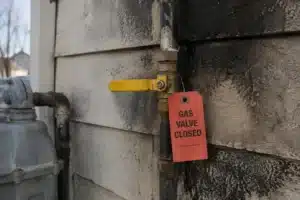
Emergency crews secure the scene from immediate hazards, and if they disconnect a meter or tag a valve, leave it alone. A missing meter isn’t an invitation for a handyman to reinstall one, just as a closed gas valve isn’t waiting for you to grab a wrench.
If you smell gas or hear it escaping, leave the area without touching switches or using a phone nearby, then call emergency services and your gas provider from a safe location.
Step 2: Stabilize the Property
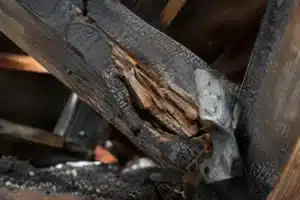
Structural hazards must be addressed before crews start pulling wet drywall or cleaning soot around questionable wiring. Roof openings may need temporary protection, while standing water may require removal once qualified personnel establish safe working conditions.
At All Nation Restoration, we coordinate restoration work around the required inspections and create a record of visible damage, which can include structural drying after firefighting water or arranging water damage restoration in Austin. We don’t treat restoration access as permission to energize regulated systems because that authority remains with licensed trades and the governing authorities.
Step 3: Inspect the Electrical System
An appropriately licensed electrician evaluates the electrical service before following affected circuits into the house, and the inspection may extend to equipment affected by the fire or firefighting efforts.
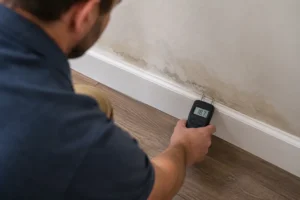
A panel can look acceptable with its cover closed while moisture sits behind breakers, and soot residue can affect electrical components. Repeatedly resetting a breaker that trips is especially reckless because it may be responding to damaged wiring or equipment.
Electrical work around exposed live parts belongs to qualified people, and OSHA’s electrical work-practice requirements call for those parts to be de-energized before work unless a specific exception applies. For your home, the practical lesson is simple: cleanup workers and homeowners shouldn’t experiment with a fire-exposed panel.
Step 4: Inspect Gas Equipment
Gas delivery and the equipment inside your home are often handled by different parties. Your provider may control the supply side, while a licensed plumber or another properly qualified trade may be responsible for house piping under local requirements, and an HVAC technician may inspect a furnace within the technician’s licensed scope.
Fire-exposed appliances need individual attention even when the piping passes a test because a water heater with damaged controls doesn’t become safe when gas service reaches the building again, and the same concern applies to a furnace with a compromised vent.
Never reopen a gas valve or relight an affected appliance unless your provider’s procedure expressly allows it and the required inspection is complete. Provider policies differ, so advice from a relative in another utility territory may be useless at your address.
Step 5: Check Water and Plumbing
Plumbing inspection often gets treated like an afterthought because water doesn’t ignite, but that misses the real problems: heat can damage supply lines and cause hidden leaks to restart as soon as the system is pressurized. Water heaters need inspection when they were exposed to fire or water.
A licensed plumber may isolate damaged piping before testing the repaired system, while the water utility may need to handle the meter or curb-side connection. Turning a street valve yourself is a bad shortcut because that equipment may belong to the provider.
Step 6: Complete Permits and Releases
Required permits don’t appear automatically because the fire department filed a report, so your contractor or licensed trade may need to handle the permit process and provide the required documentation before the local authority issues a utility release.
One inspection may not cover every system, and electrical repairs can receive approval while gas work remains unfinished. Your building department and utility providers determine the exact requirements for your address.
Step 7: Reconnect Utility Service
The provider acts after receiving the approvals required under its procedure. An electric utility may reinstall a meter and energize the service, while a gas provider may remove a lock and restore flow under its own rules.
Passing an inspection doesn’t guarantee immediate reconnection because the provider may still need a work order or access to equipment, and damage to utility-owned components can require separate repair.
Step 8: Start Systems Carefully
A licensed electrician may energize approved circuits one at a time while watching for abnormal performance and leaving damaged circuits disconnected, while the appropriate technician verifies safe operation of gas appliances within the approved scope.
Water piping should be observed under pressure before walls are closed, and you should receive a clear record of anything still out of service. A label stating that one bedroom circuit is disconnected is useful; a vague promise that everything is probably fine is not.
Who Controls Each Approval?
The fire department controls the emergency scene and may initiate a utility shutdown, but firefighters generally don’t authorize permanent reconnection or final occupancy. Their permission to approach the house is only one part of the process.
Your building or code official administers local restrictions and required inspections, determining when structural conditions permit contractor access and what repairs must be completed before occupancy is allowed.
Utility providers control their own infrastructure and reconnection procedures, while licensed trades inspect and repair the owner-side systems within their scope. An electrician can repair branch wiring but can’t bypass the electric utility’s meter requirements, and a plumber can repair approved gas piping but can’t overrule a provider’s locked valve.
Your restoration contractor stabilizes affected areas and coordinates work around those regulated tasks, while you provide authorized access and maintain the inspection records as the homeowner. Confirm who is scheduling each permit because assuming someone else did it is a reliable way to lose several days.
Service Does Not Equal Occupancy
Restored power only means approved electrical service has reached the property under the applicable procedure; it doesn’t approve every connected appliance or establish that the building is ready for overnight occupancy. One circuit may remain isolated, and a damaged air conditioner may still be prohibited from operating.
Temporary power deserves the same caution, so never run a portable generator inside your house or garage. The Consumer Product Safety Commission’s carbon-monoxide guidance calls for generators to operate outdoors and away from the home, with exhaust directed away from the structure, and a generator must never be used to backfeed house wiring through a receptacle.
Use the Hands-Off Test
Once access is authorized, you can handle communication and recordkeeping, including asking each trade for a written record of anything that remains disconnected.
Get qualified help whenever the task involves regulated utility or mechanical equipment, and follow the same rule when a lock or official tag must be removed. If the work interferes with or energizes a regulated system, it isn’t a DIY project.
Visible damage isn’t a reliable dividing line because a clean-looking panel may be wet inside, while a normal-looking furnace may have damaged controls. Inspection should follow the system’s exposure, not its appearance.
Your quick decision is this: if you’re documenting or coordinating, you can probably handle it, but if you’re about to restore service or bypass a safeguard, stop and bring in the provider or appropriately licensed trade.
References
- 1910.333 – Selection and use of work practices. (osha.gov)
- Carbon Monoxide (cpsc.gov)