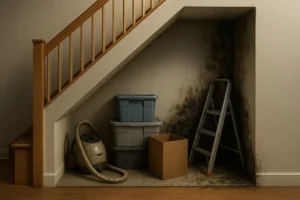
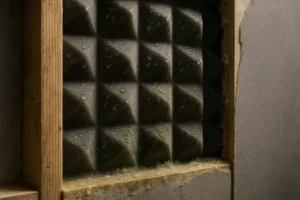
A recording room smells musty, yet the painted wall looks spotless. The owner wipes down the desk, changes the HVAC filter, and blames an old carpet. Then one acoustic panel comes loose, revealing stained drywall and fuzzy growth around the adhesive. The panel didn’t create the water, but it did a fine job of hiding the evidence.
That’s the real concern with porous acoustic panels. Leaks, condensation, and residual construction moisture can remain concealed between the acoustic material and the wall. Restricted air movement may also slow drying. By the time the face of a panel looks suspicious, the back of it, the adhesive, and the drywall paper may have been damp for quite a while.
Can Porous Acoustic Panels Trap Moisture?
They can, but the answer depends on the product and how it became wet. Open-cell polyurethane foam, melamine foam, fabric-wrapped fiberglass, mineral-wool panels, felt, wood fiber, and recycled textile products don’t all handle moisture the same way. Their facings, frames, adhesives, pore structures, and mounting methods also affect drying.
Some open-cell foam can retain liquid after a roof leak, plumbing failure, or careless cleaning. Other synthetic foam products resist liquid water fairly well and don’t absorb much moisture from ordinary indoor air. That distinction matters. Saying all acoustic foam soaks up humidity like a kitchen sponge is catchy, but it isn’t accurate.
It’s also too simplistic to claim synthetic foam can’t support mold because plastic isn’t much of a meal. Dust, skin particles, fabric, adhesive, drywall paper, wood frames, and debris caught in the pores can provide enough organic material for growth. The wall behind the panel may be a better food source than the panel itself.
One terminology adjustment is worth making. Most products advertised as “soundproofing foam” are sound absorbers. They reduce echo and reverberation inside a room, but they generally don’t stop much sound from passing through the wall. A soundproofing foam moisture problem is usually a symptom of water coming from somewhere else, not water manufactured by the foam.
Where Does the Moisture Come From?
Roof and flashing leaks are common suspects, especially when panels are installed high on an exterior wall. Window leaks can travel sideways behind trim before reaching a panel. Plumbing supply lines, drains, fire sprinklers, appliances, and HVAC condensate systems can introduce water without leaving an obvious puddle in the room.
Basement studios and home theaters deserve extra suspicion. A foundation wall can allow seepage or water vapor to affect interior finishes. If drywall and acoustic panels were installed over damp masonry without correcting the source, the finished room may look polished while the hidden side stays wet.
Condensation can be less dramatic and more persistent. Warm, moisture-laden air condenses when it reaches a surface at or below its dew point. An uninsulated exterior wall, foundation wall, metal duct, cold pipe, corner, or thermal bridge can create that condition. A panel installed tightly against the surface may limit local air movement and make drying slower.
A room hygrometer doesn’t tell the whole story. The center of a studio might read 48% relative humidity while the cold surface behind a wall panel experiences much higher localized humidity. Surface temperature, insulation, air leakage, and dew point all matter. The EPA’s guidance on moisture and condensation explains why hidden surfaces can behave differently from the room as a whole.
Residual moisture is another possibility. New drywall joint compound, masonry, paint, or a previously flooded wall may be enclosed before it dries. Installing an expensive set of panels over a wall that’s still wet doesn’t speed up the schedule. It merely makes the moisture harder to check.
Warning Signs Behind the Panels
A musty or earthy odor is often the first warning, particularly when it becomes stronger near one wall. Odor can justify a closer inspection, but it can’t identify a mold species, measure the affected area, or prove that one specific material is contaminated.
Look closely at panel edges, seams, mounting points, and corners. Brown or yellow staining suggests past or active water movement. White, green, gray, or black spotting may be growth, although color doesn’t establish how hazardous it is. “Black mold” isn’t a useful visual diagnosis, and laboratory identification doesn’t fix the leak.
Physical changes can be just as revealing. Foam may become damp, tacky, brittle, or degraded. Fabric can discolor or sag. Fiberboard and wood products may swell, warp, or delaminate. Adhesive-mounted panels might begin pulling away because the adhesive or drywall paper has deteriorated.
Nearby building materials offer clues, too. Soft drywall, peeling paint, rusting fasteners, condensation on windows, and repeated use of a dehumidifier all justify investigation. So does a recent roof leak, plumbing failure, condensate backup, flood, or extended building shutdown.
Some people experience stuffy noses, coughing, wheezing, irritated eyes, or skin reactions in damp buildings, while others experience no obvious effects. People with asthma, mold allergies, chronic lung disease, or weakened immune systems may face greater risks. The CDC’s mold health information provides broader guidance. Symptoms shouldn’t be used to diagnose a room, and medical concerns belong with a healthcare professional.
How to Inspect Panels Safely
Start by investigating water rather than hunting for exotic mold species. Review the room’s leak history. Check the roof, windows, exterior penetrations, plumbing, HVAC equipment, and condensate drains. Examine surfaces above, below, and beside the panels. Record temperature and relative humidity, and consider whether the installation covers a cold exterior or below-grade wall.
If the material is dry, the panel is designed to be removable, and there’s no sign of extensive contamination, carefully inspecting one limited test area may provide useful information. Don’t start ripping down an entire wall because one corner smells odd. Aggressive removal can release dust and mold particles into occupied areas.
Stop and seek professional evaluation when there’s widespread visible growth, crumbling drywall, significant wetness, suspected HVAC contamination, sewage, polluted floodwater, or a vulnerable occupant. The same caution applies if removal could disturb asbestos-containing material or lead-based paint. Older buildings have a habit of turning a “quick look” into a much bigger project.
What Can Moisture Tools Tell You?
A moisture meter can compare a suspicious location with a known-dry section of similar material. It can’t detect mold. Pin meters leave small holes, while pinless meters may be influenced by metal fasteners, foil facings, pipes, and differences in wall composition. A dry surface reading also doesn’t prove that insulation or the back of the drywall is dry.
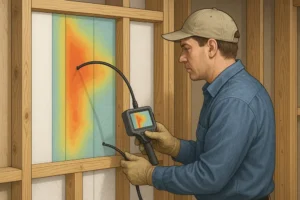
An infrared camera shows temperature differences, not mold and not water itself. A cool pattern might indicate evaporation from wet material, missing insulation, air leakage, or a cold structural component. Suspected anomalies should be checked with direct inspection and moisture measurements.
Routine air sampling usually isn’t needed when visible mold and a moisture source are already apparent. The EPA states that sampling is generally unnecessary in that situation and that no federal indoor-air limits have been established for mold spores. Testing can help in specialized disputes or investigations, but it shouldn’t replace source correction. See the EPA guidance on mold sampling for context.
Can Moldy Acoustic Foam Be Cleaned?
Sometimes the answer is technically possible but practically foolish. Accessible metal mounting hardware or another hard, nonporous surface may be cleanable with detergent and water, provided the cleaning method is compatible with the material. Deeply wetted or visibly moldy porous foam is a different proposition.
Growth and debris can extend below the foam’s visible face, where wiping can’t reach. Fabric-wrapped fiberglass and mineral-wool panels may have an inorganic core, but the fabric, dust, adhesive, paper facing, wood frame, and wall behind them can still be contaminated. Wet fibrous panels may also dry unevenly.
| Material | Typical Concern After Wetting | Likely Decision |
|---|---|---|
| Open-cell acoustic foam | Water and contamination may extend into interconnected pores. | Visibly moldy or deeply wetted foam is often discarded. |
| Fabric-wrapped panels | Fabric, dust, frame, backing, and adhesive may be affected. | Evaluate the complete panel, not just the fibrous core. |
| Wood-fiber, felt, or cellulose panels | Organic fibers can remain damp and support growth. | Persistent wetting or visible growth often makes replacement more practical. |
| Metal or hard mounting parts | Surface contamination may be accessible. | Cleaning may be possible if the material isn’t damaged. |
| Paper-faced drywall | Growth can affect the paper and gypsum-facing interface. | Soft, deteriorated, or mold-contaminated sections may require removal. |
The manufacturer’s technical and cleaning instructions should be checked before attempting to save a panel. Products vary considerably, and a method that’s acceptable for one facing may damage another. Cleaning only the visible face while ignoring the back, adhesive, and wall isn’t remediation. It’s cosmetic optimism.
Why Bleach Isn’t the Default Answer
Spraying chlorine bleach on porous acoustic foam isn’t a reliable fix. Killing some surface organisms isn’t the same as physically removing contamination, and dead mold particles can remain allergenic. Bleach can also discolor fabric, degrade materials, create irritating fumes, and react dangerously with other chemicals.
The EPA’s household mold guidance doesn’t recommend routine use of biocides such as chlorine bleach for mold remediation. Bleach should never be mixed with ammonia or other cleaners. Painting, sealing, or gluing new panels over active growth isn’t a substitute either.
When DIY Cleanup Isn’t a Good Bet
Limited homeowner cleanup may be reasonable when the affected area is small, the source was relatively clean water, the leak has been stopped, the materials are easy to access, and there’s no suspected HVAC or hazardous-material involvement. Occupant health and the condition of the wall also matter.
EPA guidance often uses approximately 10 square feet as a dividing point between limited and more involved mold projects. That number isn’t a magical safety shield. A two-square-foot patch caused by sewage, hidden inside an air handler, or located on crumbling asbestos-containing material isn’t a sensible DIY project.
Professional evaluation is advisable when several panels may be involved, the affected area exceeds about 10 square feet, growth returns, or the wall stays wet for an unknown reason. Sewage, stormwater, HVAC contamination, structural deterioration, and vulnerable occupants also raise the stakes.
Employee cleanup in a commercial studio, theater, office, school, or worship space requires more planning than handing someone gloves and a spray bottle. Employers may have obligations related to respiratory protection, personal protective equipment, sanitation, and worker exposure. OSHA maintains a workplace mold resource for employers and workers.
If hidden moisture extends beyond a panel or the source isn’t clear, All Nation Restoration can evaluate the water damage and mold-remediation needs. A proper scope should address the source, affected materials, drying requirements, and controls needed to keep contamination from spreading.
How Hidden Growth Is Remediated
The first job is stopping the water. Replacing every acoustic panel in the room won’t help if the window still leaks or the exterior wall still reaches condensation conditions. Once the source is corrected, the affected area must be opened only as much as needed to determine the extent of damage.
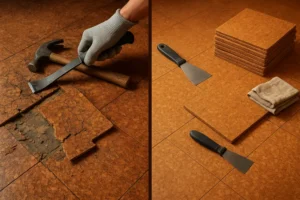
Contaminated porous materials that can’t be reliably cleaned and dried are removed. That can include foam, fabric-wrapped panels, cellulose products, drywall, insulation, paper facings, and swollen composite wood. Debris should be bagged or wrapped before it’s carried through clean occupied areas.
Larger or concealed projects may need polyethylene containment, controlled access, protected debris routes, HEPA-filtered air equipment, and negative air pressure. These measures reduce the spread of particles, but they must be suited to the project. Setting an air scrubber in a doorway without a containment plan isn’t automatically effective remediation.
Workers may need gloves, eye protection, protective clothing, and a properly selected respirator. A loose dust mask doesn’t provide the same protection as a properly fitted respirator. Employee respirator use can also trigger OSHA requirements for medical evaluation, fit testing, and a respiratory-protection program.
After damaged porous material is removed, salvageable hard surfaces can be cleaned using methods compatible with those surfaces. The area must then be dried completely. Before reconstruction, there should be no visible growth or debris, no persistent musty odor, and moisture readings should be consistent with comparable dry materials. A smell test by itself isn’t clearance.
Preventing Mold Behind New Panels
Don’t reinstall acoustic treatment until the wall assembly is dry and the cause has been corrected. The EPA recommends drying wet materials within approximately 24 to 48 hours when possible. That’s a prevention target, not a guarantee that every item will remain mold-free or salvageable during that period.
Keep indoor relative humidity below 60% and generally between 30% and 50% where climate and season allow. Studios, basements, home theaters, and rehearsal rooms benefit from a reliable hygrometer. Bathrooms, kitchens, and clothes dryers should vent outdoors, while air-conditioning equipment and condensate drains need regular maintenance.
If panels repeatedly become damp on an exterior wall, buying a stronger dehumidifier may treat only part of the problem. Missing insulation, air leakage, foundation moisture, thermal bridging, or a poorly designed vapor-control layer may be involved. Don’t add a plastic vapor barrier blindly. A low-permeance layer in the wrong location can trap moisture inside the wall.
Removable mechanical mounting systems make future inspection easier when they’re compatible with the panel design, acoustic plan, and fire requirements. Avoid covering known damp masonry or active stains. Preserve access to plumbing, cleanouts, valves, and leak-prone HVAC equipment. An air gap can improve acoustic performance in some installations, but it doesn’t automatically prevent condensation or mold.
Accessible panel faces and nearby surfaces can be maintained with HEPA-filtered vacuuming if the manufacturer allows it. Fragile foam and fiber coverings can be damaged by aggressive cleaning, so more suction isn’t always better. Inspect the installation after roof leaks, plumbing failures, condensate backups, flooding, foundation seepage, long humid periods, and extended building shutdowns.
FAQs About Foam, Moisture, and Mold
Can Acoustic Foam Itself Grow Mold?
Mold may grow on dust, debris, adhesive, fabric, drywall paper, and other organic material associated with the foam. Some synthetic polymers provide limited nutrients on their own, but that doesn’t make a dirty, wet panel mold-proof.
Does Acoustic Foam Absorb Humidity?
Product behavior varies. Some foam retains liquid water after direct wetting, but it shouldn’t be assumed that every acoustic foam readily absorbs ordinary atmospheric humidity. A cold and damp wall behind it can still create a hidden problem.
Can Mold Grow Between Foam and Drywall?
Yes. Drywall paper, dust, adhesive, and other debris can support growth when moisture persists. The narrow interface can also conceal stains and slow inspection.
What Does Moldy Acoustic Foam Smell Like?
People often describe the odor as musty, earthy, or stale. Odor is a warning sign, not proof of the growth’s exact location, species, or extent.
Should Moldy Acoustic Panels Be Discarded?
Visibly moldy, deeply wetted, degraded, or persistently odorous porous panels are often more practical to discard than clean. The decision should account for the panel’s full construction and the condition of the wall behind it.
Is an Infrared Camera Enough?
No. Thermal imaging shows temperature patterns that may suggest moisture, missing insulation, or air leakage. Any suspicious pattern should be confirmed with direct inspection and appropriate moisture measurements.
Can Panels Be Reinstalled After Cleanup?
They can be installed after the water source is corrected, contaminated materials are removed or cleaned as appropriate, and the wall assembly is verified dry. Reusing a previously contaminated porous panel may not be advisable, even if its front surface looks clean.
Does Black Mold Need Different Cleanup?
Color doesn’t reliably identify mold species or health risk. Cleanup decisions should be based on moisture, affected materials, contamination extent, water source, location, and occupant risk rather than color alone.