Your attic is not a steam room, and your bathroom fan isn’t a suggestion. If that fan’s flex duct is loose, uninsulated, or misrouted, you’re feeding your attic a daily smoothie of warm, wet air. Translation: mold. The kind that stains sheathing, soaks insulation, and wrecks your roof from the inside. The fix is not exotic. It’s a checklist: verify the fan actually pushes air out of a proper roof cap, seal and insulate the duct, add a solid backdraft damper, then clean the mold safely before it spreads. I’ll walk you through the whole thing so you can shut down the hidden attic mold source you’ve been missing.
The Hidden Attic Mold Source
Bathroom air is loaded with moisture. Blow that into an unconditioned attic and it condenses on cold surfaces – duct walls, roof decking, trusses – like a glass of sweet tea in August. If your flex duct is uninsulated, loosely connected, flat on the insulation, sloped the wrong way, or simply ends short of the roof cap, you’ve built a moisture factory. You might not notice from the bathroom, because the fan sounds normal. Up top, it’s a mess.
Codes and inspection guidance agree: bathroom exhaust must terminate outside the building envelope, not in the attic, not aimed into a soffit that feeds back into vents, and not dribbling into fiberglass like a leaky garden hose. Long or sloppy duct runs also reduce airflow and encourage water to pool in low spots. A short, sealed, insulated path to a working roof or wall cap is the goal. For more on routing do’s and don’ts, see these bath-fan venting standards from the American Society of Home Inspectors and this overview on how to properly terminate exhaust ducts from InspectApedia:
bath-fan venting standards,
how to properly terminate exhaust ducts.
Spotting the Early Signs
Attic mold from a bathroom fan rarely shows up as horror-movie fuzz at first. It whispers. Here’s what tips off the pros:
Staining or frost on roof sheathing above the bathroom, musty odor when you pop the attic hatch, damp or matted insulation under the duct run, rusty nails protruding through roof decking, dark rings on ceiling drywall, and a roof cap that sweats, rattles, or shows no sign of airflow when the fan is on. In cold climates, winter is the tattletale season – you might find frost crystals that melt into springtime stains.
Roof Cap Discharge Verification
If the bathroom fan is your engine, the roof cap is the tailpipe. Roof cap discharge verification is how you confirm the fan actually blows outside and that the termination damper opens freely. Loose connections near the roof cap and stuck dampers are among the most common finds during bath fan terminal inspections. Here’s how to check like a pro:
bath fan terminal inspections.
Check From the Attic
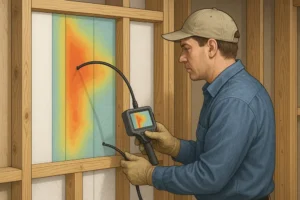
Turn on the bathroom fan. Follow the duct run to the roof or gable end. You should see a tight connection to a metal or plastic collar that penetrates the roof or wall. Feel around the joint – you want strong airflow inside the duct, not leaking into the attic. If you feel air blasting through torn insulation or a loose zip tie, that’s your leak. Also look for water stains, mold speckling, or drip marks near low points in the duct where condensation collects.
Check From the Exterior
With the fan on, go outside and watch the roof or wall cap. The damper flap should open. Hold a tissue near the outlet to confirm discharge. If the flap barely moves or you feel nothing, the duct may be disconnected or choked. If the flap is stuck by paint, debris, or insect nests, it needs cleaning or replacement. Make sure the cap is sealed to the roof or wall and that fasteners and flashing are intact.
What a Good Termination Looks Like
A proper cap has a low-resistance damper that swings open with minimal pressure, no bird or insect screen that clogs with lint, a rain hood, and tight flashing. The duct is positively attached to the cap collar with a mechanical clamp and sealed seams. If your fan terminates in a soffit, be aware that humid air can re-enter attic intake vents. It’s a lousy setup. Reroute to a roof or gable termination that exhausts fully outside.
Seal and Insulate Flex Ducts
Flex duct is the fast-food of airflow – quick and fine in a pinch, but it can do damage if it sags, stretches, or stays uninsulated. Any bathroom exhaust duct in an unconditioned attic needs both airtight connections and thermal protection. Without flex duct insulation and sealed seams, moisture condenses inside the line and gravity does the rest. Codes and inspectors flag this constantly:
inspecting uninsulated exhaust ducts.
Keep the Run Short and Straight
Use the shortest practical path to the exterior with gentle bends. Every tight turn multiplies resistance and reduces airflow. Avoid low dips where water can pool. Support the duct every 4 feet with 1.5 inch or wider straps. Slightly slope the run toward the exterior cap so incidental condensation drains outward, not back to the fan housing.
Make Airtight Connections
Slide the inner flex core over a smooth metal collar at the fan and at the termination cap. Secure with a worm-drive clamp. Seal the joint with UL 181 aluminum foil tape or duct mastic. Do not use cloth duct tape – it dries out and fails. Pull the outer insulation and vapor jacket back over the collar and tape that jacket tight so the vapor barrier stays continuous. Any unsealed jacket seam is a future drip.
Insulate to Stop Condensation
In most attics, you want R-8 around the duct. That’s the common code target for unconditioned spaces in many jurisdictions under the IMC and IECC. Use factory-insulated flex rated for attics or wrap rigid sections with duct wrap and a proper vapor barrier. Seal longitudinal seams and butt joints of the jacket with foil tape so warm, wet bathroom air cannot reach the cold duct wall. More guidance here:
why uninsulated exhaust ducts condensate.
Consider Rigid Sections Where It Counts
Rigid smooth-wall pipe near the fan and near the termination reduces friction, keeps slopes true, and resists crushing compared to full-length flex. Use flex only for short transitions. The result is stronger airflow and less moisture left behind to condense.
Backdraft Dampers That Work
Your fan likely has a small internal damper. Add a quality termination damper at the cap so outside or attic air does not rush backward when the fan is off. A backdraft damper limits cold air intrusion, reduces condensation, and improves energy performance. Options include gravity flaps, spring-loaded models, and low-leak roof caps with integrated dampers. Make sure the damper’s swing is unobstructed and the flap is not warped or painted shut. Here’s a solid primer on backdraft dampers and performance:
benefits of backdraft dampers.
Pro tip: if you can hear the damper ping or rattle in a breeze, it might be undersized or poorly seated. Size the duct and damper to your fan’s CFM and keep the path clean. The best dampers open with little pressure, seal when closed, and don’t trap lint.
Safe Attic Mold Cleanup
Now to the furry part. If mold is limited and the wood is structurally sound, a careful homeowner can often handle it. If growth is widespread, insulation is soaked, or wood feels soft, call a restoration crew. A common rule: if the affected area is larger than about 10 square feet or you see chronic wetting, bring in a pro.
Stop the Moisture First
Confirm roof cap discharge verification, fix disconnections, seal joints, and add insulation before you clean. Otherwise you’re washing a car in the rain. Then dry the attic zone using airflow and, in humid climates, a dehumidifier. Target wood moisture below about 15 percent.
Set Up Containment
Lay down plastic sheeting to protect the ceiling below. Bag out loose insulation that is damp or moldy. Use disposable bags rated for construction debris. Keep the attic hatch area clean so you don’t rain spores into the hallway.
Use Real PPE
Wear gloves, goggles, and a properly fitted N95 or P100 respirator. Long sleeves help. Attics are full of nails, wiring, and itch. Work on planks, not drywall, unless you like making new living room skylights.
Clean the Growth
HEPA vacuum the surface dust first. Wipe or scrub stained wood with a detergent solution or an EPA-registered mold cleaner. Bleach is not the magic answer on porous wood. Let the surface dry, then repeat as needed. Some contractors apply a post-cleaning antimicrobial or a sealant after thorough cleaning, but no coating should be used to hide active growth or moisture problems.
Don’t Rely on Fogging Alone
Mist-only approaches are like spraying cologne on gym socks. Physical removal of contamination and moisture control always come first. If you want extra assurance, arrange for third-party post-remediation verification after repairs and cleaning are complete.
Prevention and Maintenance
Bathroom exhaust is not set-it-and-forget-it. Keep it tuned and your attic stays clean.
Use a countdown timer switch so the fan runs 20 to 30 minutes after showers. Size the fan correctly: at least 50 CFM for small baths and roughly 1 CFM per square foot for larger rooms, with more if you have a steam shower. Keep duct runs short with gentle bends and a slight slope to the exterior. Upgrade long spaghetti runs to rigid duct with minimal fittings. Inspect after roof work or big wind events – it’s common for a flex connection to get tugged loose while someone’s crawling around.
Once a season, especially in winter, check the roof cap from outside while the fan runs. Verify the damper opens and air exits. Inside the attic, feel for leaks and check for damp insulation under the duct. If you’re still planning layout changes, route to a gable or roof termination, not into a soffit cavity. Re-entrainment of moist air defeats the whole purpose. For routing guidance and why venting into an attic or leaky soffit is a no-go, see this resource:
proper bathroom vent duct routing.
Homeowner FAQ
How Do I Verify My Roof Cap Discharge?
Turn the fan on. In the attic, feel around the termination collar for leaks and look for a tight mechanical connection. Outside, watch the cap and confirm the damper opens and air exits. Use a tissue near the outlet to check airflow. If the damper barely moves or you feel nothing, the duct may be disconnected, crushed, or blocked.
What R-Value Do I Need Around the Duct?
Many jurisdictions require R-8 for ducts in unconditioned attics. At minimum, use attic-rated duct insulation with a sealed vapor barrier. Factory-insulated flex labeled R-8 is common. Wrap rigid sections with duct wrap to the same level. Reference: guidance on condensation and code notes here:
InterNACHI on uninsulated exhaust ducts.
Can I Keep Using Flexible Duct?
Yes, if it’s installed correctly: short, supported, sealed, and insulated. Rigid duct performs better, especially on long runs or where slopes must be maintained to drain condensation. Many pros use a hybrid – rigid for most of the path, a short flex connector at the fan or cap for vibration isolation.
Do I Need a Backdraft Damper?
Your fan may include one, but a low-leak termination damper at the roof or wall cap is smart. It helps prevent cold air and moisture from reversing into the duct and reduces condensation risk. Pick a design that opens easily under your fan’s airflow and seals well when off.
When Should I Call a Professional?
If mold exceeds roughly 10 square feet, if insulation is soaked, if the roof sheathing is soft, or if accessing the roof cap is risky. Also call in help if you fix the ducting and still see new staining – you may have a roof leak or another hidden source.
DIY vs Pro: Quick Guide
| DIY-Friendly | Call a Pro |
|---|---|
| Short duct runs you can reach safely | Terminations high on steep roofs |
| Sealing joints with UL 181 tape and clamps | Full rerouting through framing or masonry |
| Adding R-8 flex duct insulation | Widespread mold or saturated insulation |
| Swapping a simple roof or wall cap | Structural wood damage or recurring leaks |
Pro-Level Checks You Can Copy
Measure airflow at the fan grille to confirm performance after repairs. If you do not have a flow hood, a makeshift test with a plastic bag and stopwatch can provide a sanity check: a 13 gallon bag is about 1.7 cubic feet – how many seconds to fill gives a rough CFM estimate. Not lab-grade, but it tells you if your 110 CFM fan is acting like a 30 CFM wheezer. Listen for whistling that hints at crushed flex or tight turns. In cold climates, peek after a cold night for frost tracks that point to leaks. Seal what you find.
Common Installation Mistakes to Avoid
Do not leave the inner core unsecured at the fan or cap. Do not tape to rough plastic without a clamp. Do not bury uninsulated duct in loose-fill insulation and call it a day – the vapor barrier needs to be continuous and sealed. Do not leave a belly in the run where water collects. Do not vent into a ridge vent or passive attic vent and hope it drifts out. And do not ignore a damper that sticks – it defeats the whole system.
What Inspectors Want to See
Short, supported, sealed duct with labeled insulation, a visible mechanical clamp at each collar, clean roof or wall cap with a free-swinging damper, and no stains around the run. They also love to see a timer switch in the bathroom and a quiet, properly sized fan that actually moves air. For a run-down of field findings and what often goes wrong at terminations, scan this guide:
common bath fan terminal issues.
If You’re Upgrading the Fan
Choose a fan with the right CFM and a low sone rating so you’ll actually use it. Match the duct size to the fan collar – choking a 6 inch collar down to 3 inches is an airflow crime. Many premium fans include smooth-flow fittings that make sealing easier. Add a spring-return backdraft damper if your cap lacks one. Wire a 20-60 minute timer and, if you battle humidity, a humidity-sensing control that stays on until levels drop.
Your Next Steps
Turn the fan on and do a fast roof cap discharge verification. If the damper doesn’t open, fix that first. Then work the run from fan to termination: clamp, mastic, and UL 181 tape every joint, and finish with R-8 flex duct insulation that’s fully sealed. Replace weak or sticky dampers with a quality model. If you uncover mold, stop the moisture, clean it safely, and dry the structure. If the attic looks like a biology project, call a restoration team that handles both duct fixes and mold remediation so the source and the symptoms get handled in one pass.
If you want more background while you plan repairs, these resources are worth a read:
bath-fan venting standards,
how to properly terminate exhaust ducts,
condensation risks on uninsulated ducts.