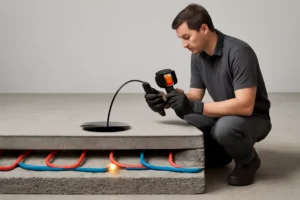
If your laminate or LVP is suddenly doing the wave, your slab might be trying to tell you something in Morse code: moisture is pushing up. That upward push is called slab vapor drive, and it loves to turn pristine floating floors into mold farms you can’t see until it’s ugly. The good news is you can catch it early, confirm it fast, and fix it right so your next floor doesn’t become an expensive science project. Here’s how a restoration pro reads the signs, verifies the problem without guesswork, safely tears out and dries, and then prevents a repeat with the right floating floor underlayment, slab sealing, and humidity control.
Why Floating Floors Hide Trouble
Floating floors are the ninjas of flooring. They sit on top of the slab with a thin cushion, click together, and look great fast. The problem shows up underneath. Concrete always has moisture, and if there’s no effective vapor barrier under the slab or proper moisture control above it, that moisture is going to chase the drier air in your home. When it hits a mostly impermeable floor system, it stalls under there. Cue trapped humidity, sticky edges, and the kind of musty funk that screams mold is moving in rent free.
Unlike solid wood that telegraphs problems with dramatic cupping, LVP and laminate can mask early-stage damage. The surface still looks good while the underside gets damp and fussy. By the time you notice buckling, odor, or staining at the baseboards, the slab vapor drive has usually been at it for a while.
What Is Slab Vapor Drive?
Slab vapor drive is the movement of water vapor through a concrete slab from a higher-moisture zone to a lower-moisture zone. Concrete is porous. It wicks and breathes. Even if the slab looks dry, vapor can still diffuse up through it. If the soil under the slab is damp, if there’s seasonal groundwater, or if the home lacks a proper under-slab vapor barrier, that diffusion ramps up. When the top of the slab is covered with a low-permeance floor and there’s no functioning barrier on top, vapor collects under the floor. The result is elevated moisture at the floor-slab interface, which is exactly where mold likes to set up shop.
Think of it like steam trying to escape a pot with a tight lid. It will find a way out at the edges or build enough moisture to condense under the lid. That “lid” is your floating floor. Once that microclimate under the planks hits around 60 percent relative humidity and stays there, mold growth is just a matter of time.
Early Warning Signs To Watch
Your floor will drop hints before it drops your jaw. Here are the clues pros look for during inspections of laminate or LVP installed over a slab:
| Sign Type | What You Might Notice |
|---|---|
| Visual or Structural | Edges curling or lifting, planks tenting, bubbles or blisters, seams telegraphing, perimeters darkening, soft or spongy spots that sound hollow or dull when tapped. |
| Odor | Musty or earthy smell that lingers after cleaning. Strongest near baseboards, closets, or furniture that hugs the floor. |
| Seasonal Shifts | Issues spike after heavy rain or during humid months. Rooms over colder slab zones feel clammy and odors intensify with doors and windows closed. |
Your nose is the tattletale you should trust. If a room with floating floors smells musty but you can’t find a spill or leak, slab vapor drive is a prime suspect.
Quick Tests You Can Trust
Skip the guesswork and get data. Some tests are DIY friendly, and others are best handled by a pro. Here’s how to confirm whether your slab is pushing moisture up into your floor system and how much muscle that push has:
Plastic Sheet Test – Tape a square of clear polyethylene to a bare section of slab, seal the edges with tape, and leave it 24 to 48 hours. If you see condensation under the plastic or the slab looks darker when you peel it up, vapor is moving. This is a simple red-light or green-light check.
Calcium Chloride Test – This lab method measures moisture vapor emission rate, often expressed as pounds of water per 1000 square feet over 24 hours. It runs for 60 to 72 hours. Many resilient floor systems and adhesives have strict emission limits. If your MVER number is high, you need stronger mitigation before reinstalling floors. Always match the test results to your flooring manufacturer’s specs, because their warranty lives or dies by those numbers.
In-Slab RH Probe – A pro test that puts a sensor at about 40 percent depth of the slab to read internal relative humidity. This gives a better picture of what the slab will do in service. If the in-slab RH is high, the slab will continue to feed vapor upward long after the surface looks dry.
Moisture Meters and Thermal Imaging – Non-invasive meters help map the hotspots, and thermal cameras point to cooler zones that may be evaporating. These are great for hunting the worst areas before you open anything up. Use them together with MVER or RH tests for a complete story.
Testing tip from the field: test multiple spots. If one side of the room borders an exterior wall or a downspout, that side often reads wetter. You’re not looking for a single number. You’re looking for the worst-case number that sets your mitigation plan.
Safe Tear-Out and Drying Steps
Once you have evidence of slab vapor drive and the floor shows damage or odor, it’s time to remove the materials that trap moisture and let the slab breathe. Here’s how we handle it on real jobs without turning your home into a dust bowl:
1. Contain and Protect – We isolate the work zone with plastic barriers and run negative air with HEPA filtration. This keeps dust and mold fragments from migrating into clean areas. We suit up with proper PPE, because mold likes to ride the airflow out like it owns the place.
2. Smart Tear-Out – Floating floors come up first, followed by damp or moldy underlayment, vapor barriers that are compromised, and baseboards with visible staining or swelling. If adhesives or floor prep compounds are present, they’re removed where they’re damp or debonded. We check drywall at the bottom 2 to 4 inches along walls. If it reads wet or shows growth, off it comes.
3. Dry The Slab and The Air – We set commercial dehumidifiers and high velocity air movers to get the slab and surrounding air down to safe levels. Target indoor RH is 30 to 50 percent during drying. We monitor the slab surface and in some cases run temporary heat to boost evaporation. Doors and windows can help in low humidity weather, but in a humid climate the machines do the heavy lifting.
4. Clean and HEPA – We HEPA vacuum exposed surfaces and perform antimicrobial cleaning where growth is visible or suspected. If we cut drywall, we clean framing and plate lines and dry those zones thoroughly before closing anything up.
5. Verify Moisture Before Rebuild – No new floor until the numbers say yes. Depending on your flooring specs, we’ll aim for manufacturer-approved MVER and in-slab RH. If the slab still reads high, jump to mitigation instead of hoping a new floor will behave. It won’t.
For projects with significant mold growth, we follow IICRC S520 practices, set up proper containment, and run post-cleaning verification. If you’re a homeowner tackling a small area, the general rule of thumb is to call a pro when growth covers more than about 10 square feet or when you can smell it across the room.
Picking Floating Floor Underlayment
Most floating floors over slab need a vapor barrier underlayment. Not a maybe. Not a someday. A real barrier with sealed seams that stops vapor from riding into the underside of your planks. Here’s how we spec it so the floor looks good and stays that way:
Vapor Barrier Layer – Many LVP and laminate manufacturers call for at least a 6 mil polyethylene barrier over concrete. Some underlayments integrate a film layer on top of the foam pad. Either way, you want a continuous, flat, taped barrier as your first line of defense above the slab.
Compatibility – Your flooring’s warranty language is not just legal decoration. Some products require their own branded underlayment or a specific perm rating. Use the right one or be prepared to own the risk if the slab breathes more than the floor can handle.
Seam Sealing – Every seam gets butted tight and taped with a manufacturer-approved tape. Gaps, wrinkles, or tears become moisture funnels. Run the barrier up the perimeter 2 to 3 inches behind baseboards to protect edges and stop vapor sneak attacks.
Pad Selection – If foot comfort or sound is a concern, choose a foam or cork pad that’s rated for concrete and designed to be used with a separate or integrated vapor barrier. Avoid cushy, high-permeance pads that feel nice but invite vapor through.
One more reality check: underlayment is not a miracle cure for a hot slab. If MVER or in-slab RH is beyond the flooring’s tolerance, you need slab mitigation first, then underlayment. Do not ask a thin plastic sheet to fight a hydrogeology battle by itself.
Does The Slab Need Sealing?
When testing shows high emissions or high in-slab RH, surface-applied moisture mitigation is your best friend. These are not off-the-shelf paints. They’re engineered coatings that control vapor diffusion at the top of the slab so your floor system lives a long and happy life.
Two-Part Epoxy Moisture Mitigation – ASTM F3010 type systems are designed to handle elevated vapor emissions and in-slab RH. After proper prep, we roll or squeegee the coating to the specified thickness, sometimes with sand broadcast, then install the appropriate primer or underlayment on top. This creates a new moisture control layer where your slab meets the floor.
Surface Prep Matters – We mechanically profile the slab so the coating bonds like it means it. That often means shot blasting or diamond grinding to a specified CSP profile. Quick-fix coatings on smooth or dusty slabs fail. Prep is where the win happens.
Edge Conditions – Exterior edges and control joints are common leak paths. We detail these with sealants or compatible materials per the system instructions so vapor does not detour around your new barrier.
Timing – If the slab is new, follow the manufacturer’s requirements. Some systems can be applied earlier than traditional floor installs, but they still require stable conditions. If the slab is old and always damp, mitigation beats waiting forever for a number that never arrives.
Control Humidity and Ventilation
Even with a sealed slab and the right floating floor underlayment, high indoor humidity can tip the balance back toward trouble. Mold thrives when air stays above about 60 percent RH. Keep your space in the 30 to 50 percent range for a hostile-to-mold environment.
HVAC and Dehumidification – Run the AC in cooling season and make sure the system is dehumidifying properly. In muggy climates or basements, add a standalone dehumidifier and set it to 45 to 50 percent. Do not wait for sticky floors to tell you the air is too wet.
Airflow – Dead pockets along exterior walls and under big furniture are mold’s favorite hiding spots. Leave a little breathing room. If you love area rugs, make sure they are not trapping moisture in known problem zones.
Live With The Weather – Opening windows on a humid day just dumps new moisture into your home. On dry days, go for it. On humid days, let your HVAC and dehumidifier be the heroes.
Exterior Drainage and Edges
Your slab is not floating in space. Soil moisture and surface water send a steady supply line to the bottom of that concrete. Cut off the source and the slab has a fighting chance.
Grading and Gutters – Aim the grade away from the structure, keep gutters clean, and extend downspouts well past the foundation. Splash blocks look cute and do little. Extensions move water where it cannot soak under the slab.
Irrigation and Planters – Sprinklers that soak the perimeter make slabs cry. Re-aim heads, shorten run times, and use drip where you can. Planter boxes against exterior walls are a moisture trap unless they have flashing and drainage addressed.
Cracks and Joints – Seal control joints and cracks that channel surface water under the floor edge. This is not a cosmetic detail. It is stopping a direct pipeline into your slab.
When To Call a Pro
If you smell mustiness and your floor is starting to misbehave, get a moisture assessment before the next rainy week puts your floor on life support. We bring calibrated meters, RH probes, thermal imaging, and actual remediation muscle. If tear-out is needed, we keep it contained and clean, follow industry standards, and we do not guess on drying targets. After we prove the slab is in range or install a mitigation system, we help you pick a floor and floating floor underlayment that match your numbers and your warranty.
We also recommend seasonal checkups if your home sits on a slab in a humid climate, if you live near a high water table, or if you had a past failure. Catching a small spike before it becomes a swamp is the cheapest win in restoration.
Pro Tips That Save Floors
Here are field-tested habits that keep your floor from ever meeting a moisture meter up close:
Test Before You Install – Always run MVER and in-slab RH tests before you buy a single box of flooring. If the numbers are borderline, plan for mitigation, not wishful thinking.
Read The Specs – Your flooring and adhesive manufacturers publish acceptable moisture limits and underlayment requirements. Follow them and keep the paperwork. If something goes sideways later, proof beats memory.
Detail The Perimeter – Run the vapor barrier up the wall behind baseboards, foam and seal large gaps at the slab edge, and do not leave holes at pipe penetrations. Moisture loves shortcuts.
Acclimate The Right Way – Acclimate flooring to service conditions, not just the room temperature. If your home runs at 45 percent RH, get the space there before you click boards. Acclimating in a humid house, then drying later, is asking for movement.
Monitor After Heavy Weather – After big storms or seasonal humidity shifts, spot check with a hygrometer. If the room RH creeps up or odor shows up, act early.
Case Study: The Floor Looked Fine Until It Didn’t
A homeowner called us after their new LVP started bubbling at the kitchen and darkening along the back door. No leaks above. We pulled baseboards and ran tests. The plastic sheet fogged up in 24 hours. Calcium chloride test came back high. An RH probe read elevated at 40 percent depth. The underlayment was present but seams were loose and not taped in the traffic path. We set containment, removed the floor and pad, dried the slab to target, then installed an ASTM F3010 moisture control epoxy. After cure, we placed a compatible primer and self-leveling underlayment in a couple of low spots, then installed a manufacturer-approved vapor barrier underlayment with sealed seams. New LVP went down, and the kitchen still looks great a year later, including after a wet spring. The difference was numbers first, mitigation second, and no shortcuts on underlayment seams.
FAQ: Common Questions
Can I just put a thicker underlayment over a damp slab?
Not if the slab is out of spec. Thicker cushioning does nothing to stop vapor. You need a true vapor barrier and often a surface-applied mitigation system when test numbers are high.
Do I need to rip out the whole floor if only one area smells musty?
Maybe not, but plan for it. Moisture rarely stays in a perfect square. We test to map the moisture and open the worst sections first. If the underlayment or barrier is continuous and compromised, the fix usually extends beyond the smelly spot.
How dry is dry enough for reinstalling floors?
Whatever your flooring manufacturer specifies. That usually means MVER and in-slab RH within the published limits. We verify with the same standardized tests the manufacturer recognizes.
What if my slab never seems to dry?
Stop waiting. Install a moisture mitigation system that is rated for your emission and RH levels, then rebuild over that. It is a permanent fix when done right.
Is a dehumidifier alone enough to stop slab vapor drive?
Dehumidifiers help air conditions but cannot stop vapor diffusion through the slab. Use them as part of the drying and control plan, not as a bandage for an out-of-spec slab.
Do area rugs cause mold on LVP?
They can if the slab is active and the rug traps humidity. If your slab is in spec and you maintain indoor RH in the 30 to 50 percent range, rugs are usually fine. If you smell mustiness when you lift a rug, test the slab.
Need Help Catching Slab Vapor Drive?
If your LVP or laminate is sending distress signals or your nose says something is off, we’ll bring the meters, the probes, and the game plan. We handle safe tear-out with containment, targeted drying, IICRC-standard mold cleanup, and long-term fixes like slab sealing and the right floating floor underlayment. Ask about a moisture assessment, especially if you’re in a slab-on-grade home or just installed new flooring. Catch slab vapor drive early, and you keep mold from ever getting a foothold under your floor.