If a bathroom smelled smokier than a brisket and your fan quit with a sad little sizzle, you probably had a bathroom exhaust fan fire. The flames might have been small and fast, but the attic above your ceiling could be a crime scene. Aging motors and lint love each other a little too much, and that cozy relationship can light up framing, cook wires, melt ducting, sprinkle soot into every nook, and leave you with a gnarly smoke odor that refuses to move out. This is exactly where a pro steps in. You want a methodical attic wiring inspection, a no-nonsense plan to clean and rebuild, and upgrades that stop a repeat. Let’s talk about what actually gets checked, how pros restore the space safely, and the upgrades that make your next shower steamy for all the right reasons.
Why Bathroom Fans Ignite
Bathroom exhaust fan fires tend to start quietly and above your line of sight. Here’s the unglamorous truth. Fan motors age, bearings drag, windings overheat, and that warm, dusty lint blanket turns into kindling. Add wiring that has been spliced outside a junction box, aluminum-to-copper connections that were never rated to mix, or a fan that’s been venting hot, moist air right into the attic, and you have a slow-burn setup. Sources like OCI Group have documented how bathroom fan motors and poor installation choices kick off electrical fires, and home inspector resources show how sloppy attic wiring invites trouble. Lint is fuel, friction is heat, and bad wiring is a fuse. Put them together and you get a smoky surprise above the drywall.
Signs of Hidden Attic Damage
Even if the bathroom looks okay, the attic can tell a different story. A proper inspection is slow, dusty, unglorious work, and it matters. You are looking for compromised structure, cooked wiring, contaminated insulation, and a smoke pattern that gives away where soot traveled. You also want proof for your insurance adjuster, because the more clearly you document, the faster the claim moves and the safer the rebuild goes.
Attic Wiring Inspection
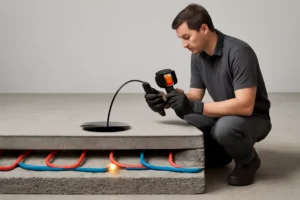
The attic wiring inspection is the first hard stop. You are hunting for heat-damaged insulation on conductors, melted wire nuts, open splices that were tucked in the insulation, and junction boxes buried under fluff. If a wire’s PVC jacket turned glossy or brittle, it probably got hot enough to lose dielectric strength. That is not a keep-it-and-hope situation. You are also checking cable support and protection, proper bushings where cables enter boxes, and whether the bathroom fan circuit should be updated with modern protection like GFCI near wet locations and AFCI where required by current code. Expect to relocate any junction boxes so they are accessible and to replace any section of cable that shows heat stress, charring, or smoke infiltration. No shortcuts with electricity. Ever.
Framing and Roof Sheathing
Char on rafters, joists, or roof sheathing is a red flag, and depth of char matters. Light surface charring might clean up, but deeper char or any structural warping usually calls for sistering or replacement. Fasteners can lose temper from heat, and gusset plates or hangers might need to be swapped. Inspect for cracked knots that opened under heat and for signs that smoke traveled along the roof deck to other bays. If the fire got close to a truss, you bring in a qualified contractor or engineer to verify the load path is still solid. Fire doesn’t have to be dramatic to be destructive.
Insulation and Ductwork
Insulation acts like a soot sponge. Even if it did not ignite, it can hold odor for years. Burned or smoky insulation is usually a remove-and-replace item. That includes fluffy fiberglass that looks clean on top but reeks when you disturb it. Ductwork is another hotspot. Flexible duct with thin plastic liners can melt, kink, or delaminate. If the bathroom fan ever vented into the attic instead of outdoors, you are addressing moisture damage as well as fire risk. Replace that run with smooth-wall metal duct, insulate it to limit condensation, minimize bends, and terminate it at a proper exterior hood with a backdraft damper. No venting into soffits. No venting into the attic. Full stop.
Soot, Smoke, and Odor Paths
Soot travels in unpredictable ways, driven by pressure differences and thermal plumes. You can see a smoke fingerprint where framing members slowed the plume, leaving tiger striping on roof sheathing and rafters. Expect to find soot in odd places like nail tips punching through roof decking, light fixtures, and even the HVAC return if the fire smoldered long enough. Odor does not respect your to-do list. It lingers in porous materials and hidden gaps. That is why professional soot removal is targeted, layer by layer, before any odor treatment is applied. You do not perfume over contamination. You remove the contamination, then neutralize what remains.
Insurance Photos and Notes
Good documentation speeds approvals. A trained team will take wide and tight photos, map the affected area, mark charring depth, note wire sizes and device ratings, and log where insulation and ductwork need replacement. Thermal imaging can show heat signatures or missed voids. Moisture meters come out if fire suppression or broken pipes added water to the equation. Then the scope gets written in plain English with line items for wiring, framing, insulation, ducting, cleaning, and odor control. Adjusters like clarity because it makes their job easier. You like it because it gets you to yes faster.
Pro Restoration Checklist
When you hire a professional restoration company, you should see a step-by-step plan that locks in safety first, then cleanup, then rebuild, then upgrades. Here is what that looks like in practice.
| Step | Action |
|---|---|
| Safety and Stabilization | Shut power to affected circuits, secure any loose framing, and set up lighting, walk pads, and containment so no one eats insulation for lunch. |
| Attic Wiring Inspection | Open everything that needs to be opened, replace heat-damaged runs, relocate and label junction boxes, and bring protection up to current standards. |
| Framing Repair | Sister or replace charred or warped members, swap compromised fasteners, and verify load paths if trusses were exposed to heat. |
| Soot Removal | HEPA vacuum, dry-chem sponge, and targeted media cleaning where needed, then a meticulous wipe-down. No painting over soot. |
| Odor Neutralization | Apply proven odor treatments after cleaning, use negative air, and run hydroxyl or ozone in unoccupied areas as appropriate. |
| Insulation Replacement | Bag and remove contaminated insulation, seal penetrations, and reinstall R-value to current code with proper clearances from fixtures. |
| Duct Replacement | Install smooth-wall metal duct, insulate it, minimize bends, and terminate at an exterior hood with a damper and proper flashing. |
| Verification and Sign-Off | Electrical and building inspections, odor check, and a walk-through with documentation for your carrier. |
Safety Starts With Power Off
Nothing good happens in a smoky attic with live power. A licensed electrician should isolate the circuit, verify no shared neutrals are hiding, and lock out the panel while the attic wiring inspection and repairs happen. Pros also set containment and negative air so loosened soot does not tour the rest of your house. If the HVAC is nearby, registers get sealed until the dirty work is done.
Cleaning That Actually Removes Soot
Real soot cleaning is measured and boring, which is exactly what you want. HEPA vacuum to capture loose carbon, dry-chem sponges on raw wood, and selected media cleaning on stubborn areas. Then a careful wash with products that are made for soot. If the crew jumps to paint without that progression, you are buying a future odor problem. After surfaces are clean, odor control can actually do its job.
Odor Control That Works
Odor mitigation follows cleaning, not the other way around. Pros use hydroxyl generators for occupied structures or ozone for unoccupied, sealed spaces. Thermal fogging can chase odor molecules into framing cavities. The key is selecting the right tool for the material and the level of contamination. Run-time and placement matter. Results get validated with an actual sniff test plus instrumentation if needed.
Reinsulating the Right Way
Once the attic is clean and wiring is corrected, insulation goes back in. That is when a team should block and seal penetrations with fire-rated sealants where appropriate, maintain clearance around recessed lights that are not IC-rated, and balance the ventilation strategy. You want the R-value your region requires and you want even coverage so you do not create hot or cold pockets that build condensation. If you burned through baffles at the eaves, those get replaced too.
Rebuilding the Duct Run
Bathroom exhaust deserves a short, straight, smooth ride out of the house. Smooth-wall metal duct reduces lint hang-ups and pressure loss. Every extra bend adds drag, which makes the motor work harder and run hotter. Terminate at a proper exterior hood with a backdraft damper that moves freely. Seal seams with foil tape rated for duct use. If the old fan used skinny flex duct that sagged like a wet noodle, you just found one of the culprits.
Upgrades and Prevention
A bathroom exhaust fan fire is the universe suggesting an upgrade. Here is what professionals put on the table to cut risk and improve performance so the next call is about a remodel, not a rebuild.
Pick a fan sized to the room with a real-world static pressure rating, not just a pretty CFM on the box. Add a humidity sensor so the fan runs long enough to dry the space. Choose a model with a thermal cutoff and a sealed motor assembly that does not inhale your lint buffet. Many modern fans run quieter at higher efficiency, which means you will actually use them. Quiet fans save drywall, paint, and framing from moisture damage too.
For wiring, a licensed electrician can bring protection up to current code. GFCI where required, AFCI where required, and accessible junction boxes that do not vanish under insulation. Secure cables properly and protect them at box entries. If your home mixes aluminum and copper from different eras, make sure rated connectors are used by someone who knows the difference between good and crispy.
Vent to the exterior only. No attic vents, no soffit vents, no dumping into a crawl. Use metal duct, keep it short, insulate it in unconditioned spaces, and point it outside through a termination designed for bath fans. Check that damper annually. If it sticks, the motor runs hot and your mirror fogs forever.
Clean the fan. Yes, actually clean it. Pop the cover, vacuum, and wipe the blades a couple times a year. Lint is free fuel. You do not want your bathroom fan snacking on it. While you are there, look for discoloration on the housing, scorched wiring, or a motor that sounds like it is grinding coffee beans. Replace before it fails spectacularly.
If your attic runs hot, improve ventilation and air sealing. Clear soffits, add or repair baffles, and make sure ridge or gable vents are not choked by debris. Seal big penetrations so your conditioned air stops feeding the attic, and you will reduce moisture, lower odors, and make the fan’s job easier.
How We Handle These Jobs
We restore attic fire damage for a living, and we do it with a healthy respect for electricity, structure, and airflow. You call, we show up, and the first thing we bring is a plan. Our team performs a full attic wiring inspection with a licensed electrician, isolates the affected circuits, and opens up anything that needs eyes on it. We do not guess. We photograph and map damaged wiring, framing, insulation, and ducting so your adjuster has a clean file. We set containment, negative air, and HEPA filtration so soot stays put and your living space stays livable.
Cleaning happens in layers. HEPA vacuum, dry-chem sponge, targeted media cleaning where wood staining will not release, and then the right wash-down. Odor control comes after cleaning so it actually sticks. We replace insulation only after the attic is truly clean and the electrical is safe. Then we install correctly sized, insulated ductwork to a proper exterior termination. If you want a fan upgrade, we help specify one that fits your space, hits the CFM target at real pressure, and uses safer, modern components.
If you want to see what professional fire restoration looks like from start to finish, our Fire Damage Restoration Services page lays out the process. We also handle larger loss scenarios that include code compliance and structural coordination, which we explain on our Commercial Fire Damage Restoration page. When a bathroom exhaust fan fire hits the attic, you need both electrical and building know-how. We bring both, and we document it so your carrier can authorize the work without back-and-forth déjà vu.
If you are the type who likes receipts, you can read more on risks of bathroom fan fires from sources like OCI Group, and you can see common attic wiring and venting mistakes outlined by national inspector organizations. Those resources back up what we see in the field every week: lint, old motors, and bad ducting team up, and the attic pays the price.
FAQ: Bathroom Fan Fire Fixes
Is my attic safe if the bathroom looks fine?
Maybe, but probably not without checking. Bathroom exhaust fan fires frequently damage attic wiring, insulation, and ducting out of sight. A proper attic wiring inspection, soot assessment, and a look at framing and roof sheathing are non-negotiable. Hidden smoke and heat damage cause secondary issues months later if you skip this step.
Can I just paint to cover the smoke odor?
No. Paint is not a deodorizer and soot is acidic. You remove soot first with HEPA vacuuming and dry cleaning methods, then you apply odor treatments, then you rebuild. Painting over contamination traps odor and can cause long-term staining and adhesion problems.
Do I need to replace all the insulation?
If insulation is contaminated with soot or smoke odor, yes. It is nearly impossible to clean effectively, and it will keep broadcasting odor. We bag and remove the damaged material, seal penetrations, and reinstall the correct R-value.
What upgrades prevent another bathroom exhaust fan fire?
Choose a properly sized, modern fan with a thermal cutoff and humidity control, replace any damaged wiring, add required GFCI or AFCI protection, install smooth-wall metal duct with a short run and exterior termination, and clean the fan twice a year. That combination eliminates the usual suspects.
Should the fan vent into the attic or a soffit?
No. Always vent to the exterior. Venting into the attic or a soffit dumps moisture where it does damage, encourages mold, and raises fire risk. Use metal duct, insulate it in the attic, and terminate at a proper exterior hood with a backdraft damper.
Will insurance cover this?
Every policy is different, but bathroom exhaust fan fires are commonly covered events. Documentation is everything. We supply photos, a written scope, itemized material losses, and a stepwise plan that aligns with industry standards so your adjuster can approve the work.
How fast should I call a pro after a fan fire?
Right away. Shutting off power, stabilizing the attic, and preventing soot cross-contamination are time sensitive. The sooner a trained crew starts, the less secondary damage you deal with and the cleaner your insurance file looks.
What if my home is older and has aluminum wiring?
That is a flag for licensed electrical work. Aluminum wiring needs rated connectors and proper practices. After any fire event, all affected splices and devices in the area should be evaluated and repaired or replaced by a qualified electrician as part of the attic wiring inspection.
A Quick Word on Sources
Electrical investigators have documented how bathroom fans fail and ignite, and national inspector groups detail attic wiring and venting mistakes that multiply risk. If you want to read more, see resources like OCI Group’s analysis of bathroom fan fire risks and InterNACHI’s electrical and attic checklists. And if you are here because your fan already tried to roast marshmallows, skip the homework and call a pro who will start with a real attic wiring inspection, clean the mess the right way, and rebuild with smarter components so this story does not get a sequel.