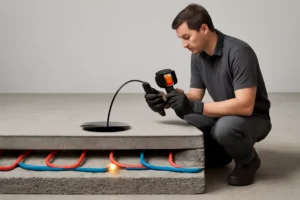
If your water heater lives in the attic, you’re playing leak roulette over your favorite couch. Gravity is not your friend, drywall hates surprises, and that tiny drip can turn your living room into a soggy modern art exhibit. The fix is not magic, it’s a system: a correctly sized and drained attic water heater pan, a T&P relief line and pan drain that actually work, and smart sensors that shut the water off before your ceiling throws a tantrum. Here’s how to turn a high-risk setup into a boring, well-behaved appliance that minds its manners.
Why Attic Heaters Are High Risk
Water always takes the fastest path down, and in an attic that path runs through insulation, joists, recessed lights, and whatever room is directly below. A pinhole in the tank, a stuck inlet valve, or a faulty temperature and pressure relief valve can quietly fill an undersized or undrained pan until it spills like a kiddie pool on your sheetrock. By the time you notice a stain on the ceiling, you’ve already got wet insulation, possible electrical hazards, and a perfect breeding ground for mold. That’s why the attic water heater pan, standalone drains, and a smart shutoff valve are not fancy upgrades. They’re cheap insurance against the kind of restoration project you never want to fund.
Pick The Right Catch Pan
The attic water heater pan is your first line of defense. Code requires one when the heater is above finished space, because a leak upstairs can go full waterfall downstairs. You’ve got choices for materials. Plastic is inexpensive and fine for small spaces, but it can crack if it gets stressed or UV exposed during storage. Galvanized steel is tough and handles heat better, although it can rust where the coating is scratched. Aluminum is lightweight, corrosion resistant, and a favorite for attic installs, but it costs a bit more. If you want the pan to survive a real-world oops, choose sturdy metal and avoid bargain-bin plastic that flexes like a kiddie sled.
Depth and size matter. Model codes that jurisdictions adopt, like IRC P2801.6 or UPC 508.2, call for a pan at least about 1.5 inches deep and large enough to extend at least 3 inches past the heater on all sides. Translation: if your heater is 20 inches in diameter, a 26-inch pan is the minimum target. Many off-the-shelf pans are sized for common 30, 40, and 50 gallon units, but always measure the actual footprint and give yourself breathing room around the jacket, the drain fitting, and any condensate lines. Too snug and you’ll kink the pan drain or block access to the drain port. Too shallow and you’ll be mopping the attic after a fast leak. Lowe’s consumer guidance also echoes going larger than the footprint, which is common sense when you account for splashing and service clearances.
Size It And Drain It Right
An attic water heater pan that can’t drain is a shiny bowl that ruins drywall slightly later. The pan needs a dedicated drain outlet of at least 3/4 inch in diameter that slopes continuously to an approved termination point. No traps, no uphill runs, no tying into a condensate drain that clogs every summer. The pan drain should dump to the exterior in a location you can actually see, or to a conspicuous interior receptor. If you have to get a ladder and push aside a rose bush to spot it, you’re not going to catch a slow leak early.
Follow these code-aligned rules of the road:
• Use a pan with a factory drain connection sized for a 3/4 inch fitting, and run a 3/4 inch drain line to daylight or another approved point of discharge. Shrinking the pipe invites overflow.
• Slope that line about 1/4 inch per foot so gravity does the work, and secure it so it can’t sag and trap water.
• Keep the pan drain independent. It must not be combined with the T&P discharge or any other drain line.
• Terminate the pan drain where leaks will be noticed quickly. A little telltale near the eave that drips on the front walkway beats a hidden termination behind shrubs every time.
One common point of confusion is the temperature and pressure relief discharge. Retail how-to pages sometimes suggest pointing the T&P discharge into the pan. Many jurisdictions do not allow that, and codes require the T&P discharge to be separate with specific termination rules. Bottom line: keep the pan drain and T&P discharge independent, and follow your local code authority if there’s any doubt.
Test T&P And Pan Drains
Two drains matter up there: the T&P discharge line and the pan drain. If either one is clogged, undersized, or missing, your ceiling is the sponge that pays the price. Testing does not require a PhD, just a little care and the courage to look for problems before they get loud.
Start with the T&P relief valve. This is the brass valve near the top or side of the tank with a little flip lever. It exists to vent superheated or overpressurized water before your tank turns into an angry tea kettle. The discharge pipe connected to it must be the same diameter as the valve outlet, usually 3/4 inch, run to an approved termination, slope downward with no traps, have no shutoff valve, and end unthreaded. Never cap or plug it. To test it safely, stand clear of the discharge outlet because the water can be hot. Flip the lever for a second to confirm it opens and water moves, then let it snap back to seat. If it leaks afterwards, if the discharge is blocked or goes nowhere safe, or if you do not know where it terminates, call a licensed plumber. A nonfunctional T&P valve is a safety problem, not just a leak risk.
Next, test the pan drain. Pour a gallon or two of water into the attic water heater pan and see where it comes out. You should see a quick, steady discharge at the termination point you picked. If it dribbles, backs up, or never appears, you likely have a clog, a flat section, or a drain that dumps somewhere you can’t see. Fix it now. A pan drain that works only in theory is how attic leaks graduate to ceiling collapses. While you’re at it, make sure the pan sits level, the heater is centered with at least a few inches of margin all around, and there are no screws or nails poking into the pan from the platform.
Smart Leak Detection Upgrades
Now that gravity has a plan, give electronics a job. Smart water sensors and alarms are the tattletales you want in the attic. Battery-powered pucks go in the pan and on the platform around the heater, and they squeal the second they sniff water. Connected options use Wi-Fi, Zigbee, or Z-Wave to ping your phone, your security system, or your smart hub. Some pair with a central brain that shuts the water off automatically. We like sensors at three spots: inside the pan near the drain port, by the cold inlet and hot outlet connections, and under any nearby air handler or condensate lines that could masquerade as a water heater leak.
The gist is simple. Put sensors where leaks start, test them, keep the batteries fresh, and tie them to something that gets your attention. Off-the-shelf platforms like Monnit offer purpose-built leak detection for water heaters and boilers, and security companies offer integrated systems that talk to shutoff valves. The tech does not replace a pan and proper drains, it backs them up when fittings weep, kids fiddle with thermostats, or a tank decides this is the week to retire.
Add A Smart Shutoff Valve
A sensor that screams is great. A sensor that also closes the water before the attic throws a pool party is better. A smart shutoff valve installs on your main water line or locally on the water heater cold inlet, and it closes on command from a sensor, a controller, or your app. Whole-house systems watch your flow profile to catch slow leaks you would never see upstairs, while local valves guard just the tank. Battery backup keeps them alive during outages, and many include freeze alerts and trickle modes to prevent burst pipes.
Two common paths work well. If you want full coverage, install a whole-house flow-based system that detects unusual usage and closes the main automatically. Options like Water Hero and similar platforms monitor flow, send alerts, and can shut the valve without you lifting a finger. If you prefer a simpler local guard, pair a leak sensor in the pan with a motorized ball valve on the water heater feed. Security providers offer smart water valves that integrate with door and smoke sensors so everything lives in one app. However you slice it, the phrase you want in the spec sheet is auto-shutoff, and the place you want that valve is upstream of where the water escapes.
We break down practical sensor and shutoff choices in our 15 Ways to Prevent Water Damage guide, along with quick wins like labeling your main shutoff and testing alarms. Mix a pan that drains with a smart shutoff valve and you turn attic drama into a short notification and a shrug.
Quick Inspection Checklist
Most attic disasters announce themselves early, and they’re not subtle once you know the signs. A five-minute walk-through twice a year beats a five-figure rebuild every time. Here’s a fast checklist you can run without special tools:
• Look at the ceiling under the heater zone. Any new stains, yellowing, or sagging means trouble upstairs.
• Open the attic hatch and scan the platform. Any rust stains on the pan, mineral tracks, or puddles are red flags.
• Check the cold inlet, hot outlet, and drain valve for drips. Wrap a dry paper towel around each and check for damp.
• Confirm the pan drain is clear by pouring water and watching the outlet. No flow means no protection.
• Find the T&P discharge termination and make sure it is open, unthreaded, and obvious. Test the valve if you’re comfortable, or schedule a plumber.
• Press the test button on your leak sensors and replace batteries every 6 to 12 months.
• Note the heater age. Most tanks live 8 to 12 years. If yours is pushing the back nine, budget for replacement before it chooses the timing for you.
Costs vs Risks
Let’s talk money, because math can be motivating. A basic aluminum attic water heater pan runs 50 to 150 dollars, with heavier-gauge options on the high end. Add 20 to 60 dollars for a proper 3/4 inch drain kit. Having a plumber run or correct a pan drain through the attic to a visible termination usually lands in the 200 to 600 dollar range depending on access. Adjusting or replacing the T&P discharge piping typically runs 150 to 300 dollars if the route is short and straightforward.
Leak sensors cost 20 to 70 dollars each, and a three-pack is all most attics need. A local smart shutoff valve kit that pairs with sensors typically runs 150 to 400 dollars for the hardware, and 200 to 500 dollars for installation depending on pipe material and access. Whole-house flow-based systems are usually 300 to 800 dollars for hardware plus 300 to 800 dollars to install, with optional subscription analytics depending on the brand.
Now compare that to cleanup costs when an attic leak soaks a ceiling. Even a small section of drywall repair and paint can be 800 to 2,500 dollars if you’re lucky. Add wet insulation removal, duct cleaning, and electrical checks, and you’re at 2,500 to 5,000 dollars. If the leak runs for hours and drops an entire room’s ceiling, expect structural drying, contents handling, and mold prevention that can hit five figures. If mold takes hold because you were on vacation, a 6,000 to 20,000 dollar restoration tab is a very real outcome. A pan, a drain, and a smart shutoff valve are rounding errors compared to rebuilding a living room.
Common Code And Setup Questions
Homeowners hear a lot of conflicting advice on attic installs. Here are straight answers to the most common head-scratchers we hear in the field.
• Can the T&P discharge share the pan drain? No. The discharge from the T&P relief valve must be independent and cannot be combined with the pan drain. Each needs its own path with a continuous slope and no traps.
• Can the T&P discharge terminate into the pan? Many jurisdictions do not allow it. Codes require the discharge to terminate to an approved location by gravity without causing damage, and it must be conspicuous. Check with your local inspector. Even where allowed, dumping scalding water into a shallow pan that drains slowly is a great way to boil your ceiling.
• How big does the pan drain need to be? At least 3/4 inch, and the fitting on the pan should be sized to match.
• Where should the pan drain terminate? To the exterior at a visible point, or to an approved interior receptor where leaks are obvious. Hidden terminations defeat the early warning.
• Do I need a float switch in the pan? A float switch that cuts power to an electric heater or triggers an alarm is a nice add-on, but it does not replace a real pan drain or a smart shutoff valve. It’s a belt-and-suspenders move, not the belt.
• What temperature should I keep the water heater at? Most homes run 120 F to limit scalding and reduce mineral buildup. Follow the manufacturer’s instructions and local guidelines.
DIY Or Call A Pro?
If you’re comfortable with measuring, basic hand tools, and cutting PVC or CPVC, you can set a pan and run a straightforward gravity drain to an exterior wall. You can also place sensors, set up their app, and test them without breaking a sweat. Where most homeowners tap out is rerouting a T&P discharge to a safe termination, installing a motorized shutoff valve on copper or PEX, or threading a drain line through awkward framing without creating traps or puncturing something expensive. Gas and electrical connections are another line in the sand. If your heater is gas-fired, you need to maintain combustion clearances, manage venting, and avoid any wiring or valve work beyond your comfort zone. That is when a licensed plumber and a qualified electrician are worth every penny.
Our restoration crew also sees the aftermath of DIY projects gone sideways. If you find any of the following, bring in help before the attic turns into a science project. The pan is cracked, too shallow, or too small for the heater. The drain fittings are cross-threaded or dripping. The pan drain disappears into a condensate trap that already looks swampy. The T&P discharge line is capped, reduced below 3/4 inch, or ends where nobody can see it. Or the heater is older than your high schooler and the jacket is rusting. Fixing small layout issues now is always cheaper than fixing ceilings later.
Product Picks And Placement
We do not push brands, but we do like gear that works. Whole-house auto-shutoff systems like Water Hero and similar platforms offer flow monitoring, automatic shutoff, and alerting that cover every fixture, attic included. Security providers offer smart water valves that integrate with door, glass break, and smoke alarms if you want everything on one app. For sensors, choose units that are loud, easy to test, and either have long-life batteries or wired power with battery backup. Place one sensor in the pan by the drain port, one on the platform behind the heater where leaks hide, and one near any HVAC condensate piping that loves to clog in August. Tie them all to notifications on your phone, not just a siren in the attic you will never hear while you’re at work.
When To Replace The Heater
You can baby an old tank with fresh anode rods and perfect drains, but a product that is past its life span is still a ticking clock. Most storage tanks go 8 to 12 years depending on water quality and upkeep. Hard water, high temperature settings, or a neglected anode can put the end closer. If the data plate says your attic guardian is in its teens, start planning. Replace before peak summer when HVAC condensate is also in the mix, and before holiday travel when you are least likely to catch a leak. When you do replace it, upgrade the attic water heater pan, verify both drains are independent and visible, and add that smart shutoff valve while the plumber is already on site.
A Few Code And Reference Links
If you want to nerd out before you buy parts, here are useful references that lay out pan size and drain rules, along with smart upgrade strategies. The National Water Heater Authority explains pan requirements like minimum depth, 3 inch side clearance, and a 3/4 inch drain that terminates at an approved point. Retail guides from Lowe’s cover sizing and material options for pans in plain language. And if you want to layer tech on top, our own 15 ways list break down sensors, maintenance, and shutoff picks that have saved more than a few ceilings.
What Should You Do Next?
Grab a tape measure, a flashlight, and a pitcher of water. Verify your attic water heater pan is large enough and at least about 1.5 inches deep, confirm it has a dedicated 3/4 inch drain that actually flows, and identify where the T&P discharge pipe terminates. If anything is fuzzy, wrong-sized, or invisible from the ground, fix it. Drop water sensors in the pan and around the platform, link them to your phone, and add a smart shutoff valve to either the main or the heater’s cold inlet. Label your main water shutoff and teach everyone in the house how to use it. Then put a reminder on your calendar to run the quick checks every six months. Boring systems do not flood attics. And nothing makes a restoration pro happier than a homeowner who never needs us for a preventable ceiling collapse.
References: National Water Heater Authority on pan and drain requirements; Lowe’s water heater pan guide; 15 Ways to Prevent Water Damage.