If your garage smells like a wet dog that majored in cardboard, you are hosting a mold party thrown by cold cars and colder concrete. Park a dripping vehicle on a chilly slab and you create little dew point pockets that soak into boxes, fabrics, and raw wood. That is mold heaven. The fix is not complicated. Smart airflow, raised wire shelving, drip control, and sealed storage bins turn your garage from swamp to storage. Call it garage condensation control for people who actually want to keep their stuff.
How Mold Starts With A Cold Car
Here is the play-by-play. Your car is cold from the drive, the slab is colder, and the air in the garage is a touch humid from what you just dragged in. When warm-moist air hits a surface that is below the dew point, water appears on that surface. Concrete loves this trick because it holds cold and it is porous. That water then hangs out close to the floor where relative humidity spikes. Anything that can absorb moisture down low, like cardboard or fabric, stays damp longer than you would guess.
There is a second water source many people miss. If your slab lacks a proper vapor barrier or your sealer is tired, moisture can ride up from the ground as vapor drive, keeping the concrete cool-damp from below. Now stack storage tight to exterior walls or the slab and you have stagnant air, cold surfaces, and a built-in sponge. Mold spores do not need encouragement. Give them oxygen, a bit of dust or cellulose, and sustained moisture, and they will colonize your holiday decor before you can say new tree skirt.
Why Cardboard And Fabric Lose
Cardboard boxes on a cold slab trap moisture under the bottom flaps, so the underside never really dries. The same goes for moving boxes parked on a solid wood shelf pressed against an exterior wall. Fabrics are worse. Gym bags, camping gear, drop cloths, and old baby clothes act like moisture magnets. They wick humidity, hold it in the fibers, and share it with anything sitting against them. That is why you find green speckling on the edges of flattened boxes and the musky smell that refuses to die in your hockey bag.
Solid shelving is part of the problem. It blocks airflow. Moist air pools underneath tote bottoms and along the back edge near the wall. Wire shelving changes the airflow from pancake to breeze. It is not glamorous, but it is brutally effective.
Quick Wins For Garage Condensation Control
Start with the simple stuff and work up only if needed. These small changes have big impact when the car rolls in wet or frosty.
Move Air Where It Stagnates. Set a small floor fan to sweep the slab for a couple hours after parking. Leave 1 to 2 inches of space behind shelves and along exterior walls. If your opener has a fan setting or there is a wall exhaust fan option, use it for a timed purge after wet arrivals.
Switch To Raised Wire Shelving. Wire racks let air move under and around bins. Keep the lowest shelf at least 6 inches off the floor. If you love your current shelves, add 1 inch risers under tote corners to create a drying gap.
Catch Drips Intelligently. Use vehicle drip trays or heavy-duty containment mats sized to your wheelbase. Empty or squeegee them after storms. Replace soggy absorbent mats often, or you are just nursing a mold nursery under your tires.
Use Sealed Storage Bins The Right Way. Gasketed-lid totes beat cardboard every day, but only if the contents go in dry. Toss in a few desiccant packs and label the date. Do not park sealed bins directly on the slab. Put them on wire shelves or on 2×4 runners to stay above the cold zone.
Dry The Car Fast. Pop the garage door 1 to 2 inches for 20 to 30 minutes while a fan runs. Wipe the big drips from rocker panels and wheel wells. The faster the puddles disappear, the less moisture your storage has to fight.
Sealed Storage Bins That Actually Work
Pick rigid plastic bins with real gaskets and latch handles. If you can smell the garage through the lid, mold spores can stroll in. Before sealing anything, make sure fabrics and paper are truly dry. If the laundry feels cool to the touch or your tent smells earthy, they are not ready. Stage a cheap drying rack with a box fan to finish the job.
Drop in 10 to 30 gram silica gel packs per 12 to 20 gallon tote, then swap or recharge them twice a year. Bag loose fabrics inside cotton pillowcases to keep them organized while still allowing small airflow inside the tote. Do not stack bins tight to the exterior wall. Leave an inch of air space on all sides and at least 6 inches off the floor. If a bin ever fogs on the inside, open it, dry everything, and clean the interior with a mild detergent, then a disinfectant labeled for hard non-porous surfaces. Let it air out completely before resealing.
Upgrade The Slab, Walls, And Air
If you still battle foggy mornings on the floor, attack the sources. A quality penetrating concrete sealer or an epoxy coating reduces moisture migration from below and makes cleanup faster. While you are at it, check that the slab actually drains toward the door or a trench drain. Standing water is not a personality trait your garage needs.
Insulate exterior walls, the ceiling, and the garage door panels. Warmer surfaces mean a higher dew point threshold, so you skip condensation in the first place. Weatherstrip gaps around the door to calm cold-air waterfalls. Add a dehumidifier sized for the square footage and keep relative humidity near 40 to 50 percent. A small programmable heater can bump the room a few degrees on the coldest days, which is often enough to keep the slab from crossing the dew point line.
For new builds or major remodels, ask about a proper under-slab vapor barrier and edge insulation. Those two details pay for themselves in lower moisture loads for decades.
What To Stop Doing Right Now
| Stop | Do Instead |
|---|---|
| Stacking cardboard boxes on the slab | Store sealed storage bins on wire shelves |
| Piling gym bags and coats in a corner | Dry on a rack with a fan, then bin them dry |
| Using thick wood shelves flush to cold walls | Use wire shelves with 1 to 2 inches of wall gap |
| Leaving soaked car mats to stew | Drain or squeegee trays after storms and snow |
| Shutting the door tight after parking wet | Vent and fan for 20 to 30 minutes to purge moisture |
Spot-Check Guide For Hidden Mold
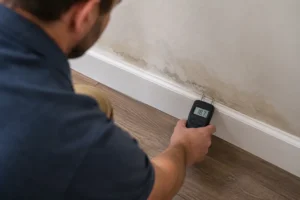
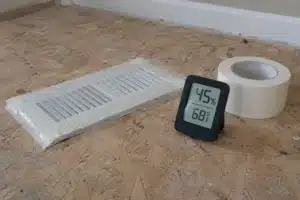
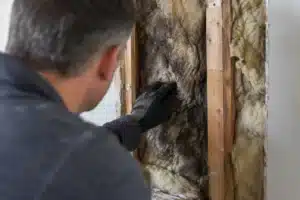
Give yourself five minutes with a flashlight. Look for fuzzy growth or peppery specks on the bottom edges of boxes, the underside of solid shelves, and the back corners where shelves meet exterior walls. Slide a bin and sniff. Musty or earthy means there is moisture hanging around. Check the first 12 inches of drywall or base trim near the slab for staining or soft spots. On concrete, look for darkened patches that come and go with weather cycles. Grab a hygrometer and take a reading 6 inches off the floor and again at shoulder height. If the floor-level reading is consistently higher, you have a near-slab humidity pocket that needs airflow.
Case File: The Hockey Bag Fiasco
One of our favorite garage rescues started with a smelly suburban legend: the year-round hockey bag. The family parked a slush-coated SUV every night. The bag lived on a solid wood shelf pressed to an exterior wall. Within a month, the bag had a green freckle pattern and the box with holiday lights below grew white fuzz on the flaps.
We dried the garage with fans, cleaned the small growth, and swapped the shelf for wire. The bag moved to a drying rack with a dedicated fan for 60 minutes after practice. We added a containment mat under the car, a dehumidifier set to 45 percent, and sealed storage bins for fabrics and paper. Final tweak was a 1 inch air gap behind every shelf. Six weeks later, no smell, no spots, and the only thing growing in that garage was the kid’s slap shot.
When To Call A Pro
If you are looking at more than 10 square feet of growth, if there is a persistent musty odor after your airflow and storage changes, or if anyone in the home has respiratory sensitivities, bring in help. Skip spraying bleach on raw concrete. It does not penetrate well and can leave you with a false sense of clean. A restoration team will address moisture sources, clean correctly, and set you up with controls that stick.
Garage Mold FAQ
Do Dehumidifiers Help In Uninsulated Garages?
Yes, if the temperature is within the unit’s operating range. Many standard dehumidifiers struggle below about 41 to 50 degrees Fahrenheit. If your garage runs colder, use airflow and mild heat to keep humidity in check or pick a low-temperature rated unit.
Are Absorbent Car Mats Safe To Use?
They help if you treat them like a temporary sponge. Squeegee or hang-dry them often. If you let them stew, you end up with a wet microfiber swamp pressed against your slab. Containment trays that you empty are easier to maintain.
Will Epoxy On The Slab Stop Mold?
Epoxy reduces moisture getting into porous materials and makes cleanup simple, but it is not a silver bullet. You still need airflow, drip control, and storage that does not soak up moisture. Think of epoxy as part of a system.
Can I Keep Cardboard If It Is Off The Floor?
If the garage gets wet often, cardboard is still risky. Elevating helps, but sealed storage bins are safer. If you must keep cardboard, use it only for truly dry items, store it on wire shelves, and rotate or replace it at the first sign of softening or odor.