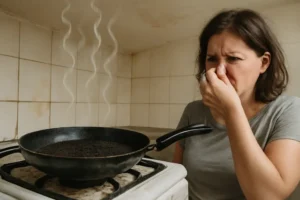
Your steak didn’t just go from medium-rare to shoe leather. It went full chemistry experiment and fogged your kitchen with an almost invisible film that clings like a stage-five clinger and smells like a gym bag met a fry basket. If you’ve scrubbed until your arms quit and the odor still punches you every time you walk in, you’re probably battling protein soot. It doesn’t look like the dramatic black soot you see on TV, yet it’s way more stubborn. Here’s how it works, why it lingers, and what to do so your kitchen stops smelling like burnt brunch forever.
What Is Protein Soot?
Protein soot is the sneaky residue left behind when meat or grease overheats, scorches, or smolders. Instead of big, obvious black smoke, the organic compounds in proteins and fats break down into a fine aerosol that drifts and settles as a sticky, almost invisible film. That film bonds to paint, cabinets, stainless, tile grout, and everything inside your kitchen. It loves porous surfaces, it loves textured ceilings, and it absolutely loves air ducts. Professionals call it protein soot. Homeowners call it the smell that will not quit. Industry sources note that this residue often looks like a light yellow or amber stain at best, or completely invisible at worst, which is why many people underestimate it at first. You can see more on this behavior in protein fires from Advanced SE.
| Residue Type | What You See | What You Smell | Cleaning Reality |
|---|---|---|---|
| Normal Smoke Soot | Gray or black smudges | Smoky, noticeable right away | Responds to standard soot cleaners |
| Protein Soot | Nearly invisible film | Rancid, lingering, seems to come and go | Needs enzyme chemistry and deep decontamination |
Why Your Wipe-Down Failed
Soap and water, vinegar, dry sponges, even typical degreasers often miss the mark on protein soot. That invisible film is stubborn because you’re not just fighting oil. You’re fighting denatured proteins that have bonded to surfaces like they paid rent. Regular cleaning can smear it around, push it deeper, or strip the top of the residue without touching the odor source. You clean, it smells a little better, you breathe a sigh of relief, then tomorrow the kitchen hits you with a round two. As restoration guides point out, ordinary cleaning often fails to break the protein bonds, which is why the stink sticks around. See the warnings on standard cleaning limitations in this protein fire guide.
The other problem is what you can’t see. Odor molecules ride air currents, sneak into the HVAC return, settle on evaporator coils, and hide in cabinet voids and light fixtures. So you can make the counters sparkle and still have a sour smell drifting from registers or inside your pantry. This hidden spread is why All Nation Restoration’s article on the unseen fallout of smoke emphasizes that soot and odor do not stay put. You can read more about hidden spread after a fire on All Nation’s Hidden Hazards page.
Where The Smell Is Hiding
If you’re chasing a ghost odor, you’re not imagining things. Protein soot loves high surfaces and air pathways. Typical hotspots include the tops of cabinets, the underside of shelves, textured ceilings, the inside of the range hood, light fixtures, and anywhere warm air flowed during the incident. The HVAC system is a prime suspect. Odors can lodge in return plenums, filters, coils, and duct dust. Even a small cooking flare-up can seed odor far from the stovetop, which is why you’ll smell it in a hallway or bedroom that never saw smoke.
Porous surfaces are another playground for this residue. Unsealed wood, painted drywall, and insulation can soak up odor like a sponge. Wipe the wall and it looks fine, yet the embedded odor continues to outgas. That’s why surface-only cleaning rarely closes the case.
How Pros Actually Clean It
Real restoration is chemistry, process, and patience. You can’t strong-arm protein soot with elbow grease alone. Pros use a sequence that targets both the greasy component and the protein component, then they remove the odor that’s already gotten airborne and spread.
Here is how a trained crew approaches a typical protein fire cleanup:
Pre-clean and test. A small, inconspicuous test spot on each material ensures the solution will not discolor finishes. HEPA vacuum loose debris if present, and control airflow so you’re not spreading residue to clean areas. All Nation’s Do’s and Don’ts of Cleaning Fire Damage highlights using HEPA tools and soot-specific agents rather than generic cleaners.
Break the grease, then the protein. An alkaline degreaser or a solvent-boosted detergent helps break down fatty residues. Dwell time matters, and light agitation with a microfiber or soft brush helps lift the film. Then comes the secret weapon for protein soot: enzymatic deodorization. Enzyme-based cleaners latch onto protein molecules, break them into smaller, non-odorous fragments, and neutralize the stink at the source. This combo works because you’re tackling both sides of the residue. You can see a plain-English explanation of enzyme cleaners for fire odors here at AdvantaClean.
Rinse and neutralize. After chemistry does its job, pros rinse and wipe until residues are removed and pH is back in a safe range for the surface. For paint and sealed wood, that often means multiple controlled passes rather than one big scrub. For stainless, it means avoiding scratches and preventing streaks. For stone, it means cleaners that will not etch a polished finish.
Treat the soft stuff. Curtains, seat cushions, rugs, and vent filters hold odor like a grudge. These need dedicated textile cleaning or replacement if contamination is heavy. Cabinet interiors and drawers often require enzyme treatment and thorough airing out.
If you want a deeper read on the combination of degreasing and enzyme steps for protein residues, this Lightspeed Restoration article explains the role of alkaline cleaners, dwell time, and agitation on protein-based smoke films.
HVAC Cleanup That Matters
Clean surfaces are only half the battle if your air system is still pulsing odor around the house. Restoration often includes replacing filters, cleaning return and supply registers, vacuuming and brushing ducts, and decontaminating the air handler cabinet and coil surfaces. In heavier cases, crews bring HEPA air scrubbers, run negative air, and apply deodorization steps targeted to the system. All Nation Restoration backs this approach in their fire cleanup guides, which call out duct cleaning, air filtration, and odor treatments for light to moderate smoke incidents. You can see their process notes here: Do’s and Don’ts of Cleaning Fire Damage.
Why this matters: your HVAC is an odor highway. If it ran during the incident, odor likely took a tour through returns and settled in dust layers and insulation. Cleaning the system keeps you from chasing that mystery whiff that shows up every time the AC kicks on.
Odor Treatments That Work
Once the heavy lifting is done, pros still have to neutralize odor that has soaked into microscopic pores or gone airborne. That is where specialty treatments come in.
Thermal fogging. A technician uses a heated fogger to vaporize a deodorizing agent that behaves like smoke, which lets it travel into the same pathways the odor used in the first place. Fogging is useful for wall cavities, cabinet voids, and the air system. It is not a cover-up when done correctly. It complements cleaning by pairing with the smoke’s original path. See a plain-language overview from AdvantaClean.
Ozone or hydroxyl. Ozone is a strong oxidizer used in unoccupied spaces, which breaks down odor molecules. It must be handled by trained techs and the area must be vacant during treatment. Hydroxyl generators can be used in occupied spaces depending on the setup and manufacturer’s instructions, and they work more slowly. Both options are tools in the kit, used when source removal and enzyme chemistry have already done the heavy lifting. You can read how these treatments are typically positioned in articles like this one from Lightspeed Restoration.
Sealants and primers. After thorough cleaning and deodorization, odor-blocking primers can lock residual staining and prevent outgassing before repainting. This step is the seatbelt after you did the hard braking. For a quick reference on why a sealer can be part of the plan, see this DKI Burlington article that mentions priming after protein fire cleanup.
DIY Moves That Help
If the incident was light, or you’re waiting for a pro crew, a few smart moves can keep the odor from winning the rematch. These do not replace professional restoration, yet they can keep things from getting worse.
Kill the airflow. Turn off the HVAC during and right after the incident so you do not broadcast odor into ducts. Open windows and use box fans blowing out, not in.
Target the heavy hitters. Clean the range hood, metal filters, and backsplash with a proper degreaser, then follow with an enzyme cleaner made for protein or organic residue. Rinse well.
Light to neutral pH. Skip bleach, straight vinegar, and abrasive powders on painted walls. Bleach does not neutralize the protein odor source, and harsh cleaners can set the stain or damage finishes.
Change filters. Even if the system was off, swap the HVAC filter so you are not pulling odor back through a dirty screen.
Be gentle, not smeary. Microfiber cloths do better than paper towels. Work from clean areas toward dirty areas and change cloths often so you’re not re-depositing residue.
For do’s and don’ts, check All Nation’s fire cleaning guide here: Cleaning Fire Damage.
When To Call The Experts
If you can smell it a day later, you see a faint yellow or brown film that keeps coming back, or the odor shows up when the air turns on, it is time to bring in a restoration crew. Protein soot is a chemistry problem and an airflow problem, which means the right cleaning agents, the right order of operations, and attention to HVAC and hidden voids. Teams like All Nation Restoration combine enzyme chemistry, degreasers, HEPA filtration, air scrubbing, duct cleaning, and targeted deodorization so you are not stuck in a loop of clean, sniff, repeat.
Costs scale with scope. Light smoke cleanup with targeted cleaning and deodorization is generally much lower than a multi-room job with HVAC cleaning, contents cleaning, and specialty odor treatments. For a breakdown of what affects price, how smoke and soot cleanup gets scoped, and when HVAC decontamination enters the picture, see All Nation’s Fire Damage Restoration Costs.
FAQ: Protein Fires
Why Does My Kitchen Still Smell After I Cleaned?
Because protein soot is often invisible and sticky, ordinary cleaning can miss the actual odor source or push it deeper into porous materials. Odor also hides in HVAC pathways, on coils, inside cabinet voids, and in textiles. Until those reservoirs are treated and the proteins are broken down with enzyme chemistry, the smell rebounds. See how persistent residues are described by Grady Property Restoration.
What Is Enzymatic Deodorization?
It is the use of enzyme-based cleaners that target protein molecules. The enzymes break large, smelly protein chains into smaller components that are not odorous. For protein soot, enzymatic deodorization is a cornerstone because it neutralizes the actual source rather than trying to perfume over it. You can get a quick primer from AdvantaClean.
Can I Just Paint Over The Smell?
Painting over uncleaned protein soot is like spraying cologne on a campfire. Clean and deodorize first, then apply an odor-blocking primer before final paint if needed. Sealing over active odor sources without removing them first can trap issues and cause later failures. See a discussion of sealing as a finishing step here: DKI Burlington.
Do I Need My Ducts Cleaned After A Protein Fire?
Often yes, especially if the HVAC ran during the incident or you smell odor from registers. Ducts, returns, and coils can harbor residue and odor that re-circulate every time the system turns on. All Nation Restoration outlines HVAC cleaning and deodorization as part of smoke and soot cleanup in their fire cleaning guide.
Is Ozone Safe?
Ozone is a professional tool that must be used correctly, in vacant spaces, with proper ventilation and time to dwell and dissipate. It is not a room freshener. Many projects use hydroxyl generators instead, since they can operate with occupants depending on conditions and manufacturer guidance. A trained technician chooses the right tool after source removal and cleaning, not before.
How Long Does A Protein Soot Cleanup Take?
Small, single-room incidents can often be handled in a day or two, including cleaning and deodorization. Multi-room or HVAC-heavy jobs can take longer, especially if contents, fabrics, and duct systems need treatment. The main variable is how far the odor traveled and how much material was affected.
Prevention That Actually Works
No one plans a protein fire. That said, you can stack the odds in your favor with a few easy habits. Use the range hood every time you cook, and clean the hood filter regularly so it can actually pull grease-laden air. Keep an eye on high-protein cooking like bacon, steaks, and frying, since these produce heavy aerosols when overheated. Avoid letting pans smoke dry, since that is when proteins break down and the worst particles go airborne. If a small incident happens, shut the HVAC off, ventilate outward, and avoid dragging residue around with towels or brooms. For more quick do’s and don’ts, check All Nation’s Cleaning Fire Damage.
How All Nation Restoration Helps
We tackle protein soot with a method that fits your kitchen, not a one-size-fits-none routine. We start with a detailed inspection, then we use the chemistry that makes sense for your surfaces and finishes. That usually means enzyme cleaners paired with the right degreasers, thorough rinsing, and HVAC attention. We bring HEPA air filtration, targeted deodorization like thermal fogging when needed, and odor-blocking primers as a finishing step. If you want to understand the cost drivers or see what gets included at different levels of damage, have a look at our Fire Damage Restoration Costs page. If you’d rather skip the science and just get your kitchen back, reach out and we’ll bring the enzymes and the elbow grease.
Still Smelling Burnt Chicken?
If your kitchen looks fine but smells like last week’s mistake, it is probably protein soot. You’re not crazy, and you’re not cursed. You just need the right chemistry, the right sequence, and a cleanup that treats the air system as seriously as the stovetop. We do this every day. We’ll knock out the residue, run enzymatic deodorization where it counts, clean the HVAC so the odor does not boomerang, and get you back to cooking things on purpose.