As a fire, smoke, water, and mold restoration company in Austin, we see what lithium-ion battery failures do to homes. We also see what smart prevention avoids. This guide gives you straight answers. Practical charging and storage rules. Red flags to act on fast. What to do if a device vents, smokes, or ignites. What professional cleanup really takes after a thermal runaway. You will also find insurance and documentation tips that speed recovery after a loss.
Before we get into it, click here if you need professional help with fire damage restoration.
Why lithium battery fires differ
Lithium-ion batteries power so much of home life today. E-bikes and scooters. Power tool packs. Laptops and phones. Home energy storage systems that pair with rooftop solar. These packs deliver a lot of energy in a small space. When damage, defects, misuse, or thermal stress push a cell past a tipping point, a chain reaction can start inside the pack. That event is called thermal runaway. Heat rises fast. Flammable gases vent from small openings. Jets of flame can appear. Neighboring cells can ignite in sequence. The pack can eject hot fragments that travel across a room. The risk of re-ignition lingers until every unstable cell cools down.
Thermal runaway also creates toxic gases. Peer-reviewed testing found that hydrogen fluoride is released at tens to hundreds of milligrams per watt-hour during battery fires. Some tests also measured phosphoryl fluoride. Both can cause severe harm in a closed space. HF irritates eyes and airways at low levels. It is corrosive. The NIOSH Immediately Dangerous to Life or Health value for HF is about 30 parts per million. That means a small room can become hazardous very quickly. You will likely smell a sharp, acrid bite. You might see a white fog form as gases cool and condense on surfaces. Residues from this condensation can be acidic. They etch glass. They corrode metal. They damage electronics and finishes even if flames never spread beyond the device. See the science summary from Scientific Reports for details on gas yields, then compare those values to the NIOSH IDLH to understand the risk in confined rooms. You can review those sources at Scientific Reports and the NIOSH IDLH page for HF.
Home energy storage systems add another layer. These systems pack far more energy than a phone or bike pack. Modern ESS units come with robust safety features. Codes restrict locations and spacing. UL test programs evaluate fire behavior at the system level. That said, thermal events can still produce fierce heat and heavy off-gassing. Fire departments plan for large water flows for cooling. They also plan for long periods of monitoring due to re-ignition risk.
One more twist. Loose cells can eject during a fire or eruption. Those cells may land under furniture or deep within contents. Each one can hold latent heat. Each one can re-ignite. Professional responders treat the scene like a field of hazards. They collect cells with tools. They cool them. They isolate them.
Early warning signs
Lithium-ion devices often give signals before failure. Trust your senses. If you notice a chemical or solvent-like odor near a charging device, stop the charge. If a pack feels hot to the touch during a routine task, stop. If the case looks swollen or shows new bulges, do not use it. Discoloration or burn marks near seams or ports point to damage. Leaking fluid on or near the pack is another red flag. Hissing, crackling, or popping can precede a vent event. Back away and keep combustibles clear if you can do so safely.
The U S Fire Administration teaches a simple memory aid called C H A R G E. Choose certified products. Handle with care. Always stay present while charging. Recycle properly. Get out quickly if a device shows signs of failure. Educate others in your home. They also caution against charging below freezing or in high heat that exceeds roughly one hundred five degrees Fahrenheit. Review their safety points at USFA FEMA.
Research is moving fast on early detection too. NIST reports a distinct pattern of clicks and hiss that can precede a runaway event for some battery formats. This type of work points to future detection tools for homes and buildings. See the research summary at NIST.
When in doubt, stop using the device. If it smells off or heats up rapidly, move people away. If you can move the device into a safe open area with a clear path, do so. Do not open a battery pack. Do not press on it. Call 911 early if anything seems wrong. Acting fast reduces risk to people and property.
Safe charging and storage
Most lithium ion fires begin at charge time. Good setup and habits slash risk. These rules protect your home.
Use only the original equipment charger that came with your device. Look for UL listing on the device and the charger. Plug the charger directly into a wall outlet. Skip power strips. Skip extension cords. Place the device on a hard surface for charging. Concrete, tile, or metal shelving work well. Never charge on a bed, couch, or rug. Keep a clear zone around the device. Never block exits with bikes or scooters on charge. Keep packs dry. Keep them at room temperature. Set a timer so you do not charge while sleeping. If possible, charge and store e bikes and scooters in a detached space or outside under cover where wind and rain cannot reach the device. FDNY consumer guidance echoes these points and has saved lives across New York City. Review their rules at FDNY Smart.
Buy gear that meets current safety standards. For e bikes, the system level standard is UL 2849. For e mobility devices such as hoverboards, the system standard is UL 2272. Batteries for these devices often reference UL 2271. The U S Consumer Product Safety Commission has tracked injuries and fires linked to non compliant devices. They are pushing for compliance with these standards. See their safety push and injury data at CPSC.
Set up a safe charging corner for small electronics as well. Use a power strip with surge protection only for low power items where the manufacturer allows it. Keep space around charging phones and laptops clear. Do not cover a device with a blanket or pillow during a charge. Heat must escape. Unplug chargers when not in use. Replace damaged cords at once.
For power tools, inspect packs before snapping them onto chargers. A cracked case is a no go. A pack that just came in from a hot truck should cool to room temperature before charging. A pack that sat in a cold garage near freezing should warm up before charging. Never throw a warm pack into a toolbox with metal bits where contacts might bridge. Tape terminals if you need to transport loose packs.
If you need a quick checklist to print, the USFA page above includes a consumer handout. Post it near your charging area as a reminder for the whole family.
Home energy storage basics
Home energy storage systems require a different mindset. Talk with a licensed installer who knows local code. Require equipment that bears the UL 9540 certification mark. That mark covers the system as a whole. It confirms a higher level of safety integration. NFPA 855 sets the framework for residential locations. It restricts sleeping room locations. It outlines separation from doors and windows. It limits energy per unit for typical homes, often at or near twenty kilowatt hours per unit, and requires spacing between units unless large scale tests justify closer placement. Mayfield Renewables has clear code explainer articles for homeowners. See their summary of spacing and location limits at Mayfield Renewables.
UL 9540A is the test method that evaluates thermal runaway fire propagation. Authorities use this data to judge safe spacing and protective features. UL Solutions describes how these tests work and how the results inform code. Read the method overview at UL Solutions. UL also publishes updates that refine the test for newer chemistries and make outputs easier to apply. See the 2025 update at this UL news page. For homeowners, you may also hear about UL 9540B which targets residential systems at or below twenty kilowatt hours and includes large scale fire tests that speak directly to home conditions. See a plain language FAQ at UL residential ESS testing.
Local officials in Texas reference NFPA 855 and related fire code provisions when reviewing residential ESS applications. The Texas State Fire Marshal hosts a helpful FAQ that points to current code updates and safety measures such as detection, suppression, and gas detection for larger installations.
If you already have a system, keep the area around it clear and clean. Keep a log of maintenance. Keep emergency contact numbers posted near the unit. Make sure family members know the location and can describe the brand and model to responders if a problem occurs.
What to do during an incident
Act quickly if a battery overheats, vents, smokes, or ignites. Evacuate people and pets. Close doors behind you to slow smoke spread if you can do so without delay. Call 911. Give the dispatcher clear details. Say whether an e bike, scooter, laptop, phone, tool pack, or an ESS is involved.
If you can safely move a small device away from combustibles while it is still only hissing or smoking, do that. Place it on a hard noncombustible surface outside away from the home. Keep your face and body as far as possible. Do not open a pack. Do not hit it with a hammer or tool. Do not breathe venting gas. Firefighters will often use large amounts of water for cooling and suppression because water removes heat and slows cell to cell spread. If a small personal device such as a phone or laptop ignites, water or another nonflammable liquid can cool the cells and limit propagation if applied early. Aviation guidance reflects this practical approach for crews dealing with personal electronic devices in cabins. See the operational guidance from SKYbrary and fireground considerations from Firehouse.
Keep your distance after the initial event. Packs can reignite minutes or hours later. Cells can eject and start new spots. Do not handle cells with bare hands. Avoid contact with residues on surfaces. Ventilate the area only after the fire department clears the scene. If your device failed during charging, isolate the charger and any other packs from that brand. Report the incident to the manufacturer and to CPSC if needed. The CPSC also issued a 2025 notice of proposed rulemaking tied to safer battery packs in micromobility products. You can read a commissioner statement at CPSC.
FDNY messaging for the public stresses this order. Stop using the device. Move it away from combustibles if you can do it safely. Call 911. Their guidance matches what we see on calls in Austin. Quick action prevents flame spread in many cases. Early calls get the right help on the way.
Hidden hazards after a fire
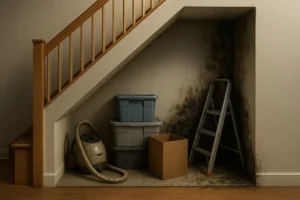
Once the flames are out, risk remains. Lithium ion fires leave behind more than soot. They coat surfaces with acidic fluoride compounds from the vent gases. They push soot into tiny cracks. They scatter cell fragments. They saturate rooms with smoke that holds corrosive byproducts. They leave water in wall cavities and under floors from suppression. The result is a mix of chemical and moisture hazards that demand a careful plan.
Acidic residues etch glass and corrode electronics. They can also irritate skin and lungs if disturbed. Dry sweeping creates dust that spreads through the home. HVAC systems pull soot into ducting and push it into every room. Water trapped in materials feeds mold growth within twenty four to forty eight hours. Our team in Austin treats these scenes with the same respect we give to chemical spills. We arrive with PPE and the right equipment. We test pH. We control air movement. We capture particles with HEPA filtration. We do not let corrosives sit.
If you want to understand the range of hazards after any fire, see our article on hidden post fire hazards. Lithium battery incidents often include additional chemical residues that fall into the category of chemical residues after fires. They corrode copper windings in motors, pit metal finishes, and stain stone. We plan our cleanup to neutralize and remove these residues before they can do more damage.
Do not attempt to neutralize residues yourself. Industrial responders use specific alkaline media for HF incidents with strict procedures. Residential cleanup needs trained technicians, proper PPE, and a controlled process. OSHA HAZWOPER guidance sets expectations for planning, PPE, and decon when unknown hazardous residues are present. See the OSHA preparedness page at OSHA.
What professional cleanup includes
Homeowners often ask what lithium battery thermal runaway cleanup really involves. The short answer is an integrated fire, smoke, water, and chemical residue project. Our process looks like this in broad terms.
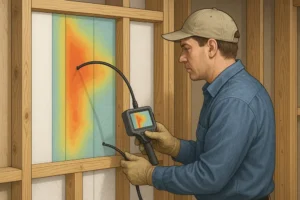
We first secure the scene. We confirm that all cells and modules are located and isolated. We place any suspect cells in a fire safe container outside. We monitor for heat and re ignition. We set up containment to prevent cross contamination. We establish negative air with HEPA filtration. We ventilate to the outdoors where safe. We test surface pH so we can select the right cleaners. Acidic deposits respond to detergents and mild alkaline solutions chosen for building materials. We start with dry HEPA vacuuming to remove loose soot and fine particles. Then we perform wet cleaning with the right chemistry for each surface. We repeat until pH and visual checks pass. We treat textiles and contents with specialized cleaning and deodorization. We clean HVAC systems and replace filters as needed. We extract water and start structural drying right away to prevent mold within the first window. We verify that moisture levels return to dry standards. We deodorize with safe methods only after source removal. We document all steps for your insurer with photos, logs, and test results. For a full overview of restoration sequence for Austin homes, see our step-by-step fire restoration guide.
Firefighting considerations for lithium events include collecting scattered cells, using water handlines for cooling, and planning for re ignition. UL FSRI highlights these points for departments nationwide. Their advice aligns with what we see in the field. Read the operational guide at Firehouse.
Water removal and drying often decide whether a home avoids secondary damage. If large volumes of water were used, extraction and rapid drying are mission critical to prevent mold. Our Austin team has a fast track for this step. Learn how water extraction and drying work during the first days after a fire. We also share homeowner tips for how to prevent mold after a fire.
One more point. Many homeowners want to start cleaning before help arrives. Some steps are safe. Many are not. Dry wiping or vacuuming standard vacuums can spread acidic soot. Do not touch residues with bare hands. Do not throw away charred batteries in household trash. Review our guide to fire damage cleaning mistakes to avoid before you try any DIY tasks.
Battery disposal and recycling
Damaged lithium ion batteries do not belong in curbside bins. Do not place them in household trash. Tape terminals or bag each battery to prevent short circuits. Then take them to a household hazardous waste facility or a certified battery recycler. The EPA provides clear consumer guidance on this point. Read it at EPA. Programs like Call2Recycle can help you find drop off sites for intact consumer batteries. For medium or large energy storage systems, contact the manufacturer or installer. Damaged or defective batteries face strict federal rules for packaging and transport. They cannot go by air. They often require special salvage packaging. Professionals can coordinate safe removal and transport.
Insurance, costs, timeline
Lithium battery incidents cut across fire, smoke, water, and chemical residue categories. Costs reflect that complexity. Damage to structure from heat or soot. Widespread smoke odor. HVAC contamination. Wet drywall and flooring. Contents cleaning or replacement. Reconstruction for rooms near the fire. Every category shows up in a typical claim. We cover the fire restoration cost breakdown so you know what drives estimates.
Fast action helps your claim. Photograph each room before anything moves. Record short video walkthroughs. Create an inventory of damaged items with brand, model, and approximate age. Save receipts for temporary lodging and supplies. Ask your contractor for a written scope and daily logs. We provide a printable checklist you can use to document your loss for insurance. The right documentation leads to faster approvals.
Timeline depends on the size of the loss. A small phone fire in a bedroom can still push smoke into closets and the HVAC. That job can take several days to clean and deodorize. An e bike fire in a garage can char structure and contents. That mix can take weeks when you include drying and reconstruction. An ESS event calls for more investigation and often more demolition. We communicate daily so you always know what comes next. That approach lowers stress and keeps the project moving.
Austin specific notes
We serve Austin and surrounding communities. Our city has seen growth in e bike use. We see more home battery installs each year. More devices means more potential incidents. Good habits keep most homes safe. When an event does occur, local response matters. We know how Austin Fire Department approaches lithium events. We match our cleanup plan to the way they secure the scene. We also work directly with local adjusters who have seen these emerging losses. If you need smoke and soot cleanup in Austin after a battery incident, call us. We are ready 24 by 7 for emergency calls.
If you have questions about prevention or home setups, we can walk your space and spot simple fixes. We can mark a safe charging corner. We can flag tripping hazards near exits. We can suggest the right fire extinguisher for your garage. We do not sell equipment. We care about your safety as neighbors and customers.
Had a battery fire Our Austin team will secure the site, clean corrosive residues, dry out water, and help with your claim. Start with our step-by-step fire restoration guide or call now for 24 by 7 help.
FAQs
Is water safe to use on a lithium-ion fire
Water cools batteries. Cooling reduces the chance that neighboring cells ignite. Firefighters use large water flows for suppression and cooling. For a small phone or laptop, water or a nonflammable liquid can help if applied early and only if it is safe to do so. Evacuate first. Call 911. See aviation crew guidance at SKYbrary.
What warning signs mean my battery could fail
Odor that smells sharp or solvent like. New heat during normal use or charging. Swelling of the case. Discoloration or scorch marks near seams or ports. Leaking fluid. Hissing, popping, or crackling. If you notice any one of these, stop using the device. Move people away. If safe, move the device away from combustibles. Call 911. See the USFA safety page at USFA FEMA.
Where should I charge an e bike at home
Charge on a hard floor away from combustibles and away from exits. Use the charger that came with the bike. Keep the area at room temperature. Do not charge while sleeping. If you have a covered outdoor space, charge there when weather allows. Follow public safety guidance from FDNY Smart.
Can I keep a home battery in a bedroom
No. Codes restrict locations. Work with a licensed installer. Use UL 9540 certified equipment. Follow NFPA 855 spacing and separation rules. See code context at Mayfield Renewables.
How do I dispose of a damaged battery after a fire
Do not use curbside bins. Tape terminals or bag each battery to prevent short circuits. Take them to a local HHW facility or a certified battery recycler. Medium or large systems should go back to the manufacturer or installer. Damaged batteries face federal transport limits. See the EPA consumer guide at EPA.
Practical takeaways you can act on
Use only OEM chargers and UL listed devices. Set a safe charging station on a hard surface away from exits. Do not charge while sleeping. Watch for odor, heat, swelling, or noise. If a device vents or smokes, evacuate and call 911. If safe, move it away from combustibles. Water cools cells for small devices, but your first move is to get people out. After a fire, treat residues and soaked materials with care. Call a professional who knows lithium battery cleanup. We will secure unstable cells, remove corrosive residues, extract water, dry structure, clean HVAC, and document your loss for a smoother claim.
If you want more detail on costs, documentation, and safe DIY limits, use these resources:
- Fire damage cleaning mistakes to avoid
- Fire restoration cost breakdown
- Document your loss for insurance
Questions about Austin fire damage cleanup after a battery incident? We’re here for you day or night. Call our team for emergency service or to schedule an inspection. We’ll protect your home and your health from smoke, soot, water, and mold after a lithium battery event.