Media rooms are special. Dark finishes. Thick acoustic treatments. Sealed doors. All great for sound. All tough on moisture. In Austin we see too many theaters with musty odors or stained ceilings from a clogged AC drain. This guide shows practical home theater mold control backed by building science. It also covers AC drain line maintenance so a simple algae plug does not ruin drywall.
Target a steady relative humidity in the safe zone. Keep air moving quietly. Choose materials that do not feed mold. Maintain your condensate line before summer peaks. If you spot water staining or smell a swampy odor from the vents, call early. Fast action protects the room you built for family time.
Why theaters grow mold
Home theaters check many boxes that mold loves. The room sits dark for long periods. Walls hold thick insulation and heavy treatments that slow airflow. Doors seal tight to keep sound in which also traps moisture. Equipment racks throw heat. That heat meets cooled air from the supply which can drive condensation on nearby surfaces if humidity runs high.
The science is simple. Mold needs a food source, oxygen, and moisture. Most rooms provide the first two. You control moisture. The United States Environmental Protection Agency recommends indoor relative humidity below 60 percent and ideally 30 to 50 percent. Staying in that band blocks most common mold growth. See the EPA Mold Course for humidity guidance and moisture control basics at epa.gov.
Local climate matters. Austin lives in a hot humid zone most of the year. Outdoor air carries heavy moisture. A theater built in a basement or over a slab edge can pull vapor through small leaks. That moisture loads up fabrics and porous materials in the room. Oversized equipment can make it worse by dropping air temperature fast but removing very little moisture. You get cool air that feels clammy. Surfaces near the supply can hit dew point which means condensation on grills or nearby panels. That is the first clue many owners notice.
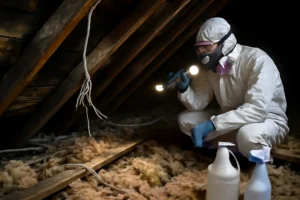
HVAC components can also be a source. A dirty drip pan that does not drain. A clogged primary drain line. A missing or dry P trap. Each of these issues can put water in the ceiling or closet. That water migrates into drywall and insulation. Mold follows. If you suspect contaminated ducts or a musty blast at startup, use this guide on warning signs and timing for professional help: Mold in HVAC warning signs and when to call a pro.
Keep RH 30 to 50 percent
Make humidity control a routine. Place two hygrometers in the theater. One near the screen wall or front corners. One behind seating or in the equipment closet. Track readings across a week during heavy use. Your goal sits between 30 and 50 percent most of the time. Never allow readings to hold above 60 percent for long periods. Many smart thermostats accept a remote sensor or a true humidistat. Automation locks in setpoints and protects the room when you travel.
How you reach that range matters. Air conditioning removes sensible heat and some moisture when it runs long enough. If the AC is too large, it short cycles. You get less time for latent removal. Humidity creeps up even while the thermostat shows a comfortable temperature. Building Science Corporation explains why right sizing and dehumidification matter in hot humid zones at buildingscience.com.
Two practical paths work well. First, a properly sized AC with long runtimes and variable speed fan control. This approach works in many homes if ducts are tight. Second, add a dedicated dehumidifier that discharges into the same return or into the room. This gives you precise RH control during shoulder seasons when the AC hardly runs. Pick a quiet unit since theaters need low background noise. Place the discharge where airflow spreads before it hits a mic or listening seat.
Ventilation also helps. Balanced outdoor air with an energy recovery ventilator reduces stuffiness without dumping wet air into the space. Whole home ventilation rates are set by ASHRAE Standard 62.2. See an overview at hvac-blog.acca.org. Your theater does not need its own 62.2 system in most cases. You can tie it to the main balanced system or bring in a small dedicated stream and return it to the central return path. Use filtration on any outdoor air introduced near a theater.
Thermostat setpoints play a role. Keep the room near 72 to 75 degrees during use. Avoid deep setbacks that leave the space warm and humid for long stretches then sudden drops that drive condensation. A steady curve protects your gear and finishes.
Quiet airflow for media rooms
Sound quality demands quiet air. Moisture control demands enough movement to prevent dead pockets. You can have both. The path to both uses gentle velocities with large grilles and lined ducts. Place supply diffusers where air washes the room without blowing on the mic position or the first row. A long throw slot diffuser can work if the slot area is generous which lowers face velocity. Oversize the return grille and keep it away from the screen wall to reduce noise. Add a return inside the equipment closet or provide a transfer path so heat from the rack does not drive humidity in that closet.
Fresh air is still possible. Balance the incoming stream rather than only exhaust. A small energy recovery ventilator can bring outdoor air with heat and moisture exchange to reduce load. Whole home ventilation targets are covered by ASHRAE 62.2. For sizing context and tables see this technical reference at wxfieldguide.com. Work with an HVAC designer so the theater receives fresh air without pressure swings or hiss at the grille.
Fan control matters. Avoid high speed constant fan during cooling in humid weather since that can re evaporate condensate off the coil back into the air stream. Use low speed continuous or circulate settings only when a dehumidifier manages latent load. A smart humidistat can command the dehumidifier so RH stays in the safe band even when the compressor rests.
Mold smart acoustic panels
Acoustic panels and bass traps do not have to feed mold. Choose inorganic cores like mineral wool or fiberglass. These materials do not provide food for fungal growth when kept clean. Many mineral wool products report a pass under ASTM C1338 which tests for fungi resistance. See product details from Johns Manville at jm.com and from ROCKWOOL AFB at rockwool.com.
Fabrics and dust still matter. Even an inorganic core can grow surface colonies if the wrap is a cellulose fabric covered in dust and kept damp. Use removable or cleanable fabric wraps. Vacuum panels on a routine. Use a brush attachment to lift lint rather than push it into the fibers. Keep RH under 60 percent to prevent damp fabrics. Avoid paper faced gypsum behind fabric where condensation risk exists such as behind a cold supply or on exterior walls with poor insulation.
Think about inspection access. Add a few panels with hidden magnets or French cleats for fast removal. Use a moisture meter during seasonal checks on the walls behind those panels. A quick check now saves a major tear out later. If any panel smells musty or shows shadowing, move it and examine the surface behind it. Small spots can be cleaned if caught early. Widespread spotting calls for an assessment by a licensed remediator.
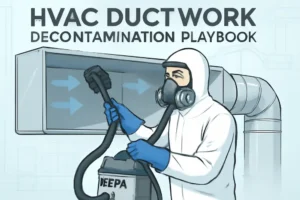
If you suspect contamination in duct liners or inside the air handler, do not delay. We cover the signs and the next steps in this guide to HVAC related contamination: Mold in HVAC warning signs and when to call a pro.
Weekly and seasonal care
A media room rewards routine care. Dust control keeps fabrics clean which cuts food for mold. Fresh filters protect the coil and reduce dirt in the drip pan. Exterior checks catch bulk water before it reaches the theater. The EPA Mold Course chapter on maintenance lists simple habits that pay off over time at epa.gov.
Walk your theater once a week during heavy use. Read both hygrometers. Sniff for any musty or sour odor as soon as you open the door. Look at supply diffusers for condensate beads. Check the equipment closet for heat buildup. Vacuum fabric panels and carpet often to remove dust that can feed surface growth if moisture rises. Wipe the rack faceplates and grills. Keep the door undercut clear for return flow.
Seasonal tasks matter just as much. Replace or wash HVAC filters at the beginning of cooling season. Inspect visible duct sections for sweating or rust bleeds. Check around exterior walls and slab edges for any signs of water entry. Look up at the ceiling below the air handler for rings or discoloration. Open the condensate clean out and perform a preventive flush per the steps in the next section. Confirm the float switch wiring looks intact and the pan sits level. If you see rust in a pan or any standing water, stop and call service.
If you ever have a water event in or above the theater, act fast. Dry building materials within 24 to 48 hours. If you remove standing water and dehumidify quickly, mold growth is unlikely. The EPA brief guide on mold and moisture gives that time window and why it works at epa.gov archive. Do not rely on open windows or a box fan to dry walls. That approach misses moisture inside drywall and insulation.
AC condensate basics
Your cooling coil sweats every time it runs. That liquid falls into a primary drain pan inside the air handler or coil case. A drain line carries the water to the outside or to a plumbing tie in. In many Texas homes there is also an auxiliary pan under the unit. That pan protects the ceiling if the primary pan or drain clogs. Code requires overflow protection. That protection can be a secondary pan with a separate drain to a conspicuous location or a listed water level shutoff switch. Jurisdictions that adopt the International Mechanical Code include these provisions. See a code summary at ecode360.com and a Texas oriented reference at acwizard.com.
Homeowners often see a short length of pipe at the eave or near a window. That is the secondary or emergency drain outlet. If you ever see water dripping from that point, treat it like an alarm. The primary drain is likely clogged. Turn the system off and call an HVAC technician. That simple step can prevent a ceiling collapse over your seats.
Traps matter a lot. Most air handlers in homes pull air across the coil. That creates a low pressure area at the drain pan outlet. A P trap keeps air from being sucked in through the drain so the pan can actually drain. A missing or dry trap can stall drainage. That leads to pan overflows. The American Society of Home Inspectors wrote a clear field note on traps and drainage at homeinspector.org. Startup after long off periods can produce a dry trap condition. The trade press calls it dry trap syndrome. Read more at achrnews.com.
Drain slope counts too. The line should fall gently from the pan to the termination. About one eighth inch per foot is a good target. Avoid long flat runs. Avoid rises that form air pockets. Use a clean out tee near the unit so maintenance is easy. Tie the secondary pan into a separate drain or route it to a conspicuous location. Never combine the primary and secondary into one line at the coil.
DIY drain line upkeep
Homeowner maintenance is simple and safe with a little care. Always shut power off at the breaker before touching panels or wiring. If you are not comfortable working near electrical parts, call a tech. For routine cleaning you will work at the drain clean out, not inside the cabinet.
During cooling season, clean the primary drain line about once a month. Remove the clean out cap. Pour about one cup of distilled white vinegar into the line. Wait thirty minutes. Then flush with water and confirm a steady drip at the outdoor termination. Vinegar helps inhibit algae and slime growth. This method is widely recommended between annual professional service visits. See a step by step overview from a major manufacturer at carrier.com.
Look closely while you clean. A brown stain on drywall under the air handler points to past overflow. Rust in the auxiliary pan points to repeated wetting. A float switch that trips more than once is a sign of a recurring issue. A secondary drain dripping at the eave is an alarm. Turn the system off and set a service call. Treat a clogged line as an urgent maintenance issue in a home theater. The ceiling sits directly under the equipment in many homes. A single night can create a large stain over the seating area.
A few safety reminders help. Do not use harsh chemicals like strong bleach or drain acids in the condensate line. Those chemicals can damage PVC and metals. Many manufacturers warn against it. Vinegar is the safer between visits option. Always restore the trap prime after cleaning by running the system so condensation refills the trap. Verify that the trap is installed and located at the coil outlet, not at a distant point where it can dry out.
When to call a pro in Austin
Call a licensed mold remediator or an HVAC technician in Austin when any of the following occur. Relative humidity holds above 60 percent for more than a day. You see visible mold on panels, the ceiling, or inside the air handler. Water stains appear below the unit or on the theater ceiling. The emergency drain drips at the eave. The float switch trips and the system shuts off. Supply air smells musty at startup then fades. Each of these signals a risk to finishes, gear, and health.
For mold removal and moisture diagnostics, our team provides state licensed mold remediation in Austin with clear scopes and containment that respects your finishes. Start here for service: State licensed mold remediation in Austin. If the event involves liquid water such as a clogged pan or a burst coil line, fast extraction limits damage behind the scenes. Learn how professional extraction reduces hidden moisture that feeds mold: How pro water extraction prevents hidden moisture and mold.
Document damage with photos and dates. Keep samples of any wet ceiling material you must remove for access. Call your carrier early to open a claim number. If standing water is present, use this simple checklist to act within the 24 to 48 hour window for best outcomes: Remove standing water within 24 to 48 hours. For pipe failures related to air handler drains or attic lines, shut off water and electricity to the affected area first, then contain. See fast steps here: Shut off water and electricity and contain.
Serving Austin and surrounding areas. We offer a free assessment for theaters with humidity issues. We run moisture mapping and document conditions for your records. If you have active water intrusion or a ceiling leak, call our 24 by 7 emergency line now.
FAQs
What humidity should a home theater be kept at
Target 30 to 50 percent relative humidity. Never allow RH to sit above 60 percent. Use hygrometers and a humidistat with dehumidification to stay in range.
Can acoustic foam or panels get moldy
Mineral wool and fiberglass cores are inorganic. They do not provide food for mold. Dust and organic fabric wraps can support growth if damp. Keep RH under 60 percent. Clean fabrics on a routine. Choose removable wraps that can be washed. See product data for fungi resistance such as ASTM C1338 claims from major manufacturers.
Is bleach okay for AC drain lines
Use distilled white vinegar between annual services. Harsh chemicals can damage PVC and coil metals. Turn off power at the breaker before you open panels or touch wiring. Restore the trap prime after cleaning.
Do I need both an auxiliary pan and a float switch
Code requires overflow protection. That can be a secondary pan with a separate drain to a conspicuous location or a listed water level shutoff device. Many installers choose both for redundancy. Ask your HVAC pro what your local jurisdiction requires.
How do I prevent my AC drain line from clogging
Install a clean out near the air handler. Keep a proper P trap at the coil outlet. Maintain a gentle downward slope to the termination. During cooling season, pour a small cup of distilled white vinegar into the clean out each month. Flush with water after a short wait. Consider a float switch so the system shuts off before the pan overflows.
Protect your theater year round
Mold control in a home theater is not guesswork. Hold RH in the safe band. Move air quietly but consistently. Use materials that do not feed growth. Maintain your condensate system before algae does the job for you. Watch for early signs such as diffuser sweat or a drip at the eave. Act fast during any water event. If wet materials are dried in the first two days, growth is unlikely.
You built your media room to relax. A few smart habits keep it clean and dry. If you want local help, our team knows Austin construction and climate. We can test humidity, inspect drain lines, clean affected surfaces under containment, and set up a maintenance plan so mold never gets a foothold.