Lithium ion batteries power daily life. EVs sit in garages. E bikes lean in hallways. Cordless tools live on shelves. The same cells that move us forward can fail without warning. As a restoration company owner, I see the aftermath. Scorched drywall. Acrid smoke etched into every surface. Invisible residues that bite skin and metal. Families displaced. This guide gives you the playbook I share with my own customers. You will learn how failures start, how to set up safer charging zones, how to read early warning signs, what to do during an emergency, and how to protect your insurance claim. Prevention comes first. Fast action when trouble shows up saves property and lives.
Why lithium ion batteries ignite
Every lithium ion pack depends on tight control of heat and charge. A defect or abuse pushes cells into thermal runaway. The internal separator melts. Pressure surges. Flammable gases vent. Flames follow. This chain reaction can move cell to cell like falling dominos. Fires start fast with dense smoke that tastes sweet then bitter. Many home incidents start during charging. Overcharging, wrong chargers, damaged packs, or knockoff products raise risk. The National Fire Protection Association urges households to buy only listed products, use the original charger, charge on hard non combustible surfaces, avoid extension cords, and use proper recycling programs. You can read their public guidance through industry reports on Firehouse and trade coverage on ECM and Security Info Watch.
Household risk does not sit with EVs alone. E bikes and scooters started many apartment fires in large cities. The FDNY reported a sharp increase in battery tied structural fires early in twenty twenty five. The department runs public safety campaigns that urge outdoor charging and storage when it is practical. See the latest PSA on NYC.gov and review charging rules on the FDNY safety page here.
Early warning signs and off gas
Cells often vent before flaming. That off gas phase releases hot solvent vapors plus gases like hydrogen, carbon monoxide, and hydrocarbons. Your first clues come from your senses. Hissing or popping. A sweet solvent odor that quickly turns harsh. Sudden heat in the case. Visible swelling. Smoke that looks white at first then grows thick. If you notice any of these, stop charging if it is safe. Move the device away from combustibles if you can do that without risk. Evacuate. Call 911.
Scientific testing confirms that off gas can show up before flames. Researchers document early release of hydrogen, carbon monoxide, carbon dioxide, ethylene, and methane. See the review in ACS Energy and Fuels on off gas signals. Those same studies back the strategy firefighters use. Cool the pack quickly to stop the progression.
Thermal runaway detection at home
The phrase lithium ion battery thermal runaway detection describes systems that sense gases or rapid heat rise early in the failure. Commercial energy storage systems use off gas sensors tied to alarms or ventilation. Some charging cabinets for micromobility fleets now include gas sensors and containment per new standard work. UL published a standard for battery containment enclosures that informs how these products get built. See UL guidance on containment enclosures. Home versions exist only in niche products at this point. Traditional smoke alarms still matter. Position them near charging zones without obstructing air flow. Treat any odd noise, odor, or heat as urgent. That is your real world early warning.
EV home charger safety
Great EV charging starts with the right equipment on the right circuit. Your EV supply equipment needs a listing. UL 2594 is the listing for conductive EVSE used at homes. You can confirm this scope on UL 2594 overview. Then look to electrical rules for the install. The twenty twenty three National Electrical Code added key items for homes. EVSE needs a dedicated circuit sized per the device. Receptacles serving cord and plug EVSE need GFCI protection. Whole dwelling services now need a surge protective device. Load calculations must reflect EV loads. See industry summaries on RectorSeal and design Q and A on Consulting Specifying Engineer.
A quick note on GFCI for hardwired EVSE. The code requires GFCI protection for receptacles intended for EVSE. It does not call out a blanket GFCI requirement for hardwired units in Article 625. Your authority having jurisdiction may add local rules. Manufacturer instructions prevail. That is why a licensed electrician is your best ally during planning.
Circuits, GFCI, surge, placement
Choose a location that avoids vehicle impact zones. Keep the EVSE face clear from shelves stuffed with cardboard or paint. Good airflow helps the unit shed heat. Ask your electrician to install the correct breaker rating with copper conductors sized per the device. If you need a receptacle for a cord and plug EVSE, specify a GFCI type that matches the required amperage. Whole home surge protection now sits in the code for dwellings. Your electrician can select a device that fits your panel and service rating. Surge protection reduces stress on EVSE electronics during storms or utility events. That reduces nuisance tripping and extends equipment life. Treat labels and screen warnings on the EVSE as you would a smoke alarm chirp. Do not ignore them.
Install and maintain EVSE safely
Use listed equipment. Avoid counterfeit adapters. Follow the EV and EVSE maker instructions without shortcuts. Set the maximum charge current in the car to match the circuit rating. Coil the cable loosely to prevent kinks or crush points. Keep kids from playing with the cable or connector. Wipe the connector face with a dry cloth only. If the EVSE or breaker trips often, stop use and call your electrician. Periodic checks catch heat damage or loose terminations. Infrared scans by a pro can spot hot spots before failure. If an EV battery gets damaged in a crash or flood, park the vehicle away from structures if responders advise it. NTSB cited cases where damaged packs reignited days later. See the warning covered by CollisionWeek.
E bikes and e scooters
E bikes and e scooters sit at the center of many home fires in dense cities. A safe setup starts with the right product labels. Then storage that keeps exits clear. Then charging habits that avoid overnight sessions. The US Consumer Product Safety Commission urged riders to stop using certain uncertified battery packs after serious fires. That warning called out UPP batteries in particular. See the CPSC notice here. The pattern is simple. Certified systems with original chargers fail less. Cheap replacements fail more.
UL 2849 and 2271
Two labels matter for micromobility. UL 2849 covers the whole e bike electrical system. UL 2271 covers the battery pack. Manufacturers who meet these standards lower fire and shock risk. UL posts an overview of the e bike system program you can read here. New York City law requires certification for products sold in the city. SGS explains common questions about UL 2849 on this page. If you cannot find the marks on the bike, the battery, or the documents, look for a different model.
FDNY tips for storage and charging
FDNY safety messaging says to store and charge outside when possible. That advice reduces exposure to smoke and flames if a failure occurs. If outdoor space is not available, choose a room with a hard floor and clear exits. Keep the charger and pack away from curtains or cleaning chemicals. Stop charging once the pack reaches full. Never charge while you sleep. You can review city guidance on the FDNY safety hub here. Households with several riders should consider a metal cabinet designed for charging with integrated gas detection and ventilation. Look for products that claim compliance with UL 1487 battery containment concepts. These cabinets reduce risk during the venting phase.
Recalls and consumer alerts
Check the model name and serial of your e bike battery against the CPSC recall database. The agency posts fresh warnings on packs tied to fires. The UPP advisory shows how quickly a low cost pack can become a serious hazard. Stick with original chargers. Avoid adapters that trick the charger into higher currents. If the pack swells, leaks, smells odd, or runs hot, stop use. Move it outside if safe and call your retailer for guidance. Do not ship a suspect pack without seller instructions.
Power tool battery care
Garage tools deserve the same attention. Use the original charger. Place the charger on a shelf that will not catch fire. No cardboard under the dock. No charging on a couch. Inspect packs for dents, bulges, or foul odors. Clean contacts with a dry cloth. Do not leave packs on chargers for days. Heat cycles age the cells. Rotate packs in use. Store them at a partial charge when not in use for a long period. The US Fire Administration maintains a public page for household lithium ion safety. See the guidance on USFA.
If a battery overheats or ignites
Life safety comes first. Evacuate. Call 911. If the device is small and you can act without risk, unplug the charger. Move the item away from combustibles if it can be done without breathing smoke. Place it on concrete or outside on bare ground. Keep doors to the home closed to slow smoke spread. Do not take chances for property. Smoke destroys indoor air quality in seconds. Flames follow quickly during thermal runaway.
Can you use water
For lithium ion fires, water is a valid tool. Firefighters use large volumes to cool cells and stop the chain reaction. Dry chemical can knock down visible flames but often fails to stop runaway. Carbon dioxide lacks the cooling punch a pack needs. Many myths say water reacts with lithium. That confusion mixes lithium ion cells with lithium metal cells. Consumer devices use lithium ion. For a small incipient fire, a water stream can cool the pack if you can do it without risk. Your best move is to evacuate first then call 911. The Society of Fire Protection Engineers addresses the water question in a feature you can read on SFPE.
Re ignition risk
Damaged packs can reignite after cooling. Hours later in some cases. Days later in severe cases. Fire responders may isolate damaged vehicles with a standoff distance. Insurers may ask for monitoring. Do not bring a suspect pack back inside. Keep it outdoors on non combustible ground away from structures until an expert gives the all clear. Review the NTSB advisory coverage on CollisionWeek for context.
After the fire cleanup and claims
Lithium ion fires leave more than soot. Thermal runaway generates acidic gases. One of them, hydrogen fluoride, corrodes metal surfaces and stings lungs and eyes. Peer reviewed testing documented significant HF release during battery fires. The NIOSH Immediately Dangerous to Life or Health level for HF is thirty parts per million. That threshold supports strong ventilation and serious protective gear during cleanup. Read the study on Scientific Reports and the exposure limit on the CDC NIOSH page.
Do not dry sweep ash. Do not rip out debris without protection. Open windows if conditions allow it without feeding a fire. Wear gloves, a respirator rated for acid gases, and eye protection. Many jobs call for a professional team. Our crew uses neutralizing cleaners, HEPA filtration, and negative air machines. We decontaminate hard surfaces. We evaluate porous items for removal versus restoration. For a quick primer on safe cleaning practices, read our guide The Do’s And Don’ts Of Cleaning Fire Damage In Your Home.
Toxic residues and when to call a pro
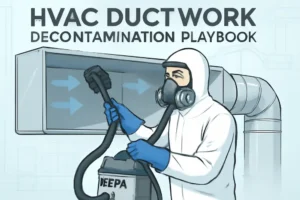
Battery fires coat surfaces with sticky soot plus corrosive salts. HVAC systems pull those byproducts deep into ductwork. Water used by firefighters adds cross contamination. Without a plan, the acid nature of residues etches metals and glass. Electronics take hidden damage that shows up weeks later. A pro will isolate zones, set containment, and run air scrubbers. They will clean, seal, and test. During scope review, ask about methods for HF risk mitigation. Ask how they will handle textiles, electronics, and sensitive finishes. Cost depends on severity, smoke spread, water damage, and contents volume. For a deeper look at cost drivers, see our page on Fire Damage Restoration Costs.
How to file an insurance claim
Speed with accuracy builds a strong claim. Once the scene is safe, take photos and video from multiple angles. Capture close ups of the device, the charger, the outlet, the breaker panel, and any burn patterns. Keep receipts for every expense. Ask your carrier about Additional Living Expenses if you cannot occupy the home. Create a room by room list of damaged items with replacement value. Get written estimates from licensed restoration contractors. The National Association of Insurance Commissioners maintains clear consumer guidance on claim steps. See their overview on NAIC.
Keep a claim diary with dates, names, and summaries of every call. Ask your adjuster about contents cleaning versus replacement. Ask about deodorization and corrosion control. Request copies of any expert reports. For a step by step checklist with documentation tips, see our article Preparing for a Fire Damage Insurance Claim.
Preserve the device for subrogation
Do not throw away the battery or the charger. Do not recycle the device until the insurer releases it. If a product defect is suspected, your carrier may pursue the maker to recover costs. That process depends on evidence. Take care when moving the device for storage. Place it in a fire resistant container outdoors if safe. Coordinate each step with your adjuster. After approval, arrange safe disposal.
Disposal and recycling
Never put lithium ion packs in household trash. Do not place them in curbside recycling. Taped terminals and separate bags help reduce short circuits during transport to drop off sites. Programs like Call2Recycle operate collection points for many communities. Many cities also run household hazardous waste programs with battery days. New York City guidance appears on the sanitation site here. Your local fire department or solid waste authority can point you to safe options.
Certification quick check
Buying listed products reduces risk. Labels show the system passed tests relevant to real faults. Use this quick reference at the point of sale.
| Product | Look for listing | What it covers |
|---|---|---|
| Home EV charger EVSE | UL 2594 | Safety of conductive EV supply equipment |
| E bike system | UL 2849 | Electrical system safety for e bikes |
| E bike battery pack | UL 2271 | Battery pack safety for light electric vehicles |
Ask retailers to show certificates or marks on the nameplate. Cross check model numbers. Avoid products with missing or vague labeling.
Home setup checklist
Use this concise list to set safer charging zones at home.
- Pick hard non combustible surfaces for all charging.
- Do not block exits with bikes or scooters.
- Never charge while sleeping.
- Use original chargers only with listed products.
- Keep chargers and packs away from flammables.
- Place smoke alarms near charging areas without obstructions.
- Plan outdoor storage for e bikes when possible per FDNY.
If you want a deeper guide on cleaning choices by item after an incident, see our resource Clean Anything Affected by Fire.
FAQs
Can you use water on a lithium ion fire
Yes. Water cools cells and helps halt thermal runaway. Use it only if the fire is small and you can act without risk. Evacuate first then call 911. Fire professionals back water as the primary method for lithium ion. See the SFPE feature on this topic.
What is lithium ion battery thermal runaway detection
It refers to sensing of early gases and rapid heat rise before visible flames. Off gas sensors target hydrogen, carbon monoxide, and other compounds. These systems appear today in commercial energy storage or charging cabinets. Home use remains limited. See the ACS review on early off gas.
What certifications should an e bike have
Look for UL 2849 on the e bike system and UL 2271 on the battery. Use the original charger. NYC requires certified products for sale. See UL information here.
What are the twenty twenty three NEC rules for EVSE
EVSE on a dedicated circuit sized per the device. GFCI for receptacles serving EVSE. Surge protection for dwelling services. Follow manufacturer specs and your local authority. Read industry guides on RectorSeal and CSE.
Is a Class D extinguisher required for lithium ion
No. Class D applies to lithium metal fires. Lithium ion cells respond best to water cooling in most cases. Evacuate and call 911 before any attempt to fight fire.
Where should I install a Level 2 charger
Use a dedicated circuit. Install listed equipment. Provide GFCI if you use a receptacle for EVSE. Keep the unit away from impact zones and combustibles. Follow manufacturer instructions and local rules. See NFPA linked resources on safe EV charging.
What should I do with a swollen or damaged pack
Stop use. Isolate it from combustibles. Do not place it in trash. Use local household hazardous waste programs or Call2Recycle. The USFA guidance covers this on their page.
What documents support a lithium ion battery fire insurance claim
Photos and video of the scene. Room by room inventory with values. Receipts for all expenses including temporary housing. Written restoration estimates. NAIC gives an excellent consumer primer on claim steps.
Claim handling checklist
Your claim needs order from day one. Use this short list to stay on track.
- Evacuate. Call 911. Once safe, photograph and record video of damage.
- Notify your insurer. Ask about Additional Living Expenses.
- Keep every receipt. Log calls and decisions in a claim diary.
- Get written estimates from licensed restoration contractors.
- Preserve the battery and device. Do not discard until adjuster approval.
- Coordinate safe disposal only after evidence review.
If you need help with the documentation process, use our checklist in Preparing for a Fire Damage Insurance Claim. For a quick refresher on safe cleaning technique, start with The Do’s And Don’ts Of Cleaning Fire Damage In Your Home.
Why pro cleanup matters
Smoke from a battery fire behaves differently from a simple pan fire. Battery smoke contains tiny particles with metals plus corrosive gases such as HF. That mix penetrates drywall pores and cabinet seams. It settles on circuit boards and causes delayed failure. A quick wipe with common cleaners can spread residues. Our team follows a sequence. Stabilize corrosion risk. Remove loose soot with HEPA tools. Wash and neutralize with the right agents. Seal where needed. Deodorize with hydroxyl or thermal fog methods. Validate with wipe tests and odor checks. If you want ballpark pricing factors, read our guide on how severity and smoke drive cost. If you prefer to handle light soot on your own, review safe steps in our article Clean Anything Affected by Fire.
Detection tools at the consumer level
Home detection options for early off gas remain limited. That said, you can layer practical cues with smart devices. Place interconnected smoke alarms near charging areas. Add a heat detector in garages with an EV charger. Use a smart camera in the garage to confirm alarms remotely. Some specialty cabinets for fleet micromobility offer gas sensing. If you run a multi unit building or a bike room, look for systems that cite UL 1487 style containment with integrated detection. For single family homes, behavior changes still move the needle most. Charge on tile or concrete. Keep a clear buffer from combustibles. Do not run overnight charges.
Storage layout that reduces risk
Home storage plans can blunt a worst case event. Place EV chargers on side walls to reduce backing impact. Mount e bike wall hooks away from door swings. Reserve a corner of the garage for tools with a metal shelf and ceramic tile under chargers. Keep powder finish fire extinguishers away from charging spots due to residue concerns. A water source nearby helps for quick cooling if a small fire occurs and you can act safely. Run a tidy space. Dust and clutter create fuel and hide early damage. Label charging cords to avoid mix ups.
What to tell your family
Everyone needs the same simple script. If you hear hissing or smell solvent, back away. If you see white smoke from a battery, evacuate and call 911. Do not carry smoking devices through the house unless the path is clear and you face no smoke. Keep exits clear of e bikes. Do not leave power tools on a charger overnight. Unplug chargers when not in use. Kids should never plug in chargers or charge toys unsupervised. Teach the difference between lithium ion and lithium metal only in simple terms. Lithium ion is in your devices. Water cools it. Lithium metal sits in specialty tools and may react with water. That last point prevents confusion during a panic moment.
Resources
Public safety bodies produce solid guidance. Use these as anchors for your plan.
- NFPA lithium ion battery safety for homes
- NFPA guidance for safe EV charging at home
- NEC twenty twenty three updates for EVSE
- GFCI and EVSE design Q and A
- UL 2594 scope for EVSE
- UL 2849 program for e bikes
- UL 2849 common questions
- USFA household battery safety
- FDNY battery safety page
- CPSC UPP battery warning
- Off gas detection research
- UL containment enclosures context
- Hydrogen fluoride emissions during battery fires
- NIOSH HF IDLH reference
- Water use for lithium ion fires
- Battery disposal through DSNY
- NAIC claim guidance
Safe charging starts with listed gear and a clean setup. Early warning signs buy you precious seconds. Smart response keeps your family safe. Cleanup after a battery fire requires care due to toxic residues. Strong documentation protects your insurance claim. If you face the aftermath and need support, my team stands ready with trained technicians, containment, and the right tools. Together we can restore your home without cutting corners or losing sight of health.